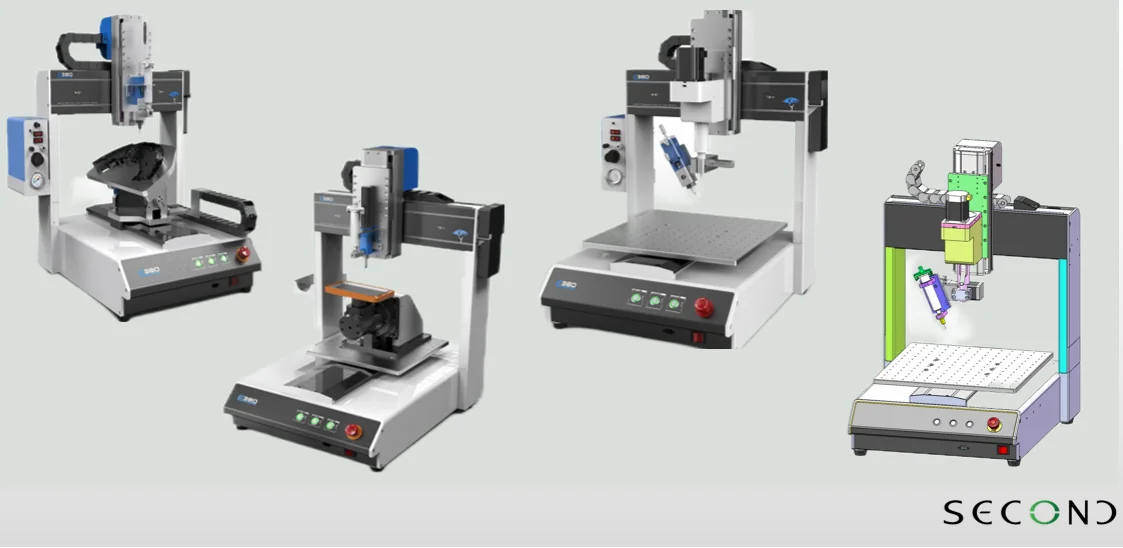
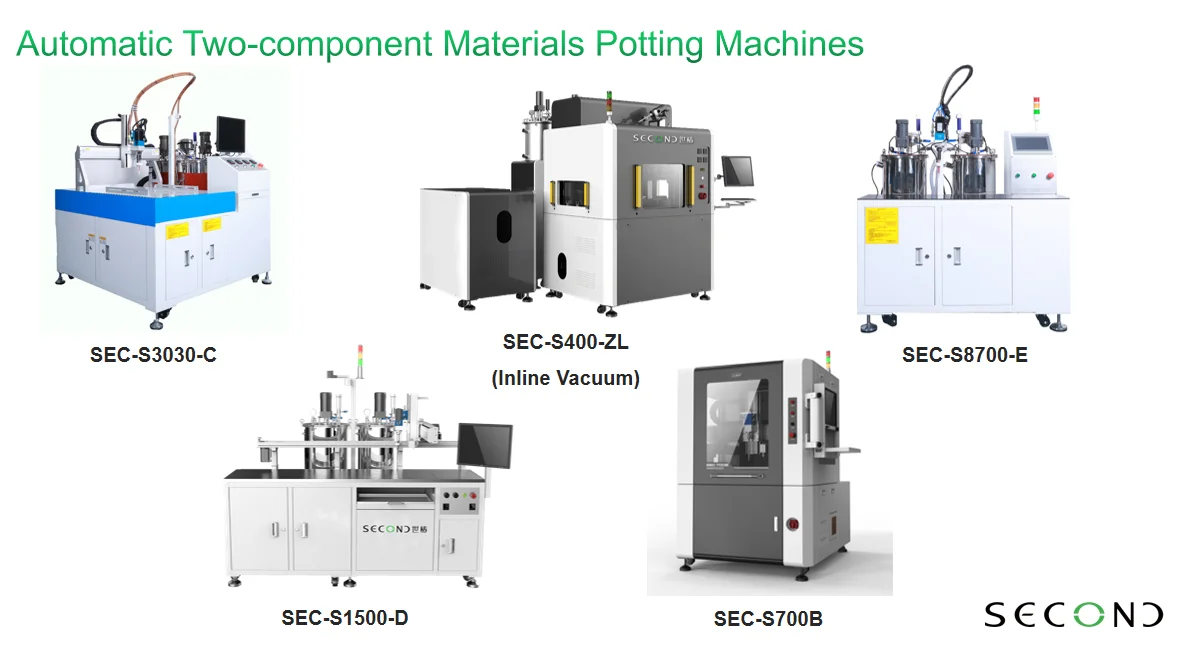
The application of “two-component servo glue shaft dispensing” technology to the bonding of curved glass displays using A/B adhesives represents a highly precise process step in current consumer electronics manufacturing.
Ι.Analysis of the key elements of the case::
● Core Process:Two-component servo glue shaft adhesive dispensing system. This is a high-precision automated dispensing machine technology that uses a servo motor to drive a plunger, precisely controlling the mixing ratio (e.g., 1:1) and dispensing volume of the A and B components. After uniform mixing in the mixing tube, the adhesive is applied to the designated location. Its advantages include precise mixing ratios (with errors controllable within ±1.5%), stable dispensing, and a clean, string-free cut-off, making it highly suitable for high-viscosity, high-filler adhesives.
● Application: Bonding of curved glass to display panels. This refers to the lamination of curved glass covers (3D glass) with display modules such as OLEDs. The structure of curved screens involves complex curved surfaces, placing high demands on the adhesive’s filling capability and bond strength. This process effectively controls adhesive volume, ensuring uniform filling of curved areas and preventing issues such as air bubbles, white edges, or adhesive overflow.
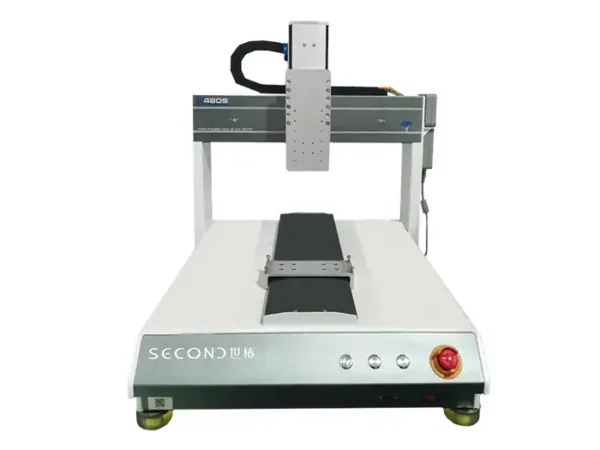
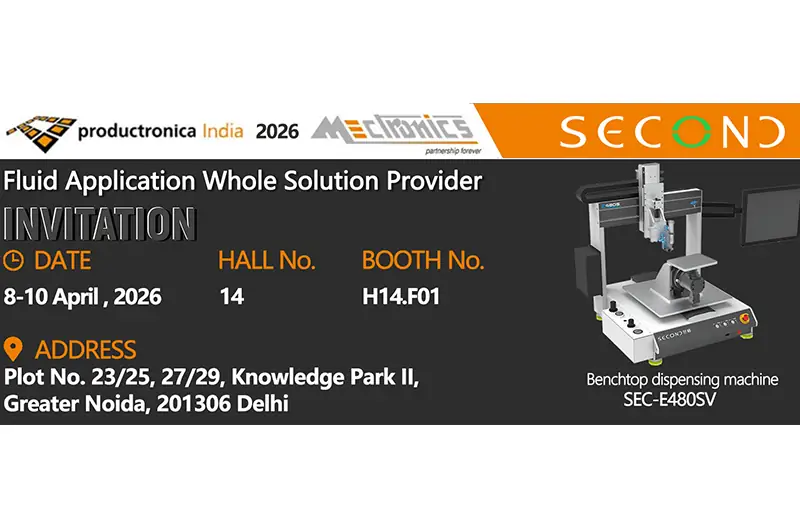
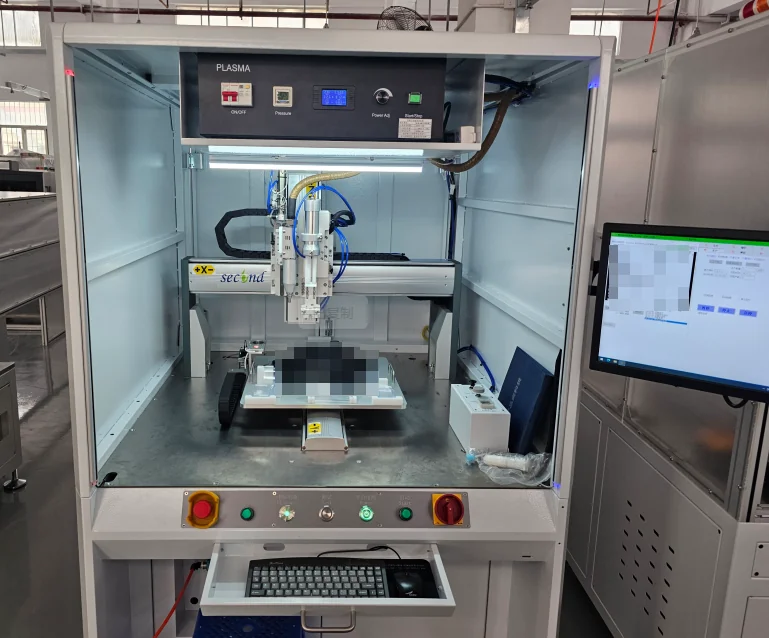
Benchtop Desktop Glue Dispensing Robot machine SEC-E480
This is the Second Intelligent SEC-E480 desktop dispensing machine, which features one-piece casting, strong structure, and stable operation; smaller size and larger stroke. Adopting the transmission method of stepper motor plus synchronous belt, it has the advantages of low cost and low noise! Flexible matching of different glue supply/control systems; realize dispensing of different products with different processes. In addition, adopting stepper motor + precision imported synchronous belt drive, it can ensure high accuracy and have higher cost performance
● Key Materials:AB Adhesive. Here, “AB adhesive” is a broad term; in display bonding applications, it typically refers to the following types:
OCA (Optical Clear Adhesive): Used for bonding optical layers within the display, requiring high transparency without affecting display performance. For example, there is an AB adhesive specifically designed for curved screens, whose structure includes an OCA layer and a soft substrate layer to adapt to the curved shape without causing bubbles.
Structural AB Adhesive: Used for filling and structural bonding between the glass cover plate and the display module. For example, in a curved screen lamination process, adhesives from the same system are used: uncured Part A is applied as a temporary “dam” to prevent adhesive overflow, followed by Part A mixed with Part B (curing agent) as the top coat for filling and bonding.
Thermal Conductive Structural Adhesive: In certain high-performance devices, the adhesive must also provide thermal conductivity to assist with screen heat dissipation.
Ⅱ.Solutions and Technical Applications
Combining the above elements, a typical solution for “two-component servo dispensing for bonding curved glass displays with AB adhesive” generally includes the following steps:
1.High-Precision Metering and Mixing:A two-component metering pump dispensing system (such as the GS-P50 or a servo dual-drive device) is employed. A servo motor drives a precision metering pump to ensure that Component A (e.g., epoxy resin) and Component B (e.g., curing agent) are drawn from separate tanks in a strict ratio (e.g., 10:1).
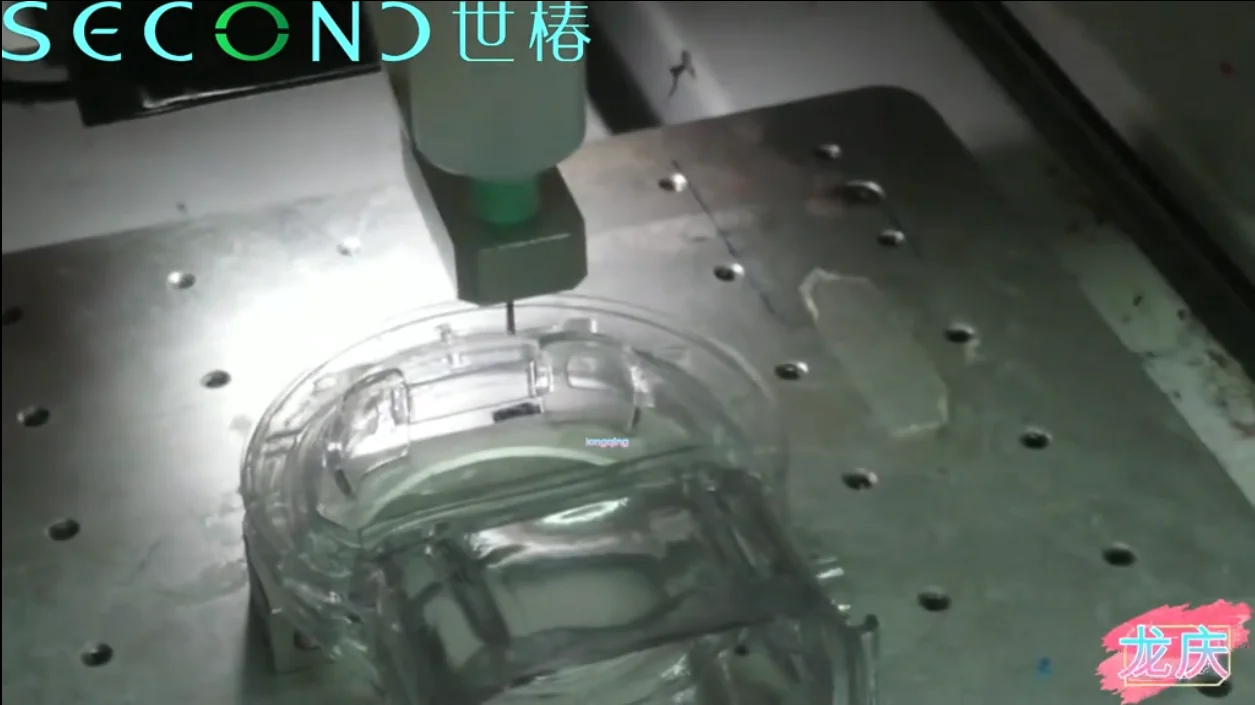
2.Stable Delivery and Dispensing: Using a servo-driven dispensing machine (such as the GS-D400), the mixed adhesive is applied along a predetermined path on the curved glass via a dispensing head at a precisely controlled dispensing speed (e.g., 0.1–0.5 g/s) and volume.
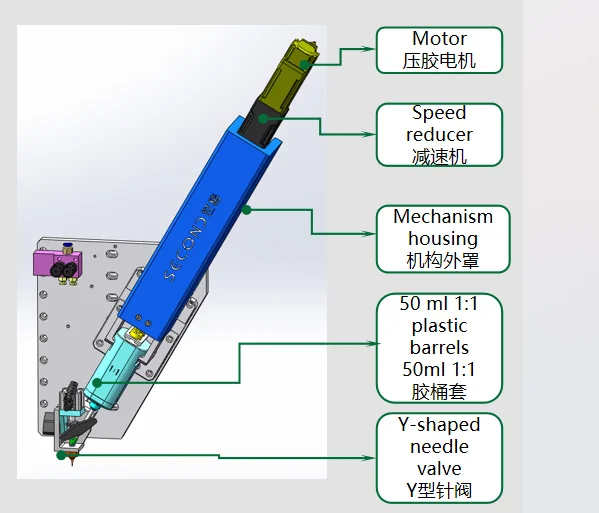
Two-component servo glue shaft assembly
3.Special Process Considerations:
● Preventing Premature Curing: For fast-curing AB adhesives dispensing, some equipment incorporates a cooling mechanism that wraps around the mixing tube to delay curing after mixing and prevent clogging.
● Achieving Complex Curved Surface Filling: Utilizing the equipment’s precise arc interpolation function ensures the dispensing path perfectly conforms to the curvature of the 3D surface. Additionally, by selecting suitable adhesives (such as zone-curing, high-filler AB adhesives), the adhesive is guaranteed to fill curved areas effectively without overflowing at the edges.
4.Post-dispensing Curing:
After dispensing is complete, the laminated components are sent to a curing oven, where the AB adhesive is rapidly cured through heating or UV irradiation to form a strong, durable bond.
Summary:
This case represents a classic “equipment + process + materials” integrated precision manufacturing solution. By utilizing servo-controlled dispensing technology, it ensures absolute precision in the mixing ratio and application of the AB adhesive, thereby overcoming the challenge of reliably bonding curved glass to displays within complex three-dimensional spaces and ensuring both the aesthetic perfection and structural strength of the final product.
Second Intelligent has strong solution and technical service capabilities, and will provide customized automatic fluid dispensing and glue filling solutions to customers based on their adhesive characteristics, production process requirements, production capacity requirements, factory space, and other comprehensive factors. At the same time, in the global market, we will provide comprehensive solutions and technical support services to global customers through distributors, agents, and our headquarters’ 50+technical team.