I. Development Background: Why Two Routes?
Electrolysis of water for hydrogen production is not a new technology. The commercial history of alkaline electrolysis (ALK) can be traced back to the early 20th century. Between the 1920s and 1980s, a large number of large-scale alkaline electrolysis plants were built globally, with the largest single plant reaching 165MW, mainly serving the hydrogen needs of the synthetic ammonia industry. After the 1980s, the rise of cheap natural gas-based hydrogen production (steam methane reforming) led to the withdrawal of water electrolysis from large-scale industrial applications due to its cost disadvantage, leaving only small-scale plants of about 1MW. It wasn’t until the rise of the “green hydrogen” concept in the last decade that water electrolysis for hydrogen production returned to the forefront, giving rise to the new PEM route.
The origins of PEM electrolysis are much later. Its technological basis comes from proton exchange membrane fuel cells (PEMFC)—also a structure of “solid polymer membrane + precious metal catalyst + titanium-based bipolar plate,” only the reaction direction is reversed. With the maturation of PEMFCs in the automotive field, PEM electrolysis gradually moved from the laboratory to MW-level commercialization after the 2010s.
The fundamental difference between the two approaches stems from the different electrolyte forms: alkaline solutions use liquid KOH solution, while PEM uses solid proton exchange membranes. This difference determines all subsequent technical characteristics and equipment requirements.
2.Technical Background: A Summary of Key Differences
Data source
Dimensions | Alkaline electrolysis (ALK) | PEM electrolysis |
| Liquid KOH/NaOH (20-30%) | Solid proton exchange membrane (PFSA) |
Electrolyte | 60-90℃ | 50-80℃ |
Operating Temperature | 0.2-0.6 A/cm² | 1.0-2.0 A/cm² |
Current Density | 20-100% (Poor) | 0-100%(excellent) |
Load Flexibility | Low yield, requires purification | High (can be directly supplied to fuel cells) |
Hydrogen Purity | 6 MW | 2 MW |
Maximum Power Per Cell | Nickel-based (non-precious metal) | Iridium/Platinum (precious metals, iridium is especially scarce) |
Catalyst | Nickel/Stainless steel | Titanium (requires platinum/gold coating on the surface). |
The core advantages of the alkaline route are its maturity and affordability. The technology has virtually no barriers to entry, nickel-based catalysts are low-cost, and it’s suitable for large-scale, stable operation. However, its fatal flaw is poor dynamic response—the load adjustment range is only 20-100%, and the load change speed is slow, inherently incompatible with the volatility of wind and solar power. A 2026 World Bank report points out that although PEM is theoretically better suited to handle the intermittency of renewable energy, in actual large-scale deployments, projects powered by intermittent renewable energy still tend to choose alkaline methods. This indicates that the “flexibility advantage” of PEM has not been fully proven in engineering practice, while the cost disadvantage is real.
The core advantages of the PEM route are its flexibility and high purity. The current density is 3-4 times that of alkaline methods, meaning that the equipment size is much smaller for the same hydrogen production; the load can be quickly adjusted between 0-100%, perfectly adapting to wind and solar fluctuations; and the produced hydrogen has high purity and can be directly used in fuel cells. However, the cost is high: iridium catalysts are extremely scarce and expensive—a 10MW PEM electrolyzer requires approximately 15kg of iridium at 1 A/cm², with catalyst costs alone approaching $3 million based on 2021 prices; titanium bipolar plates plus platinum/gold coatings account for 48% of the total battery cost.
AEM (anion exchange membrane) represents a third approach, attempting to combine the low cost of alkaline materials (non-precious metal catalysts) with the flexibility of PEM (solid-state membrane structure). However, it is currently in the early stages of commercialization, with a capacity of less than 0.1GW, and has not yet achieved economies of scale.
3.Application Prospects: Two Separate Paths
Short-term (2026-2030): Alkaline dominance, PEM breakthroughs in specific scenarios.
Domestic electrolyzer order data from January to April 2026 shows that the alkaline route accounts for over 80%, remaining the absolute first choice in large-scale wind and solar hydrogen production projects such as Jilin Electric Power’s Lishu project and Inner Mongolia Baofeng project, with single-cell hydrogen production consistently ranging from 1000-1600 Nm³/h. Globally, alkaline technology accounts for 64% of installed capacity and 84% of projects under construction.
PEM breakthroughs are concentrated in scenarios with rigid constraints on response speed and space: grid peak shaving, on-site hydrogen production at hydrogen refueling stations, and off-grid hydrogen production. PEM orders increased significantly from January to April 2026, with China Huaneng’s 15MW centralized procurement and Jilin Electric Power’s 10MW PEM project marking PEM’s transition “from laboratory demonstration to industrial-grade application.” However, the price is still more than 1.5 times that of alkaline electrolyzers—Ludao Hydrogen Energy’s 250Nm³/h PEM equipment is priced at approximately 5.92 million yuan, while Longi’s alkaline equipment of the same scale (1000Nm³/h) is priced at approximately 5.51 million yuan.
Medium-term (2030-2035): PEM’s market share will increase, but it will not replace alkaline electrolyzers.
China’s “Medium and Long-Term Plan for the Development of the Hydrogen Fuel Cell Dispensing System Industry” includes hydrogen energy as a cutting-edge strategic industry. Domestic annual electrolyzer capacity has exceeded 35GW, of which alkaline electrolyzers account for over 32GW, and PEM approximately 2.5GW. Industry assessment is that PEM and alkaline electrolyzers will develop in parallel: alkaline electrolyzers will maintain the foundation for large-scale, stable hydrogen production, while PEM will capture the incremental growth in volatile and distributed scenarios.
An easily overlooked fact: the electrolyzer stack itself only accounts for about one-third of the total project cost, while EPC, civil engineering, licensing, and financing account for 40-50%. This means that equipment cost reduction has limited leverage on the total cost, while the high CAPEX of PEM is further amplified at the project level. This is why the narrative that “PEM will dominate large-scale hydrogen production” is being re-evaluated.
4. Second‘s Capabilities and Solutions in the PEM Electrolyzer Field
Why PEM is Second’s “Home Ground”?
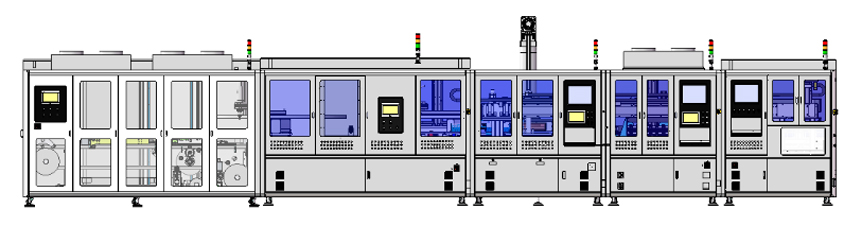
The manufacturing process of PEM electrolyzers is essentially the same as that of proton exchange membrane fuel cells (PEMFCs): both involve the stacking and assembly of membrane electrode assemblies (MEAs) + bipolar plates + sealants, and both require MEA encapsulation, adhesive sealing, stack pressing, and airtightness testing. Second’s fluid control capabilities accumulated in the fuel cell field are a transfer of the same underlying technology, not starting from scratch.
The manufacturing logic of alkaline electrolyzers is completely different: the core is electrode plate welding (laser welding, deformation control <0.5mm), automatic membrane fabric laying (flexible material gripping), and overall screw pressing. Second’s adhesive sealing capabilities play a supporting role in this system, not a core process.
Existing PEM-Related Products from Second
According to publicly available product information, Second’s layout in the PEM electrolytic cell field is already in place:
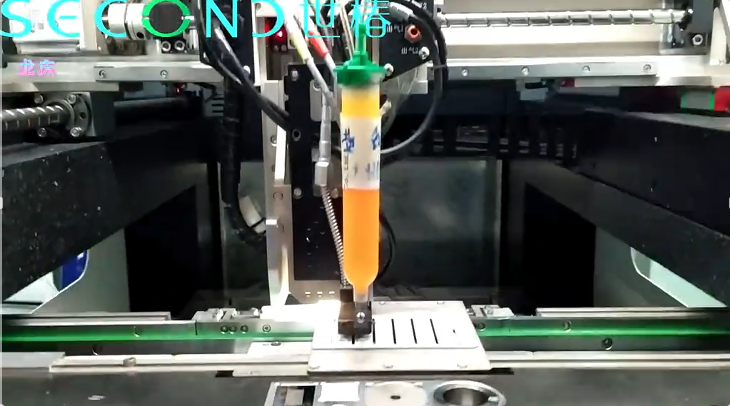
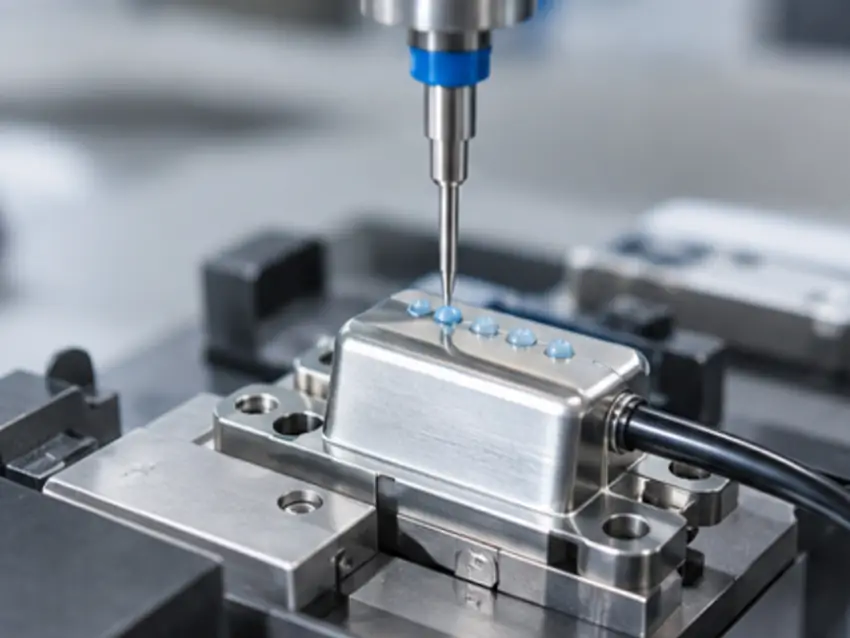
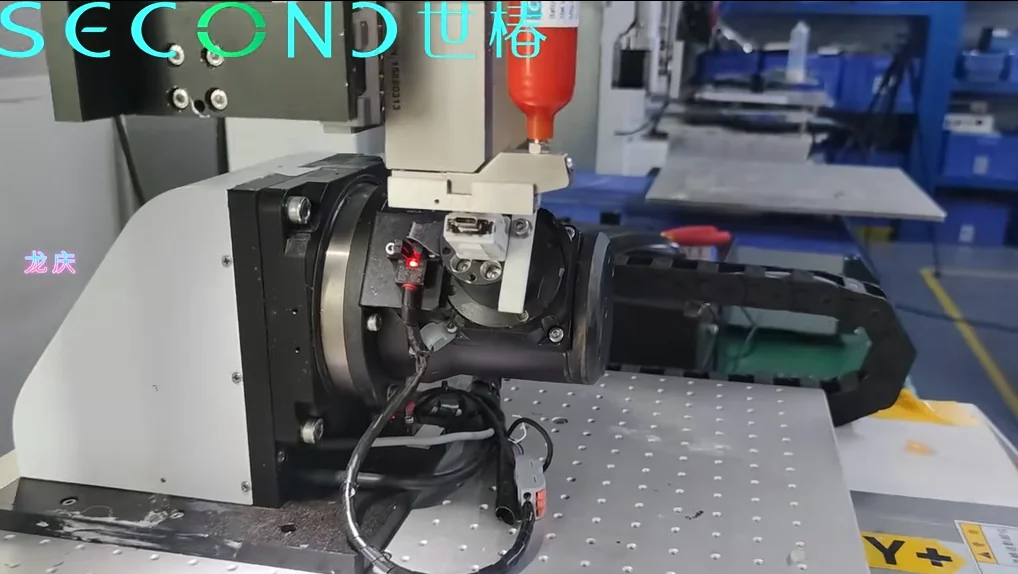
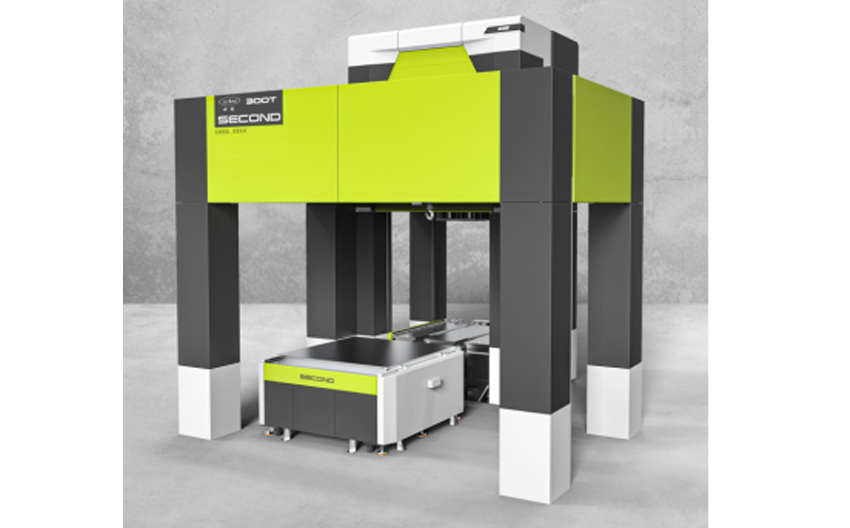
PEM Electrolytic Cell Dispensing Machine: Gantry movement, product fixation, equipped with an industrial camera for high-precision visual guidance, pneumatic adsorption/pressing platform compatible with graphite plates, composite plates, and metal plates, and adaptable to different dispensing valves and positioning platforms according to customer processes. This equipment directly addresses the dispensing of adhesive and primer for PEM electrolytic cell bipolar plates.
Five-in-One Roll-to-Roll Production Line: Suitable for membrane electrode encapsulation, compatible with pressure-sensitive adhesive or hot melt adhesive frames, featuring unwinding/winding, web guiding, inspection, pressing, tension control, and an information management system. It can achieve frame + 3CCM + frame lamination and is compatible with MES systems. The membrane electrode encapsulation process of PEM electrolytic cells is highly consistent with that of PEMFC membrane electrodes, and the capabilities of this production line can be directly transferred.
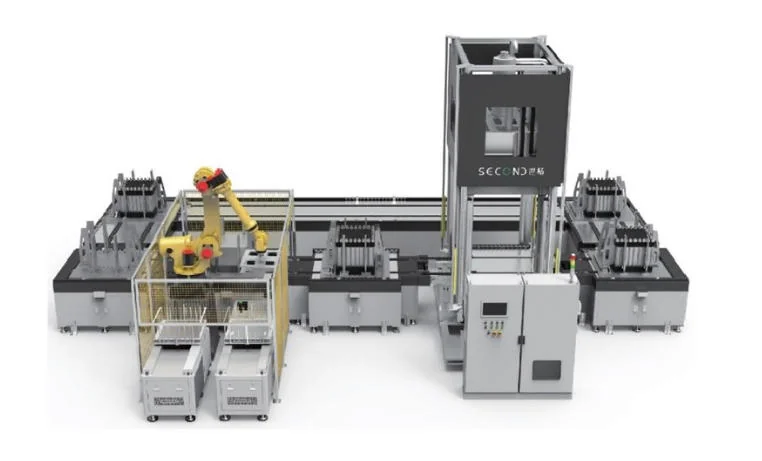
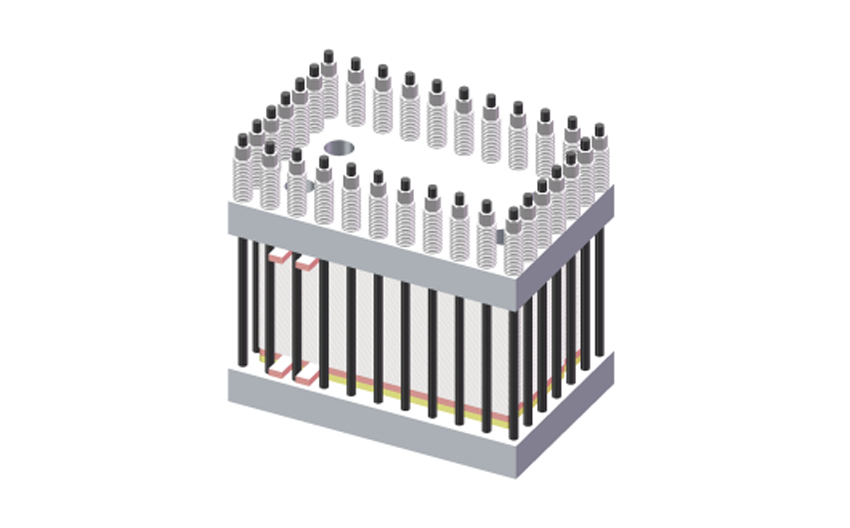
Second’s existing fuel cell stack assembly machine has servo hydraulic closed-loop control and online air tightness testing (differential pressure method/flow method, accuracy ±0.1%FS), which is also applicable to the stack pressing and testing of PEM electrolyzers.
5.Development Prospect Assessment
For Second, PEM electrolyzers represent a sector with “higher capability matching than alkaline electrolyzers and faster market growth.” Domestic annual PEM electrolyzer production capacity is approximately 2.5GW, far less than the 32GW of alkaline electrolyzers, but its growth rate is significantly faster—PEM is transitioning from “laboratory” to “industrial-grade.” Second’s target customers (PEM-based companies such as Hydrogen Power and Re-Fire Technology) are at a turning point from “pilot production” to “mass production,” and their demand for automated equipment for membrane electrode packaging, fuel cell stack assembly, and airtightness testing is most urgent.
Recommended Contact Strategy: Use the following entry point: “We have already verified a solution with alignment accuracy <0.2mm and adhesive strip thickness <0.03mm on our fuel cell membrane electrode production line. This capability can be transferred to your PEM electrolyzer membrane electrode and fuel cell stack production lines.” Among PEM electrolyzer manufacturers, HydrogenPower Energy (Shenzhen-based, with a fully self-developed PEM stack) and Re-Fire Energy (dual layout of fuel cells and electrolyzers) have the highest priority because their technology routes and production line configurations overlap most with Second’s existing capabilities.
In short: alkaline technology is “large and mature,” while PEM is “small and growing rapidly.” Alkaline technology focuses on scale and cost, while PEM focuses on flexibility and response speed. Second’s opportunity in PEM lies not in being better than alkaline equipment, but in the fact that the PEM route precisely requires Second’s strongest expertise—membrane treatment and fluid control.