In acoustic panel manufacturing, dispensing quality directly affects bonding performance, assembly quality, and overall product consistency. With irregular contours, complex dispensing paths, and varying application requirements across different areas, achieving high precision, stable dispensing, and efficient production presents several process challenges.
Process Challenges: Coordinating Position, Adhesive Volume, and Dispensing Paths
Although dispensing may appear straightforward, acoustic panel applications often involve several technical challenges:
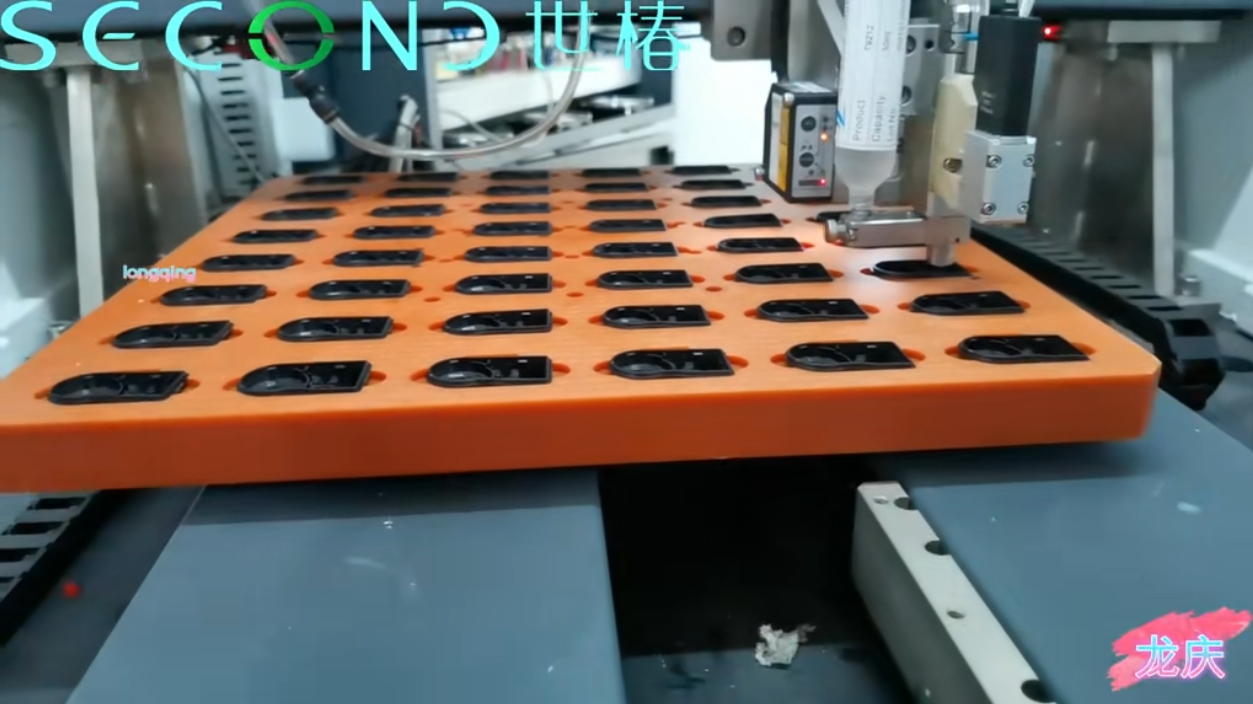
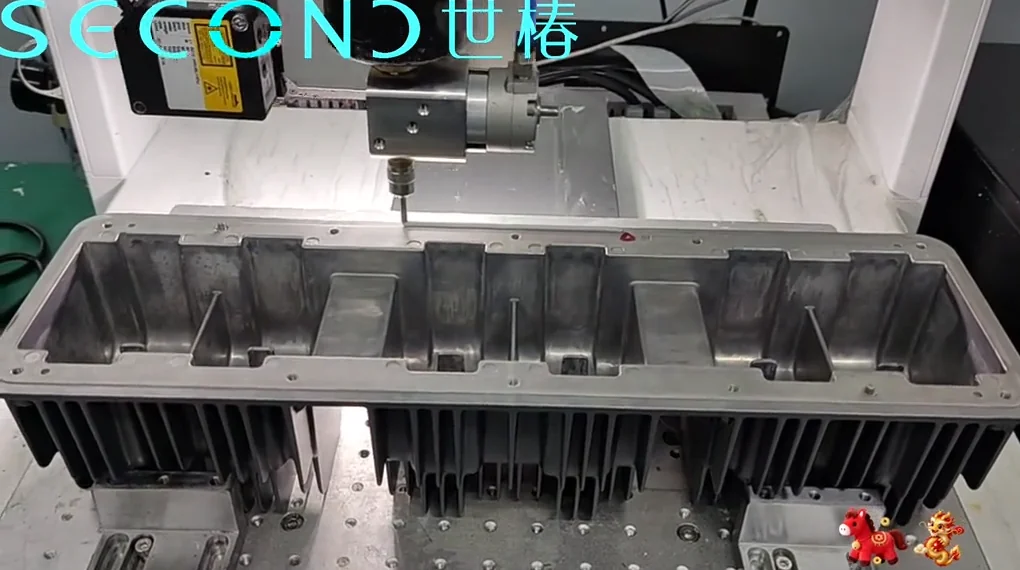
Complex product geometry: Acoustic panels may feature irregular edges, recessed areas, and different dispensing zones, requiring accurate path planning and positioning.
High positional accuracy requirements: Each dispensing point must align with its intended location. Deviations may compromise bonding performance and subsequent assembly.
Precise adhesive volume control: Insufficient adhesive may result in inadequate bonding, while excessive application can waste material and potentially affect product appearance or assembly.
Consistent process performance: Factors such as adhesive viscosity, ambient temperature, dispensing speed, and process parameters can influence dot size, bead shape, and application consistency.
Balancing productivity and quality: Manual dispensing depends heavily on operator skill and technique, making it difficult to maintain a consistent production cycle and uniform application quality over time.
Desktop Automated Dispensing for Stable Process Output
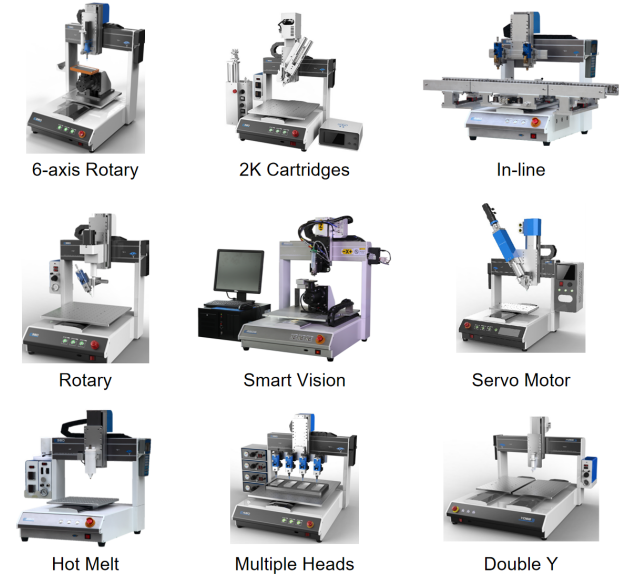
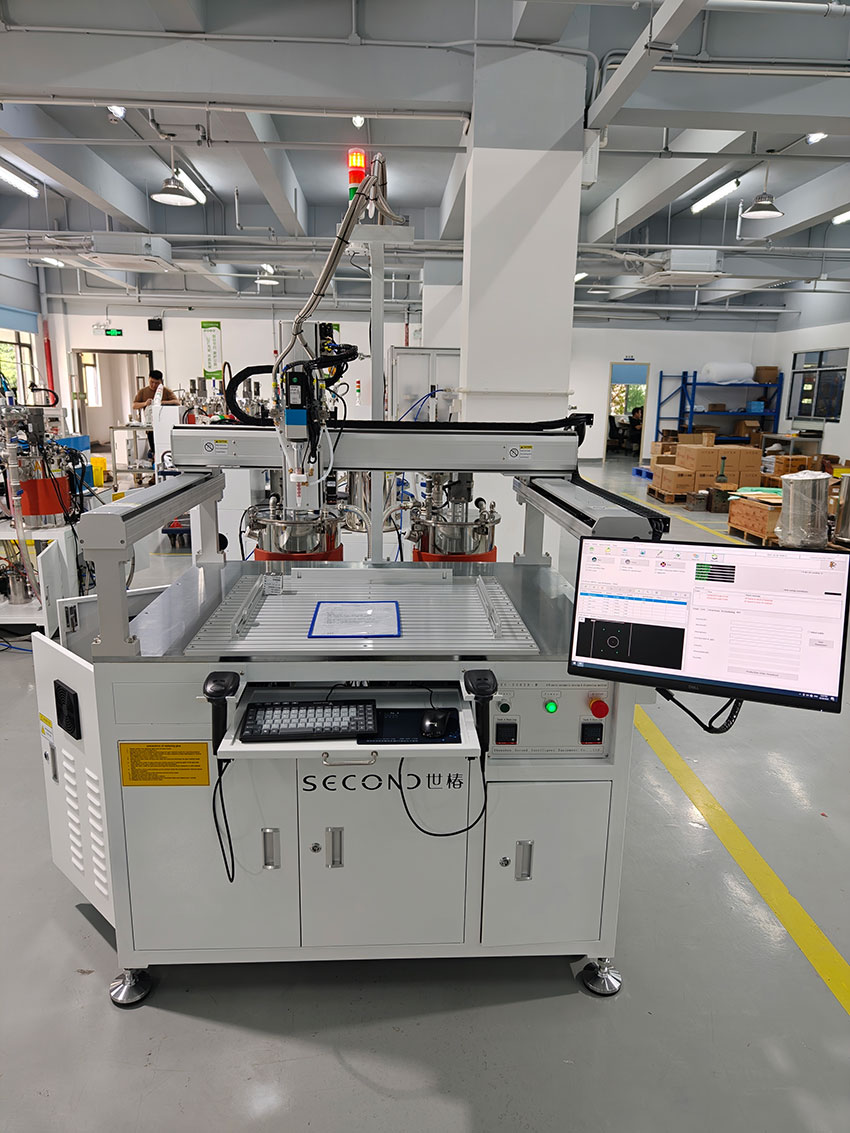
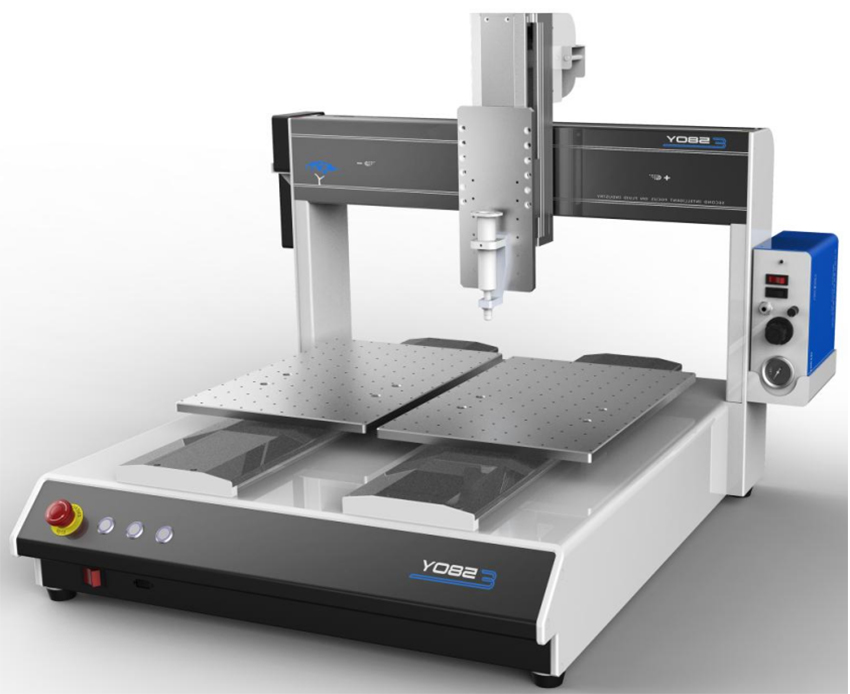
To address these challenges, the Second Intelligent desktop dispensing system uses programmed motion paths and dispensing positions to transform manual operations into a standardized automated process.
Stable process output: Standardized programs and dispensing parameters help reduce operator-dependent variation and fluctuations between production batches.
High-precision application: Programmed paths based on product geometry help improve the consistency of dispensing positions, dot profiles, and adhesive distribution.
Improved production efficiency: Automated operation reduces manual handling and repetitive positioning, helping optimize cycle times.
Repeatable process control: Established dispensing parameters can be stored and reused, facilitating repeat production and process adjustment.
Actual dispensing accuracy and production efficiency depend on adhesive properties, product geometry, equipment configuration, and validation under the intended operating conditions.
From Process Improvement to Lower Manufacturing Costs
Automated dispensing delivers benefits beyond faster individual operations. More consistent application helps reduce missed dots, positional deviations, and abnormal adhesive volumes, improving bonding quality and batch-to-batch consistency while lowering the risk of rework and scrap.
Meanwhile, more controlled adhesive usage helps minimize material waste. Reduced manual intervention and fewer quality-related issues can further lower labor and quality management costs, creating a better balance between product quality, production efficiency, and overall manufacturing cost.
Consistent Processes for High-Quality Manufacturing
The key to acoustic panel dispensing is not simply applying adhesive, but ensuring that every dispensing point and every production batch meets consistent process requirements. By adopting desktop automated dispensing machine, manufacturers can establish a more controllable and repeatable production process that supports both product quality and operational efficiency.
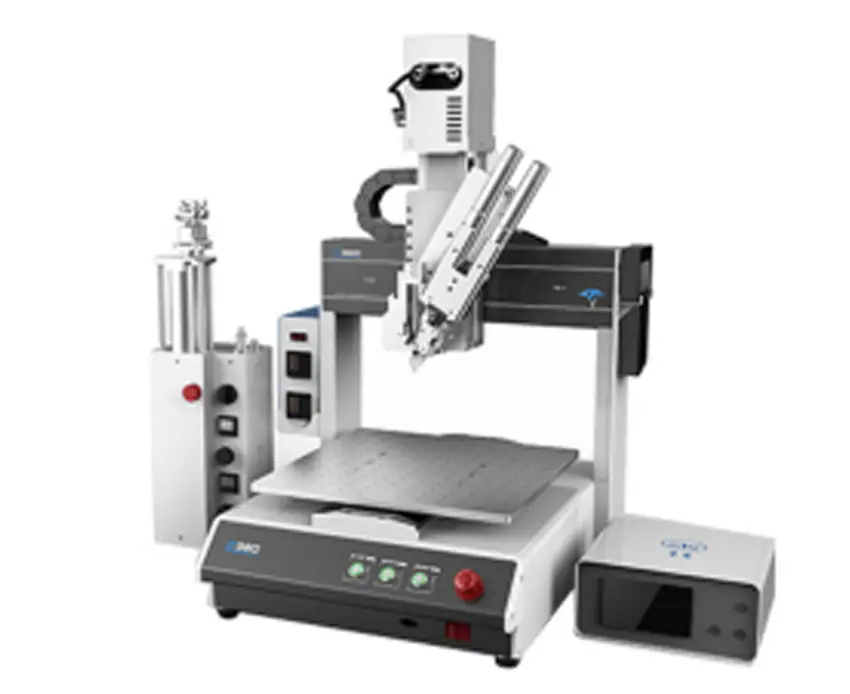
Second Intelligent specializes in fluid application and precision dispensing technology. By providing equipment and process solutions tailored to different manufacturing applications, the company helps customers improve process stability, product consistency, and overall manufacturing efficiency.