I. The Four Nodes of the Hydrogen Supply Chain at a Glance
If you look at the hydrogen chain from start to finish, it’s really just four steps:
Hydrogen production → Storage & transport → Hydrogen refueling stations → End use
Let’s go through them one by one.
①Hydrogen Production: Where Does Hydrogen Come From?
There are three main production routes today:
Fossil fuel reforming: essentially “squeezing” hydrogen out of natural gas. The technology is mature and the cost is low, but it depends on natural gas and has high carbon emissions. The output is called gray hydrogen; if you then capture the carbon, it becomes blue hydrogen.
Water electrolysis: using electricity to “split” water into hydrogen and oxygen. If the electricity is green, the output is green hydrogen. The core equipment is the electrolyzer, and costs are coming down fast.
Industrial by-product hydrogen: plants making chlor-alkali, propane dehydrogenation and similar products give off hydrogen as a by-product — basically “scrap recovery.”
Put simply, fossil fuel reforming and industrial by-product hydrogen are the existing base of hydrogen supply, but the growth direction everyone agrees on is water electrolysis.
The electrolyzer is the core equipment for water electrolysis. How well it works depends mainly on how precisely and consistently key components like membrane electrode assemblies (MEAs) and bipolar plates are made. Alkaline electrolyzers are cheap but slow to respond dynamically; PEM electrolyzers start and stop quickly and pair well with fluctuating wind and solar power, but precious-metal catalysts and specialty membrane materials are expensive, which caps cost reduction.
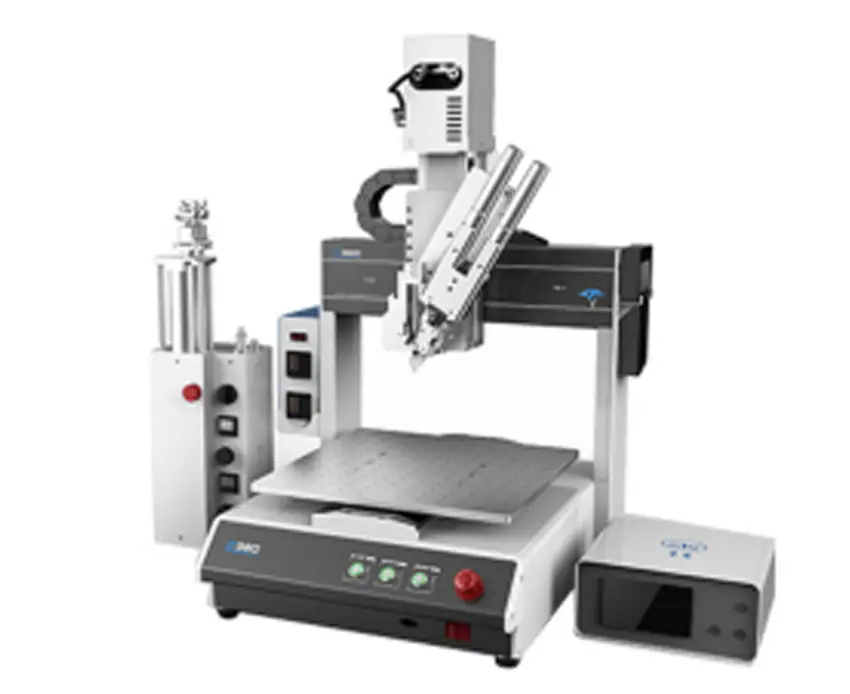
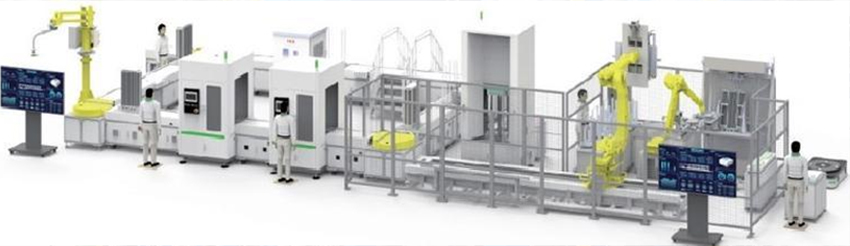
What Second Intelligent does is provide smart encapsulation and inspection lines for PEM electrolyzer assembly. From the manufacturing side, it helps customers shrink stack consistency deviations and raise yield, so electrolyzers can find a mass-producible balance between “cost down” and “efficiency up.”
②Storage & Transport: How Does Hydrogen Get Moved?
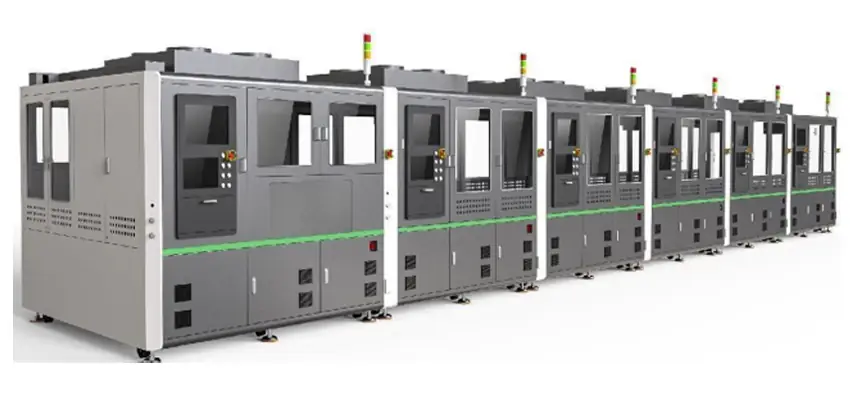
The most mature option today is gaseous storage and transport: long-tube trailers, with 20 MPa common in China and 35 MPa technology being promoted. Pipeline transport suits large-scale, long-distance delivery but requires big upfront investment. Liquid hydrogen storage and transport, and solid-state hydrogen storage, are still being breakthrough.
20 MPa long-tube trailers are the mainstay for point-to-point hydrogen transport in China — mature technology, low barriers to entry. But there’s an awkward reality: a 49-ton trailer actually carries only about 280 kg of hydrogen, and compression power consumption already accounts for about 15% of the heating value of the hydrogen transported. Once the distance exceeds 150 km, tolls, pressure-drop losses and labor costs stack up, and storage and transport costs quickly eat into the profit margin on the production side.
Liquid hydrogen has an obvious density advantage, but liquefaction power consumption accounts for more than 30% of the hydrogen’s LHV, and daily boil-off losses are hard to eliminate. Pipeline transport suits large-scale, long-distance delivery, but investment is large and construction takes time.
Second Intelligent doesn’t directly make storage and transport vessels, but the factory inspection and leak-tightness testing standards of its electrolyzer lines directly affect hydrogen quality at the source and, in turn, leak-risk control in downstream storage and transport.
③Hydrogen Refueling Stations: How Is Hydrogen Dispensed?
Core equipment at a refueling station includes: hydrogen compressors, hydrogen storage cylinder groups, dispensers, and chillers/heat exchangers. Hydrogen is unloaded from long-tube trailers into the station’s storage cylinders, boosted by compressors, and then dispensed into fuel cell vehicles through dispensers. A dispenser is a bit like a fuel pump, but at much higher pressure. Houpu shares is a representative company in the dispensing equipment field.
Compressors, storage cylinder groups, dispensers and heat exchangers make up the core station equipment, with compressors accounting for about 32% of station construction investment. Domestic production rates have risen noticeably in recent years, but equipment investment for a fixed 500 kg/day station is still RMB 5–7 million; add land approval and safety compliance costs, and most stations run at low utilization. As of mid-2025, the average Chinese refueling station serves only about 43 vehicles, and operations rely heavily on subsidies.
From Second Intelligent’s perspective, the core equipment at refueling stations shares the same underlying technologies — precision fluid control and leak-tightness testing — as electrolyzer and fuel cell production lines. The cost-reduction experience gained from scaling up equipment manufacturing could potentially be reused across these segments.
④End Use: How Is Hydrogen Used?
The main direction is the proton exchange membrane fuel cell (PEMFC), used in heavy trucks, forklifts, ships and similar applications. PEMFCs operate at 70–80°C with 35–45% efficiency; they start fast and have high power density, but they can’t do without precious-metal catalysts. Refire is a leading domestic fuel cell system company, with more than 6,200 fuel cell vehicles deployed in the vehicle sector.
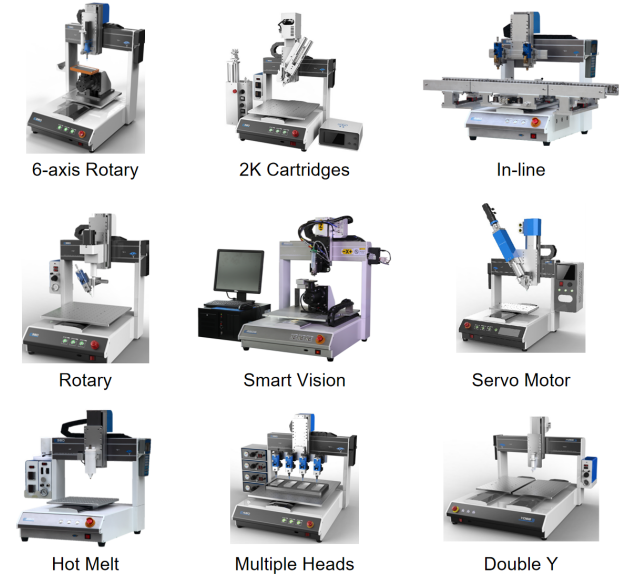
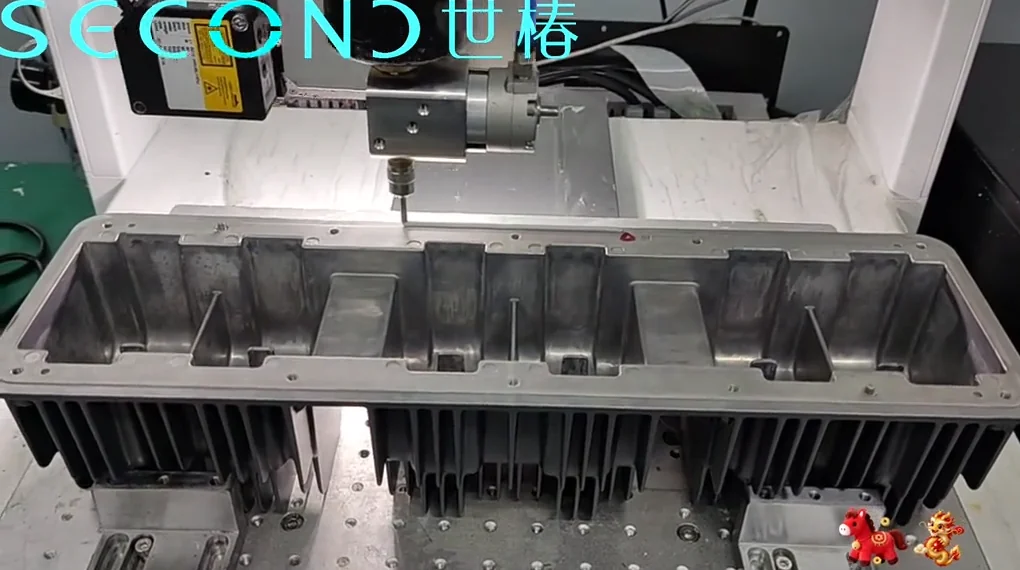
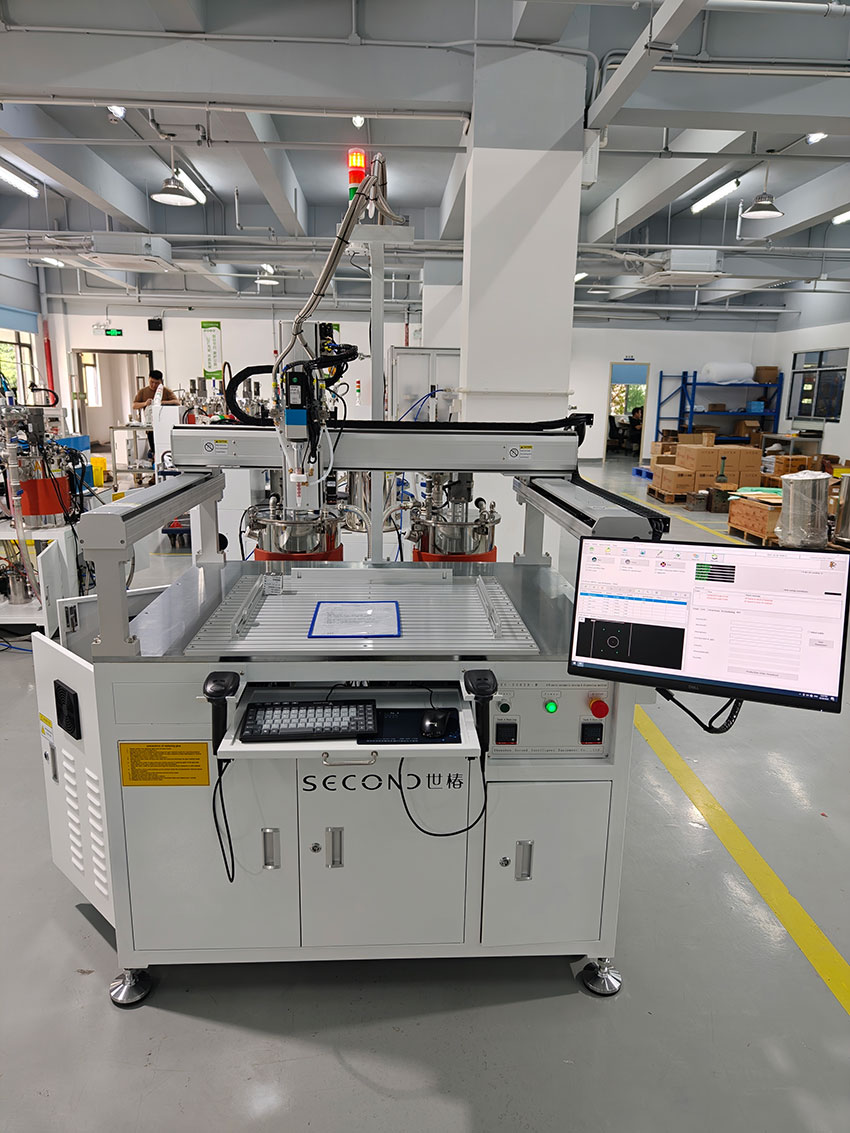
In the PEMFC cost structure, the automation level of manufacturing steps such as bipolar plate sealing, MEA encapsulation and stack assembly directly determines product consistency and service life. Second Intelligent entered the hydrogen equipment field in 2014 and has built a production line matrix covering bipolar plate sealing dispensing and encapsulation, seven-in-one MEA encapsulation, stack assembly, system assembly and leak-tightness testing. Behind the scaled deployment of leading system companies like Refire in the vehicle sector is the need for stable output at every manufacturing step — and that is exactly the value of Second Intelligent as an “equipment base.”
II. Second Intelligent · FAQ
Q1: Which part of the hydrogen supply chain does Second Intelligent actually cover?
In one sentence: Second Intelligent doesn’t make hydrogen, doesn’t build stations, doesn’t make vehicles. What it makes is “the equipment that makes hydrogen equipment” — electrolyzer lines, MEA encapsulation lines, bipolar plate sealing lines, stack assembly lines, and leak-tightness testing equipment. Customers use Second Intelligent’s lines to produce electrolyzers and fuel cell stacks; Second Intelligent’s precision determines customers’ product yield and consistency.
Q2: There are so many water electrolysis routes — which one does Second Intelligent’s equipment mainly serve?
Alkaline (ALK) and PEM are the two most commercially mature routes today. Second Intelligent’s encapsulation and assembly equipment carries more value in the PEM route — PEM electrolyzers have higher requirements for MEA encapsulation precision and bipolar plate sealing reliability, so automated lines are more necessary. Large-scale expansion of the alkaline route also needs automated assembly and inspection, and Second Intelligent provides tailored solutions based on customers’ process routes.
Q3: What problem does fuel cell line automation actually solve?
The typical problem with manual stack assembly is poor consistency. An MEA encapsulation offset of a few tenths of a millimeter, a slight fluctuation in sealant dispensing — these may not show up in single-stack testing, but in fleet operations at the thousand-vehicle level, they become amplifiers of life dispersion and after-sales costs. The core role of Second Intelligent’s lines is to turn “the master craftsman’s touch” into reproducible process parameters, so stacks maintain performance convergence in volume manufacturing.
Q4: Is Second Intelligent’s equipment related to refueling stations?
Indirectly. The core equipment at refueling stations (compressors, dispensers) and electrolyzer/fuel cell lines share the same underlying technologies in precision fluid control, high-pressure leak-tightness testing and automated assembly. Second Intelligent currently focuses on manufacturing equipment for both the production and use ends of hydrogen, and does not directly sell station-side equipment to refueling station operators. But the sealing and testing process capabilities accumulated on the manufacturing side leave a technical interface open for future extension into hydrogen refueling equipment manufacturing.
Q5: What’s the biggest bottleneck in the hydrogen equipment industry right now?
It’s not a single-point technology breakthrough — it’s that downstream demand hasn’t yet formed scaled, stable orders. Customers of electrolyzer and fuel cell lines (hydrogen project developers, stack companies) are themselves still in capacity ramp-up and cost-reduction pressure, so equipment procurement decisions tend to be cautious. Second Intelligent’s response is to bundle “equipment + process + service”: not just selling machines, but helping customers tune process parameters and train line teams, aligning equipment delivery cycles with customers’ product introduction cycles.
Q6: In one sentence, how would you position Second Intelligent?
The “shovel seller” of hydrogen equipment. One of the most stable businesses in a gold rush is selling shovels — but Second Intelligent’s shovels aren’t standard products. Every customer’s electrolyzer design, stack structure and capacity plan is different, so lines need deep customization. Second Intelligent entered the fuel cell equipment field in 2014, established its Suzhou company as an independent operation in 2020, and earned Jiangsu Province’s “Specialized, Refined, Distinctive and Innovative” (SRDI) certification, relying on process know-how accumulated in MEA encapsulation, bipolar plate sealing, stack assembly and other steps. The value of this position: no matter which downstream electrolyzer or stack company comes out on top, automation demand in manufacturing will persist.