With the deepening development of automotive electrification and intelligence, the number of electronic components in a vehicle has jumped from hundreds to thousands. These core components—from powertrain to autonomous driving sensors—must operate stably under extreme conditions such as the high temperatures in the engine compartment, severe vibrations in the chassis, and moisture intrusion after wading through water. Precision dispensing, as a key manufacturing guarantee, is becoming a core element determining the long-term reliability of automotive electronics.
Precision dispensing is not a single operation, but a systematic engineering process integrating materials science, precision control, and process management. Its core lies in applying adhesives with specific functions in precise amounts and locations, followed by curing, to build a robust defense against harsh environments for connectors and sensors.
I.Connector Sealing and Adhesive Application Process:
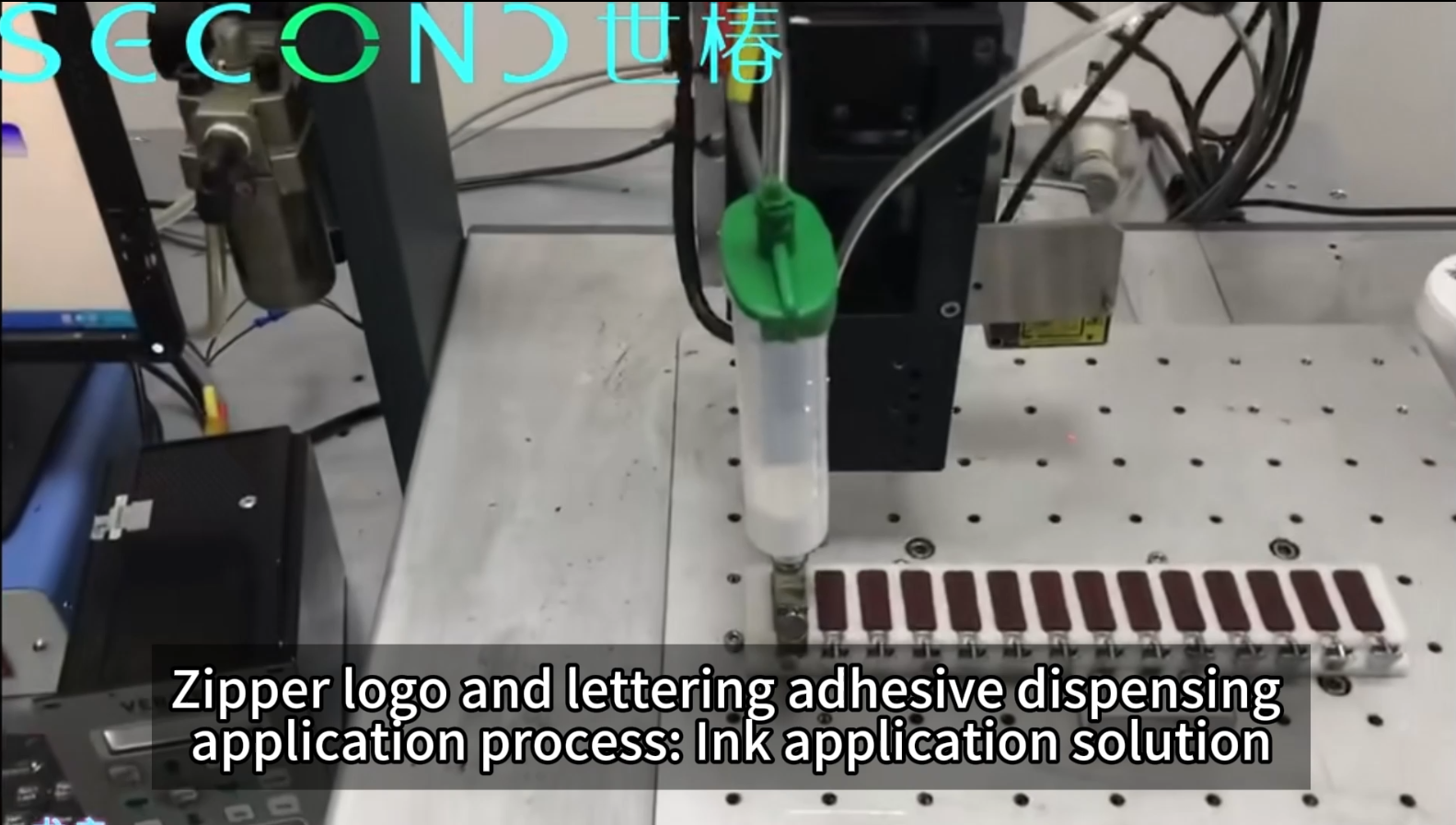
Ensuring the “Lifeline” of Electrical Connections Automotive Connector Sealing and Adhesive Dispensing are the hub of the entire vehicle’s wiring harness. If the seal fails, moisture and contaminants can penetrate, leading to increased contact resistance or even short circuits, causing serious malfunctions. The core of its adhesive application process lies in using high-precision equipment to accurately apply sealant along the housing contour or specific grooves, enhancing the connector’s heat resistance, moisture resistance, dust resistance, and vibration resistance.
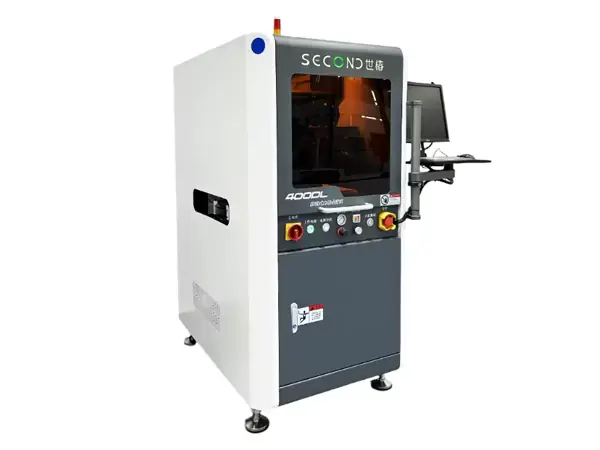
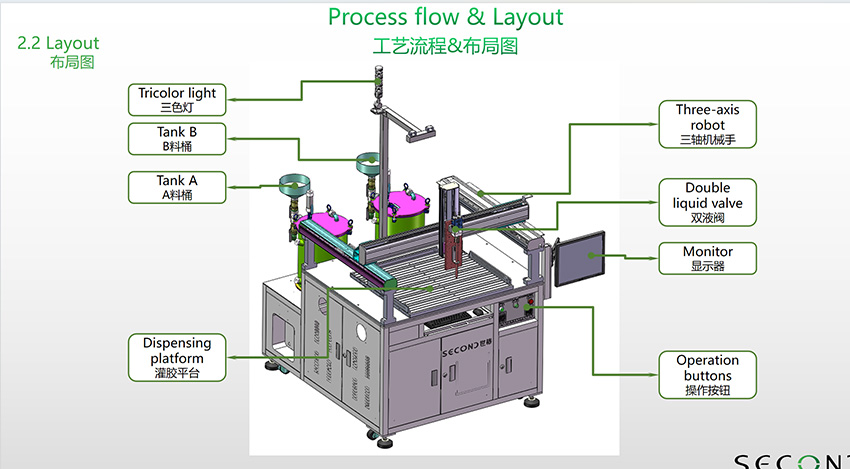
Automatic In-line PCB Glue Dispensing Machine SEC-DH400L
Second Intelligent In-line Automated Glue Dispensing Machine SEC-DH400L adopts an integrated mineral casting design, with ultra-high precision and super stability, powerful expansion capabilities, and can realize ion cleaning, dispensing, detection, UV exposure and other functions;
Adopting a gantry structure, it can bear large loads, stable structure, and a powerful CCD visual positioning system, which can meet the requirements of Mark point positioning, edge positioning, and 3D scanning positioning; strong scalability, and can expand AOI detection 3D detection, UV exposure curing and other functions;
Strong platform compatibility, contact and non-contact dispensing, single-head and multi-head synchronous dispensing, automatic compensation and adjustment of double-head spacing, five-axis dispensing function based on needle A/R displacement, etc.
This process relies on three key elements:
1.Highly Adaptable Adhesive Materials
Given the complex environment in which connectors operate, the adhesive must possess both excellent flowability and curing properties.
● Low-Viscosity Self-Leveling Sealant:Neutral, alcohol-free silicone sealants like RTV SIPC 9030 are commonly used for connector reinforcement in engine control unit wiring harness areas. Their low viscosity allows for smooth flow into narrow grooves only 3mm wide, achieving complete coverage. Furthermore, their neutral curing method does not corrode metals such as copper and tin. They have an operating temperature range of -60°C to 260°C, an outdoor service life of 20-30 years, and effectively resist moisture, vibration, and electrical interference.
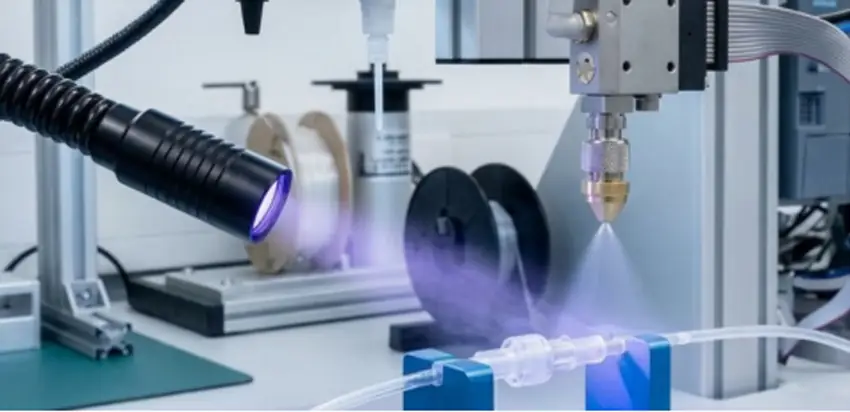
● High-Temperature Dual-Cure UV Adhesive:For connectors made of plastics such as PA, PC, and ABS, high-temperature dual-curing UV adhesive dispensing machine is an ideal choice. It can achieve positioning and fixation within seconds of UV light irradiation, and then cure in shaded areas through heat. This dual protection ensures that it will not soften even at 120°C, guaranteeing production line cycle time and finished product reliability. 2. High-Precision Dispensing Equipment
To ensure consistency in mass production, an online vision-based high-speed dispensing machine is used. This type of equipment integrates a vision system for trajectory correction, enabling high-speed dispensing along complex housing contours, preventing glue line deviation, and meeting the needs of mixed-product production. Its repeatability can reach ±0.01mm.
3.Strict Process Control
The quantity, viscosity, and speed of glue dots must be strictly controlled during the process to avoid defects such as glue leakage and stringing. Simultaneously, the equipment must support the IATF 16949 quality management system requirements, provide process control data, and achieve MES data traceability to reduce the risk of after-sales claims due to poor sealing.

1.Process Implementation for Two Major Applications
Based on the above factors, this process has different focuses in connector sealing and sensor packaging.
● Connector Sealing Process:The core is to provide a waterproof, dustproof, and shockproof protective layer for the connector’s plug, socket, or pin ends. The process flow is typically: workpiece positioning → vision system calibration → precision dispensing (applying along the housing contour or filling specific slots) → adhesive curing (through UV light, heating, or humidity, etc.). The key is that the adhesive must have good fluidity to penetrate into narrow slots as narrow as 3mm to achieve complete coverage.
● Automotive-Grade Sensor Packaging Process: This has higher requirements, aiming to protect the sensor chip from environmental corrosion and physical stress damage. Key processes include:
Chip Bonding and Underfilling: Fixing the chip to the substrate with a small amount of adhesive, or filling the gap between the chip and the substrate to distribute stress.
Cavity Encapsulation: Encapsulating the internal cavity of the sensor to provide mechanical support and environmental protection for the internal precision circuitry. For safety-related sensors, vacuum potting (vacuum degree ≤50 Pa) must be used to eliminate air bubbles and avoid potential failure risks.
Glass-to-chip packaging: For image sensors, etc., a special adhesive is needed to directly bond the glass filter to the chip, forming a fully sealed cavity. This requires the formation of narrow and high adhesive lines, completed through a two-step process of UV light positioning + thermal curing, ensuring that the package does not generate stress under temperature changes.
The precision dispensing process for automotive electronics, through the precise coordination of equipment, materials, and process parameters, ultimately ensures that the electronic systems of every car can reliably operate on complex roads.
Ⅱ.Core Elements of the Solution A complete automotive electronics precision dispensing solution needs to integrate the following key capabilities:
Key capabilities | Requirements and Values |
High-precision dispensing equipment | This online vision-based high-speed dispensing machine integrates a vision system for trajectory correction, enabling high-speed dispensing along complex housing contours.
It prevents glue line deviation and meets the needs of high-volume mixed-line production. |
Advanced colloid materials | Specialized adhesives are available for different applications: high thermal conductivity materials for heat dissipation management, chemically resistant materials for battery pack coolant sealing, and flexible materials for vibration stress resistance. |
Process control and traceability | The equipment must support the IATF 16949 quality management system requirements and provide process control data (such as CMK/CPK) to enable MES data traceability and reduce the risk of after-sales claims due to poor sealing. |
Second Intelligent has played an important role in theresearch, development, manufacturing, pre-sales and after-sales services of fluid dispensing robot, potting and coating solutions which range from various types of automatic fluid dispensing, potting, two-component potting machines and automatic coating machines with desktop, free-standing, inline or cobot combined systems, and widely used in global electrical, electronics, home appliances, automobile, telecom, pharmaceutical, automotive electronics, semiconductor, aerospace, LED and more