I. Industry Background and Strategic Significance
The explosive growth of the new energy industry has not only reshaped the global energy landscape but also imposed unprecedented demands on manufacturing precision and reliability. Dispensing, potting, and coating technologies have become indispensable core processes in the manufacturing of power batteries, energy storage systems, photovoltaic modules, and inverters. These fluid application technologies not only ensure the basic functionality of products but also directly impact battery safety, system thermal dissipation efficiency, and service life.
From an industry trend perspective, as battery energy density increases, thermal management requirements become more stringent, and photovoltaic and energy storage projects scale up, fluid control equipment is evolving from a “supporting process” to a “critical process.” Proper dispensing and potting techniques can significantly reduce defects and failures, making them essential to product safety.
II. Core Process Equipment Function Positioning
Equipment Type | Core Function | Typical Applications | Key Requirements |
Dispensing Machine | Precise quantitative and targeted adhesive application | Cell bonding, FPC reinforcement, CCS integrated busbar dispensing | High precision, clean cut-off, no stringing |
Potting Machine | Large-volume filling for complete coverage | Battery pack potting, inverter whole-unit potting, BMS protection | Vacuum environment, bubble-free, fill rate ≥95% |
Coating Machine | Thin-layer uniform application | PCB conformal coating, selective protective coating | Uniform thickness, no missed coating |
III. Power Battery Sector: Comprehensive Adhesive Application
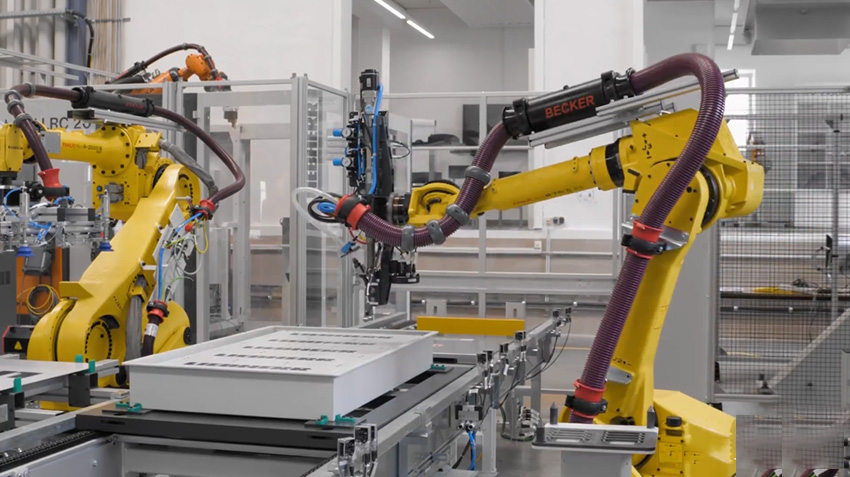
Power batteries represent the largest application scenario for fluid equipment, spanning the entire manufacturing process from cell to battery pack.
3.1 Adhesive System Overview
Adhesives for power batteries are mainly divided into three systems: epoxy resin, silicone rubber, and polyurethane, each with its own advantages and disadvantages:
Adhesive Type | Advantages | Disadvantages | Typical Applications |
Silicone Rubber | Excellent high/low temperature resistance (-50~200°C), outstanding weatherability (20+ years outdoors), repairable | Relatively weaker bonding strength | Sensitive electronic device potting, BMS, sensors |
Epoxy Resin | Good adhesion, strong insulation, low cost | Poor thermal shock resistance, prone to cracking, non-repairable | LED, transformers, industrial electronics |
Polyurethane | Good low-temperature resistance, moderate adhesion | Poor high-temperature resistance, prone to foaming and yellowing | Components with low heat generation |
Selection Recommendations: For applications prioritizing weatherability and repairability, choose silicone; for applications requiring high bonding strength with no need for repair, choose epoxy; for applications prioritizing low-temperature performance and cost sensitivity, choose polyurethane.
3.2 Adhesives for CCS Integrated Busbar Dispensing
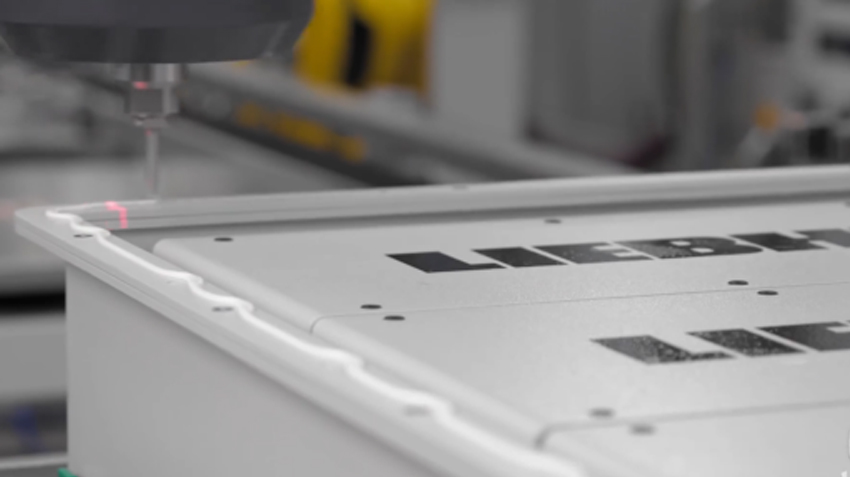
CCS (Cells Contact System) is a critical component of the BMS, consisting of FPC, plastic structural parts, copper/aluminum busbars, etc. The dispensing and encapsulation process primarily uses four types of adhesives:
Adhesive Type | Primary Application | Application Location |
UV Adhesive | Solder joint reinforcement protection | Nickel tab positions on FPC |
Yellow Glue | Component encapsulation, moisture-proof coating | Inductors, coils, electrolytic capacitor fixing |
Thermal Conductive Silicone | Heat transfer medium to improve heat dissipation | Between heat-generating components and heat sinks |
Silicone Sealant | Insulation, flame retardancy, bonding and fixing | Electronic modules, sensor potting |
Process Characteristics: UV adhesive curing requires supporting LED curing ovens; yellow glue and silicone sealant primarily use contact-type quantitative dispensing; thermal conductive silicone
dispensing requires uniform adhesive layer thickness.
3.3 Key Selection Parameters for Thermal Conductive Potting Compounds in Power Batteries
When selecting thermal conductive potting compounds, the following technical parameters require special attention:
Parameter | Description | Industry Reference Value |
Thermal Conductivity | Measures heat transfer capability, unit: W/m·K | Mainstream ≥1.0 W/m·K, premium up to 6 W/m·K+ |
Viscosity | Affects potting flowability and filling effectiveness | Process-adapted; too low causes run-off, too high causes incomplete filling |
Dielectric Constant | Measures insulation energy storage performance | Higher values indicate stronger insulation |
Operating Temperature Range | Silicone is optimal (-50~200°C), epoxy is the poorest | Selected based on operating environment |
Flame Retardancy Rating | Critical safety indicator | V-0 typically required for energy storage applications |
Actual Product Parameter Examples: Jitai S5325 polyurethane potting compound, viscosity 1500±1000 cps, hardness 60±10 (Shore A), flame retardant V-0, suitable for power/energy storage battery module structural potting. Gaomeng New Materials Flexibond series thermal conductive structural adhesives cover a thermal conductivity range of 0.6~2.0 W/m·K with adjustable working time to meet different process window requirements.
IV. Energy Storage Battery Sector: Adhesive Application
Energy storage batteries share highly similar processes with power batteries but have distinct application emphases.
Large-Capacity Cell Encapsulation: Energy storage systems employ 32/40/46/60 series large cylindrical or prismatic cells, requiring two-component potting compounds for module fixing and heat dissipation. Traditional energy storage gel batteries adopt a unique potting process—the complete discharge method to absorb acid into the plates, followed by liquid gel addition, and a special charging method to transform the acid and liquid gel into solid gel state.
BMS Protection: Energy storage BMS circuit board coating and component potting require potting compounds with flame retardancy ratings typically reaching V-0. Silicone potting compounds, capable of providing effective protection outdoors for over 20 years, have become the preferred material for energy storage BMS protection.
Actual Parameter Reference: Youbao New Materials SR 2435 potting compound, specifically designed for EV batteries, features a thermal conductivity of 3.4 W/m·K, V-0 flame retardancy, and low viscosity of only 220/240 mPa·s with good flowability, suitable for thermal potting of high-power energy storage modules.
V. Inverter Sector: Adhesive Application
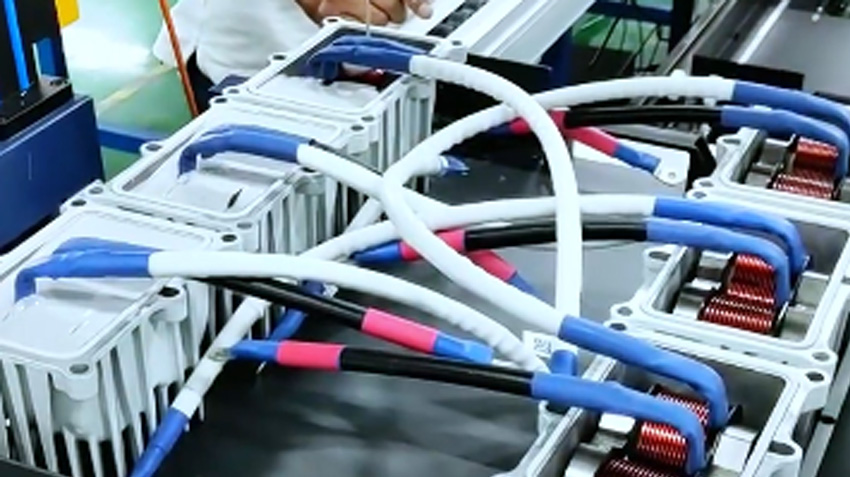
Photovoltaic inverters consist of resistors, capacitors, diodes, power devices (IGBTs, MOSFETs), inductors, transformers, etc. The primary heat-generating components are power devices and magnetic components.
5.1 Primary Adhesive Types
Application Scenario | Adhesive Type | Typical Thermal Conductivity | Annual Usage Reference (100,000 units/year) |
IGBT Thermal Grease Coating | Single-component thermal gel/grease | 2.0~3.8 W/m·K | ~0.8 t |
Magnetic Core/Inductor Potting | Two-component thermal potting compound | 1.5~3.5 W/m·K | ~150 t |
Capacitor/Inductor Bonding & Fixing | RTV single-component bonding adhesive | Non-thermal | ~0.16 t |
PCB Protective Coating | Silicone conformal coating | Non-thermal | Process-dependent |
Thermal Material Selection Reference (using Born materials as examples):
Product Type | Model | Thermal Conductivity | Key Features |
Thermal Grease | BN-GC3096AP | 3.8 W/m·K | Anti-sagging, ultra-low thermal resistance |
Thermal Pad | BN-FS300+PI | 3.0 W/m·K | Ultra-soft, with PI film insulation |
Thermal Potting Compound | BN-RT150 | 1.5 W/m·K | Room-temperature curing silicone |
RTV Bonding Adhesive | BN-RT200H-28 | — | Fast skinning, capacitor fixing |
5.2 Key Process Points for Inverter Adhesives
Thermal Grease Coating: By optimizing and adjusting the grease viscosity, coating uniformity can be significantly improved while maintaining essentially unchanged thermal conductivity and thermal resistance values, solving the performance instability issues in mass production.
Complete Unit Potting: Uses a two-component 1:1 mixed silicone potting compound, with primary components including vinyl silicone oil (base polymer), silica/alumina/aluminum hydroxide (fillers totaling over 50%), platinum catalyst, etc. VOCs content is approximately 20 g/kg. Potting volume control has incorporated load cell closed-loop control technology.
VI. Solar Panel Sector: Adhesive Application
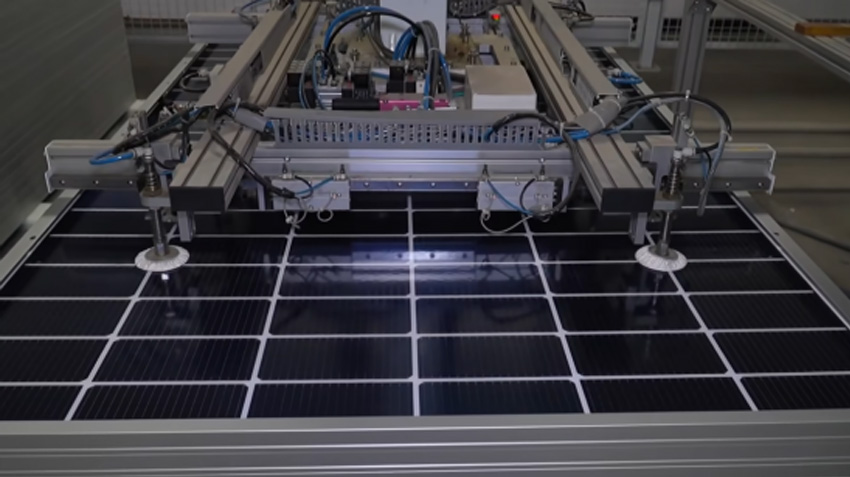
6.1 Encapsulation Process Adhesives
The core encapsulation process for solar cell modules employs EVA encapsulant film for thermal sealing. The typical lamination process is: stacking → vacuum evacuation (approx. 5 min) → heating (to 110~120°C) → pressure curing → cooling. The weatherability of the EVA encapsulant film directly affects the module’s service life.
Key Requirements: Sealants for solar panels should have a glass transition temperature (Tg) close to or below the module’s minimum operating temperature. In cold northern environments, Tg below -40°C is recommended. Meanwhile, under high-temperature conditions, the sealant should maintain no significant creep to ensure the structural integrity of the laminated module.
6.2 Component Assembly Adhesives
Application Scenario | Adhesive Type | Process Method | Key Requirements |
Junction Box Potting | Silicone/Epoxy potting compound | Potting | Encase diodes, insulation and waterproofing, UV yellowing resistance |
Frame Sealing | Silicone sealant | Coating | Weather-resistant sealing, 20-year service life |
Junction Box Bonding | Structural adhesive | Dispensing | Bonding to backsheet, insulation and waterproofing |
Product Reference: Osbond 192 series addition-cure silicone potting compound, cures into a high-performance elastomer at room temperature or with heating. The curing process releases no small-molecule byproducts. After curing, it exhibits excellent high/low-temperature resistance, low shrinkage, and flame retardancy up to UL94 V-0, suitable for photovoltaic junction boxes and power module potting.
VII. Adhesive Selection Comparison Overview
7.1 Comprehensive Comparison of Three Systems
Comparison Dimension | Silicone Rubber | Epoxy Resin | Polyurethane |
Cost | Highest | Medium | Lowest |
Processability | Medium | Best | Poorest (requires vacuum drying) |
Electrical Performance | Excellent | Excellent | Good |
Heat Resistance | Best (-50~200°C) | Good (≤100°C) | Poor |
Cold Resistance | Best | Poor | Good |
Thermal Shock Resistance | Best | Poor | Medium |
Repairability | Repairable | Non-repairable | Non-repairable |
VIII. Key Material and Process Trends
8.1 Equipment Technology Trends
Multi-Nozzle Parallel Dispensing: A single machine with 4 nozzles operating simultaneously doubles production capacity while reducing floor space by 30%.
In-line Vacuum Potting: For bubble-sensitive applications such as PACK, micro-inverters, BMS, and IGBTs, vacuum potting has become standard. Addition-cure silicone rubber can be used long-term at -65~200°C with low shrinkage, but care must be taken to avoid contact with N, P, and organometallic salts that may affect vulcanization.
Fully Automatic Turnkey Solutions: Connector dispensing → UV curing → NTC/Nickel tab dispensing → Thermal curing oven, forming a complete automated production line.
Material Supply System Upgrades: White body coating uses single-component adhesives; the 180 integrated plunger metering machine is compatible with various single-component adhesives, achieving dispensing accuracy up to ±1%.
8.2 Material Technology Trends
High Thermal Conductivity: As power density increases, the thermal conductivity requirements for thermal adhesives continue to rise. Currently, mainstream thermal conductive silicones all have thermal conductivity greater than 1 W/m·K, with premium products reaching 6 W/m·K or higher.
Full-Temperature-Range Performance: Power battery structural adhesives are required to maintain shear strength ≥4 MPa at both -25°C and 60°C, ensuring performance stability across the full temperature range.
Lightweighting: Demand for lightweight potting compounds in energy storage and power batteries is growing, with low-density (≤1.0) structural adhesives becoming more prevalent.
Enhanced Flame Retardancy: Flame retardancy requirements for energy storage applications are becoming increasingly stringent, with V-0 rating becoming standard.
How Second Intelligent Captures Opportunities in the New Energy Industry
Second Intelligent’s core strategy in seizing new energy industry opportunities is leveraging its deep expertise in fluid technology to precisely target core sectors such as power batteries, photovoltaic energy storage, and power electronics, while scaling up through endorsements from leading industry clients. The details are as follows:Targeting Core Sectors with Critical Process
Solutions
Second Intelligent provides highly tailored fluid application equipment that addresses the specific pain points across different new energy segments:
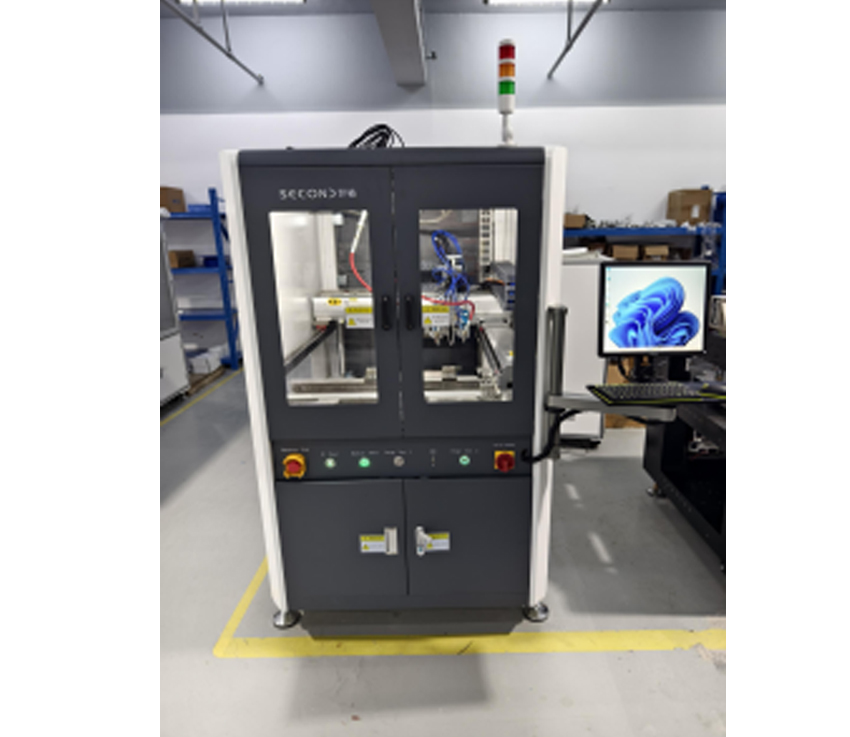
Power Batteries: For the critical process of cell coating, Second Intelligent supplies coating machines capable of 24/7 continuous production for top-tier power battery manufacturers. The performance and stability of these machines are on par with international leading standards. The equipment incorporates advanced material feeding, metering, and mixing systems to effectively handle the wear and tear caused by highly filled adhesives, ensuring precise dispensing volume and consistent bead geometry.
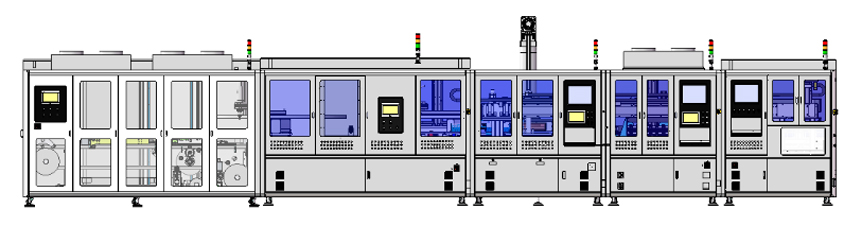
Energy Storage and Photovoltaic Inverters: Second Intelligent has identified the demand for potting IGBT modules in sectors like photovoltaics/wind power and energy storage. It has launched its Three-Station Vacuum Potting Line for IGBTs, which has already been delivered to over 10 leading domestic semiconductor and power electronics companies. This production line features three independent vacuum chambers, and by potting in a fully negative-pressure environment, it effectively eliminates bubbles, achieving a throughput of up to 100 units per hour and resolving the challenging process requirements for high-insulation and high-reliability potting.
Energy Storage Battery Assembly: Second Intelligent has also introduced its CCS System Dispensing and Curing Line for energy storage battery module assembly. This solution has been showcased at major energy storage equipment exhibitions, demonstrating its system integration capabilities in this growing field.
Deep Engagement with Tier-1 Clients: Building Benchmarks and Trust
Second Intelligent understands the demonstrative effect of serving industry leaders and uses these partnerships to validate and enhance its technology:
Power Battery Sector: By supplying over 20 coating machines across three production lines for a major new energy enterprise, Second Intelligent has helped them significantly improve production efficiency and product stability. This partnership signifies that its technical capabilities have earned the recognition of top-tier industry players, providing strong momentum for further market expansion.
Power Electronics Sector: The delivery and subsequent repeat orders of its IGBT three-station vacuum potting line for a leading integrated circuit manufacturer prove its reliability in high-end semiconductor packaging equipment. Additionally, Second Intelligent has provided complete solutions including IGBT coating, framing, and curing for leading new energy vehicle manufacturers, increasing the production line cycle time from 45 seconds to 30 seconds per unit.
Technology Platform and Forward-Looking Strategy
Second Intelligent’s core technologies are highly transferable, enabling rapid responses to the diverse demands of different new energy sub-sectors:
Reusable Platform Technologies: Its core competencies in precision fluid control, vision-based AI inspection, and whole-line MES information management can be quickly reapplied across various applications, including power battery cell coating, IGBT vacuum potting, and energy storage system assembly, creating synergies across different sectors.
Agile Service Response: Backed by a strong delivery team, Second Intelligent can compress a typical one-month on-site commissioning time down to just 10 days for its clients. This client-centric, rapid-response approach has become a key factor in winning orders and building a solid reputation.
In essence, Second Intelligent maintains a sharp focus on “fluid applications” rather than spreading its efforts too thinly. It precisely selects its entry points within the new energy landscape (power batteries, energy storage/photovoltaic inverters), builds its reputation by serving top-tier clients, and leverages its platform-based technology to rapidly replicate successful implementations. This focused and methodical approach has firmly positioned the company as a key player in the new energy manufacturing upgrade.