In industries such as consumer electronics, automotive manufacturing, and medical devices, product logos are not only symbols of brand identity but also a direct reflection of manufacturing precision. A clear, well-defined, and flawless logo often determines consumers’ first impression of a product’s quality. However, faced with increasingly complex 3D curved substrates, stringent environmental regulations, and multiple pressures to improve production efficiency, traditional logo ink-filling processes are encountering unprecedented yield bottlenecks. Ink bubbles, uneven filling, stringing and trailing, material waste… Are these persistent problems causing headaches on your production line? This article will delve deeply into the root causes of these pain points and reveal a core technology capable of delivering a “perfect breakthrough”—the piezoelectric valve high-frequency dispensing and jetting system. Discover how it redefines the standards of logo manufacturing processes through disruptive precision control.
I. Addressing the Pain Points: Why Do Traditional Logo Ink Filling Methods Frequently Fail?
Logo ink filling, seemingly simple, is actually a microscopic battle involving fluid mechanics, materials science, and precision control. When you find that the defect rate on the production line remains high, the root cause often points to the following dimensions:
1. Voids & Pinholes: Traditional screen printing or screw valve dispensing, during high-speed operation, easily entrains air into the high-viscosity ink. These microbubbles, after curing, form pinholes that are visible to the naked eye or only detectable under a microscope, directly compromising the visual integrity and protective performance of the logo.
2. Uneven Filling and Jagged Edges: For logo designs with micro or ultra-fine linewidths, traditional contact dispensing cannot guarantee an absolutely consistent fluid volume. Fluctuations in flow rate can cause ink to accumulate at corners (creating a “bull’s-eye” effect) or narrow in straight sections, resulting in jagged edges, severely lowering the product’s quality.
3.Stringing and Trailing Contamination: At the moment the dispensing needle lifts, the viscoelastic ink often “breaks and connects,” forming fine strings. If these strings break and fall into unfilled areas, they will cause irreparable damage to the appearance.
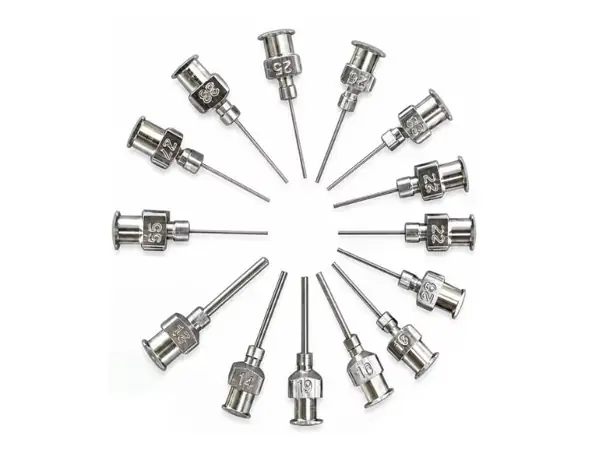
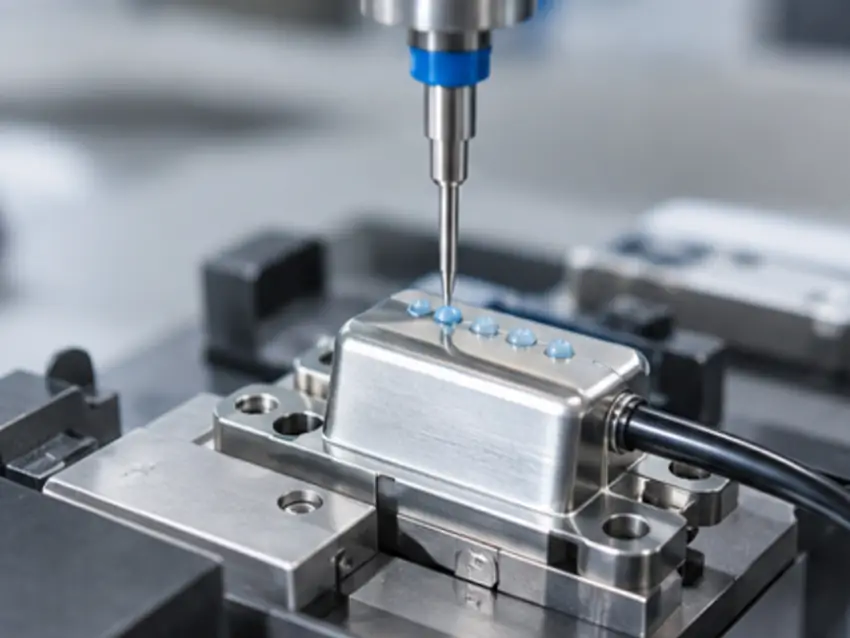
Stainless Steel Dispensing Needle
4.Staggering Material Waste: Traditional inkjet printing methods require frequent cleaning of the screen and nozzles. Large amounts of expensive UV ink are wasted during line changes or cleaning, significantly increasing the cost per unit.
These pain points are not isolated; they are intertwined and together cause the overall production yield to hover in the “danger zone” of 85%-90% for a long time, forcing companies to invest a lot of manpower in manual review and rework, thus falling into a quagmire of both efficiency and quality.
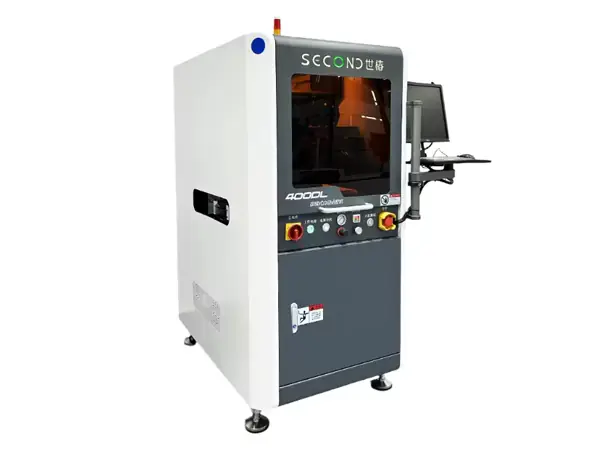
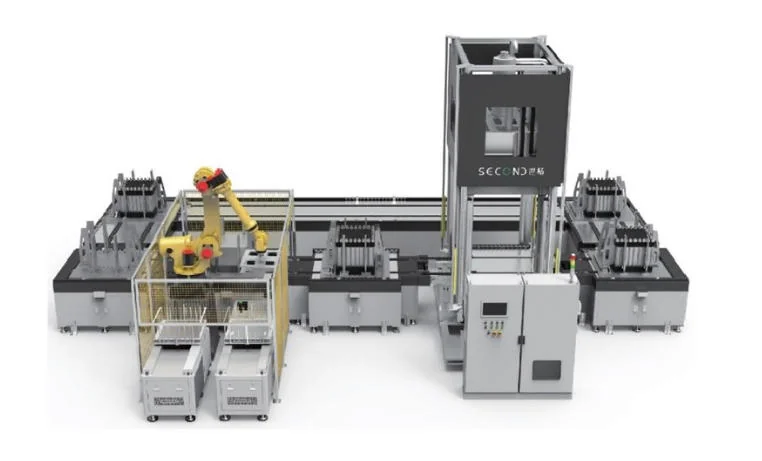
Automatic In-line PCB Glue Dispensing Machine SEC-DH400L
Second Intelligent In-line Automated Glue Dispensing Machine SEC-DH400L adopts an integrated mineral casting design, with ultra-high precision and super stability, powerful expansion capabilities, and can realize ion cleaning, dispensing, detection, UV exposure and other functions;
Adopting a gantry structure, it can bear large loads, stable structure, and a powerful CCD visual positioning system, which can meet the requirements of Mark point positioning, edge positioning, and 3D scanning positioning; strong scalability, and can expand AOI detection 3D detection, UV exposure curing and other functions;
Strong platform compatibility, contact and non-contact dispensing, single-head and multi-head synchronous dispensing, automatic compensation and adjustment of double-head spacing, five-axis dispensing function based on needle A/R displacement, etc.
Ⅱ.Its core breakthrough logic lies in:
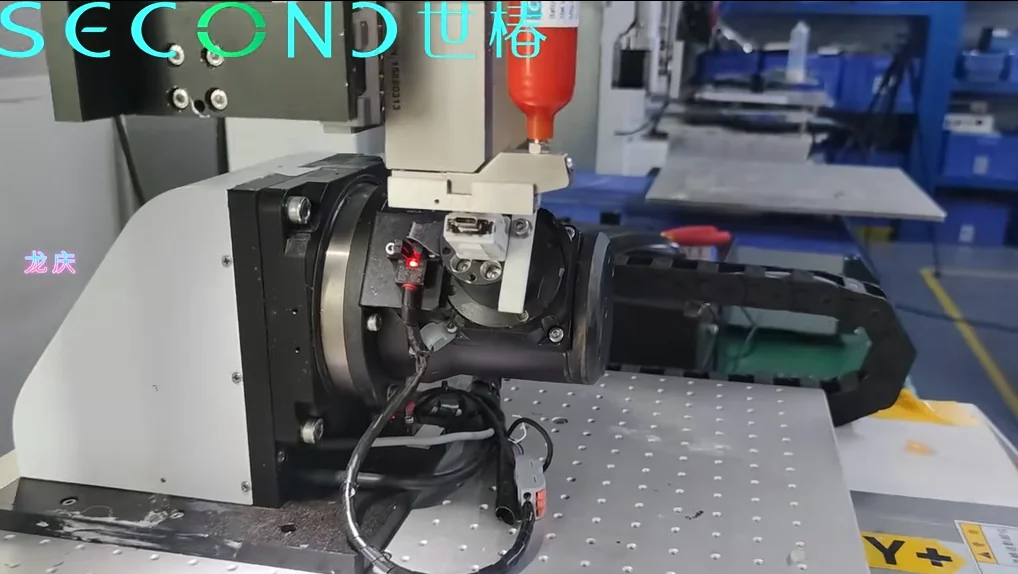
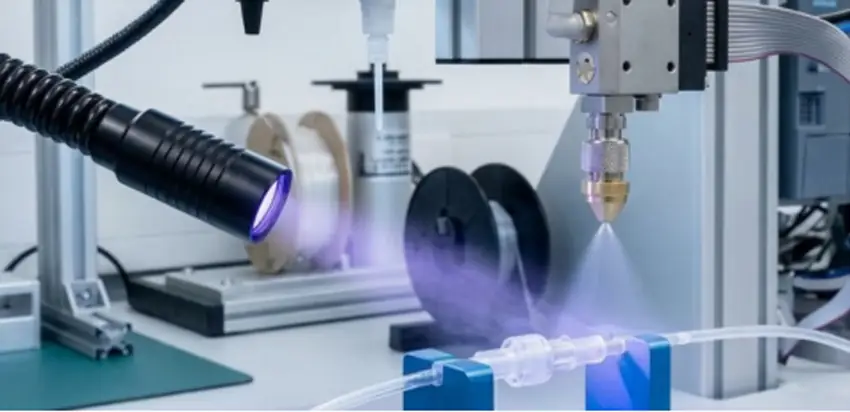
● Non-contact jetting, completely avoiding Z-axis interference: The jetting valve does not need to contact the substrate surface. Piezoelectric ceramics drive the ejector pin to vibrate at high speed within microseconds, “shooting” ink as droplets towards the target point. This mechanism fundamentally eliminates filling thickness deviations caused by inconsistent needle height or substrate warping, while completely eliminating the physical root cause of stringing and trailing.
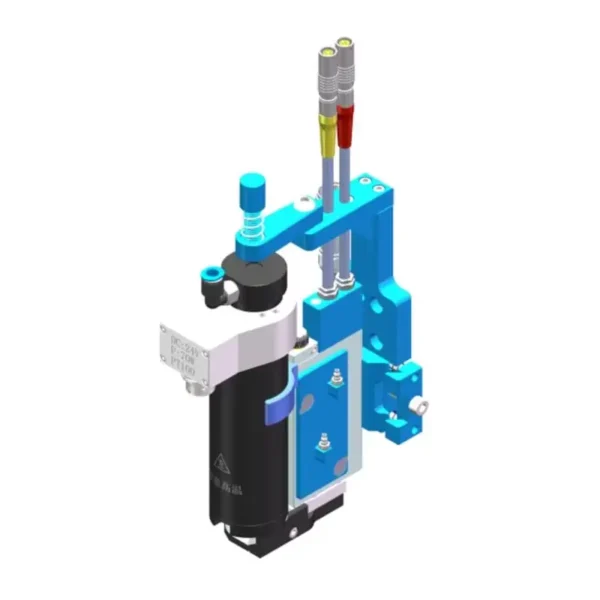
Piezoelectric Jet Valve
● High-frequency vibration, achieving micron-level precise volume control: The Piezoelectric Jet Valve can operate at frequencies of 500Hz or even above 1000Hz, meaning that hundreds of tiny, uniform ink droplets can be precisely ejected per second. By precisely controlling the width and amplitude of each jetting pulse through digital signals, it is possible to construct a three-dimensional, full logo graphic with consistent line width with extremely high repeatability (Cpk > 1.67).
● Instantaneous impact force, powerfully breaking down bubble barriers:The instantaneous high shear force and acceleration generated by the jetting action cause the ink to withstand extremely strong pressure changes in the nozzle cavity, which can effectively compress and break the mixed microbubbles, thereby ensuring that the jetted droplets are dense and free of voids, guaranteeing the solid density and optical consistency of the cured product from the source.
III. Empirical Application: The “Leap in Yield” and “Efficiency Revolution” Behind the Data
Theoretical advantages must ultimately be reflected in production line reports. In a case study of logo filling on the mid-frame of a leading international mobile phone brand, replacing the traditional dual-liquid screw valve with a piezoelectric valve injection system achieved the following quantifiable breakthrough improvements:
● Leap in Yield:The first-pass yield of logo ink filling increased from 87.3% to 99.2%, and the types of defects were significantly narrowed from complex comprehensive defects to occasional defects caused only by incoming material cleanliness, greatly simplifying the complexity of quality attribution.
● Material Savings: Thanks to non-contact injection and extremely small nozzle diameter (typically 0.1-0.3mm), ink utilization increased to over 95%. Compared to traditional processes, ink consumption per unit was reduced by approximately 30%, allowing for a recovery of equipment investment costs within six months.
● Doubling of Production Capacity: High-frequency injection allows the equipment to operate in continuous dynamic mode, eliminating the need to wait for needle lifting and positioning. With the aid of a vision positioning system, it can rapidly fill over 300 precise logos per minute, more than doubling the production capacity compared to traditional processes.
● Expanded Adaptability: This technology has an extremely wide processing window (1-200,000 cps) for ink viscosity. Whether it’s highly thixotropic conductive silver paste ink or low-viscosity UV transparent varnish, perfect spraying can be achieved by adjusting waveform parameters, providing a unified process platform for diverse substrates such as 3D curved glass, ceramics, and composite panels.
Ⅳ.Implementation Guidelines: Three Core Dimensions to Consider When Introducing a Piezoelectric Valve System
If you decide to introduce this technology, we recommend focusing on evaluating the following three dimensions to maximize its impact:
1.Equipment Synergy:The piezoelectric valve must be deeply integrated with a high-precision motion platform (linear motor + grating ruler) and an intelligent vision alignment system. The precision of the jetting requires micron-level motion control to ensure accurate path execution, while the vision system is used to compensate for substrate expansion and contraction and positional deviations in real time.
2.Waveform Adjustment Capability:This is the core know-how of this technology. A good equipment supplier should provide a professional waveform editing software library to quickly customize the optimal jetting drive waveform based on the specific characteristics of the ink you are using (viscosity, surface tension, solids content) to achieve the ideal state of “hit-and-run, no splashing or scattering.”
3.Ease of Maintenance:Although piezoelectric jet valves have a long lifespan, nozzles, as consumable parts, still require periodic replacement. Choosing a system with a quick-release fluid cartridge design can significantly reduce maintenance downtime and avoid prolonged production line shutdowns due to cleaning and replacement.
In conclusion:
when the yield rate of logo ink filling becomes a bottleneck restricting your brand value and delivery capabilities, relying on traditional “patching and repairing” process optimization is no longer sustainable. The piezoelectric valve high-frequency dispensing technology offers more than just a simple increase in yield; it represents an upgrade in manufacturing philosophy—replacing experience-based contact transfer with data-driven precision dispensing, and eliminating reactive remediation through proactive control. It is rapidly becoming the standard solution for logo surface treatment processes in high-end manufacturing. If you also aspire to gain a competitive edge in the race for quality and efficiency, perhaps it’s time to re-evaluate your dispensing process.
Second Intelligent has played an important role in theresearch, development, manufacturing, pre-sales and after-sales services of fluid dispensing robot, potting and coating solutions which range from various types of automatic fluid dispensing, potting, two-component potting machines and coating machines with desktop, free-standing, inline or cobot combined systems, and widely used in global electrical, electronics, home appliances, automobile, telecom, pharmaceutical, automotive electronics, semiconductor, aerospace, LED and more.