As a core interface for modern electronic devices, the waterproof sealing process of Type-C connectors directly determines the reliability and lifespan of the product. Faced with miniaturized terminals, high-density pins, and stringent waterproof requirements, traditional dispensing equipment can no longer meet the demands for ±0.005mm positioning accuracy and consistent adhesive application. Rotary dispensing machines, with their 360° omnidirectional dispensing capability and precise adaptation to high-power sealants, are becoming key equipment for upgrading Type-C sealing processes.
Ⅰ.The Core Challenges of Type-C Dispensing: Why is Sealing Process So Critical?
Type-C interfaces face multiple challenges in daily use, including water ingress, liquid immersion, dust intrusion, and frequent plugging and unplugging. Without compatible charging devices, the risk of circuit aging and corrosion increases significantly. Therefore, precision dispensing and sealing of Type-C connectors has become a standard process in consumer electronics, automotive electronics, and industrial control.
However, this process is far more challenging than ordinary dispensing applications. The dispensing target diameter for Type-C connectors is often only 0.15mm, and the terminal spacing can be as small as 0.3mm. The ±0.05mm positioning accuracy of traditional dispensing machines easily leads to adhesive overflow or deviation from the target, causing pin short circuits and resulting in a defect rate typically between 3% and 5%. Simultaneously, the amount of sealing adhesive must be controlled within an extremely narrow range of 0.005 to 0.01ml/dot. Too thick an adhesive layer affects assembly, while too thin a layer leads to seal failure. This places almost stringent requirements on the equipment’s adhesive control capabilities.
Even more challenging is the extreme sensitivity of the Type-C connector’s plastic shell and metal pins to adhesive contamination. The dripping and adhesive residue issues of traditional dispensing nozzles can lead to a 2.8% product appearance defect rate and increase rework costs by 15% to 20%. These combined pain points constitute the significant technical hurdles that the Type-C sealing process must overcome.
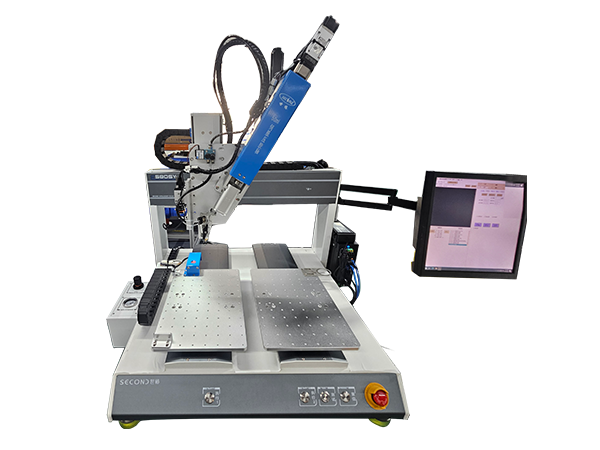
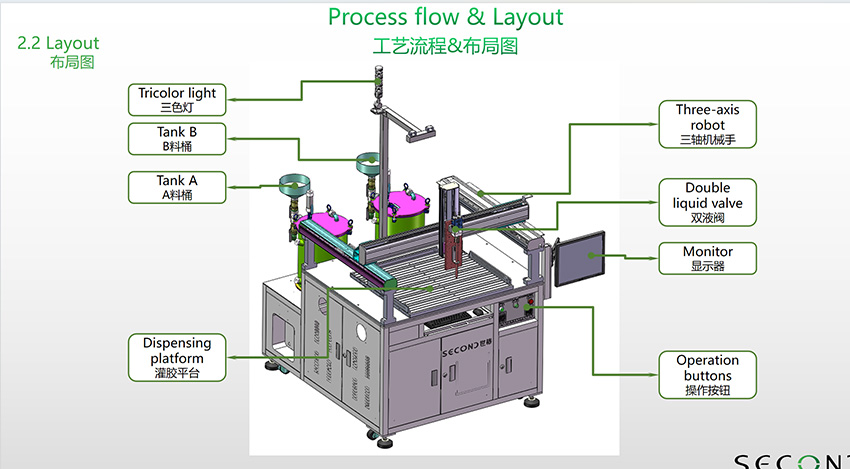
Inline 4 Axis Double Y Desktop Dispensing Machine SEC-E580SV-Y
Second Intelligent In-line Equipped with high-precision servo motors and precision ground ball screws, the visual dispensing platform offers more advanced and powerful functions. It can be integrated with vision positioning, automatic correction, dispensing inspection, laser height measurement and compensation, product information scanning, MES system connectivity, and other functions to meet the requirements of various industries and application scenarios.Standard Configuration:3-axis / 4-axis basic platform
Vision system Multi-functional dispensing control system based on industrial PC Increased travel range by 20–25% without changing the machine footprint, providing stronger compatibility
Ⅱ. High-power sealant: the material basis of Type-C waterproof sealing
Type-C sealant is not an ordinary glue, but a functional material that needs to meet a series of stringent performance indicators. From the perspective of process requirements, Type-C special sealants usually need to have several key characteristics: excellent elasticity after curing, able to withstand rebound recovery after long-term extrusion; high temperature resistance enough to maintain color and elasticity through two reflow solderings (the maximum temperature is about 265°C); reliable bonding strength to shell materials such as 304 stainless steel; no collapse after dispensing, and the ability to be formed and stacked without flowing.
The current mainstream solutions in the industry include UV curing silicone, UV moisture dual-curing adhesive, and one-component epoxy sealant. Taking UV curable silicone as an example, it can be completely cured in 30±5 seconds under LED lighting conditions of 100mW/cm², with a curing depth of up to 1mm, a lap shear strength of up to 8.2MPa, a volume resistivity greater than 1.2×10¹⁴Ω·cm, and the ability to operate in the range of -55°C to 260°C for a long time. The UV moisture dual-curing adhesive combines the advantages of rapid UV setting and moisture secondary curing. The viscosity can reach 12,000 Pa·s, and is suitable for scenarios that require a waterproof level of IPX8.
The common characteristics of these high-power sealants are high viscosity, good thixotropy, and sensitivity to shear. This means that the dispensing equipment must have precise volumetric delivery capabilities and stable processing capabilities for high-viscosity glue – this is the technical advantage of the rotary dispensing machine.
3.Rotary dispensing machine solution: technical principles and core advantages
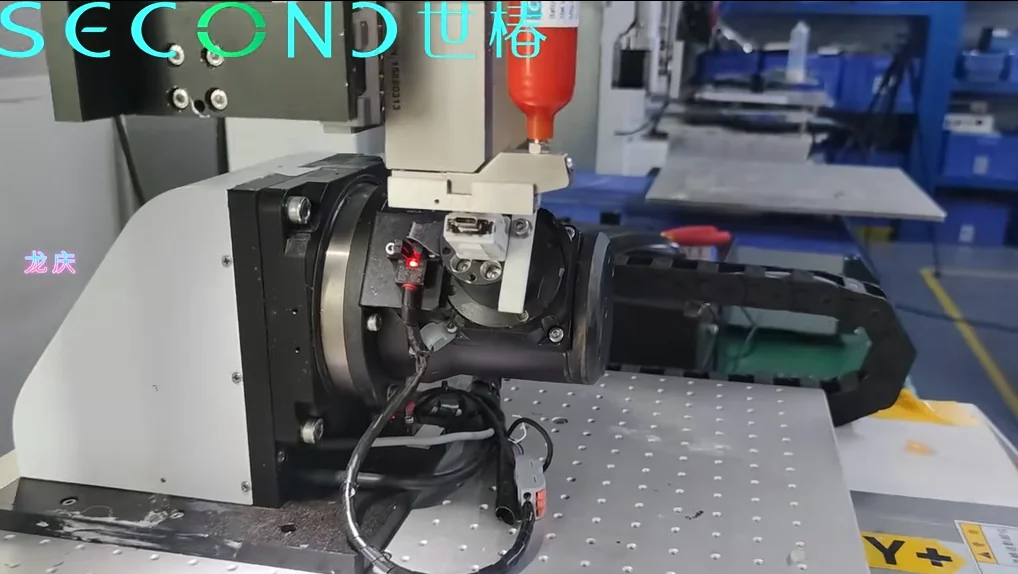
The rotary dispensing machine is specially designed for precision dispensing of annular, cylindrical and curved workpieces. It integrates a multi-axis linkage control system and a 360° rotating worktable to achieve full circumferential dispensing coverage without dead corners. Compared with traditional three-axis dispensing machines, its core advantages in Type-C sealing applications are reflected in three levels.
First, full-angle coverage capability. The sealant paths of Type-C connectors are often distributed annularly around the shell, involving curved surface transitions and corner connections. The rotary dispensing machine is equipped with a high-precision rotating axis, which supports two modes: continuous 360° rotation and fixed-angle indexed rotation. The rotation movement and the dispensing trajectory are synchronized in real time, ensuring that the glue line width is even and the glue amount is stable even on curved surfaces and corner areas. This capability completely solves the pain points of traditional equipment being unable to effectively cover sides and seams.
Second, precise delivery of high-viscosity glue. The rotary volumetric dispensing machine is suitable for liquids with high viscosity and fillers, and the dispensing accuracy can be controlled within ±1%. The rotary volume dispensing solution represented by the vipro-PUMP series maintains a constant flow rate through high-precision volume control, forming a uniform glue layer even on the surface of complex-shaped workpieces, while effectively suppressing stringing and dripping phenomena. This means more stable glue line formation and fewer edge defects for the highly thixotropic sealants commonly used in Type-C seals.
Third, collaborative accuracy with the visual system. In high-end Type-C dispensing solutions, rotary dispensing machines are often used in conjunction with 3D vision guidance systems. The 20-megapixel 3D laser vision system can obtain the three-dimensional topography data of the connector with a positioning accuracy of ±0.005mm. Combined with the AI attitude recognition algorithm, it can automatically compensate for workpiece warpage and vehicle positioning errors. This makes the rotary dispensing machine not only “turn accurately” but also “see clearly”, ensuring the consistency of the dispensing position from the source.
Ⅳ.The Core of Type-C Interface Sealing Dispensing Process? The core of the Type-C interface sealing dispensing process is the use of a rotary dispensing machine combined with R-axis (rotation axis) linkage control to drive the dispensing needle or workpiece to rotate in three-dimensional space, thereby continuously and uniformly applying and filling the sealant along the annular, sidewall, or groove trajectory of the Type-C housing.
Core Process: Rotary Linkage and Positioning Traditional three-axis dispensing machines can only dispense adhesive vertically, unable to handle the sidewalls and annular grooves of Type-C. The rotary dispensing solution adds an R-axis, allowing the needle or workpiece to adjust its angle in real time, achieving multi-angle adhesive application. In actual operation, the equipment uses a vision module to acquire images of the product’s front and side views, accurately locating the dispensing start position and planning the three-dimensional path.
Application Method: Groove Filling and Sealing Ring Formation Type-C sealant is typically formed in the following ways:
● Groove Dispensing: Liquid adhesive is injected into a pre-set annular glue groove in the housing. The groove restricts the shape of the adhesive, forming a waterproof sealing ring after curing. For housing structures with annular protrusions and no front support platform, existing processes can utilize mold assistance—the housing is inverted and placed into a mold, liquid silicone is injected into the mold cavity, and after curing, a waterproof ring is directly formed on the housing.
● Direct Forming of Sealing Strips: Some solutions directly apply UV semi-cured adhesive to the surface of the female connector. The needle moves uniformly along the closed adhesive groove until the adhesive overflows and forms due to surface tension, then UV curing forms the sealing strip, eliminating mold costs.
Ⅴ.Typical Process Flow A complete Type-C sealing dispensing process typically includes the following key steps:
1.Pretreatment: The connector is preheated (surface temperature greater than 25℃), and surface impurities are removed with organic solvents to enhance adhesive adhesion.
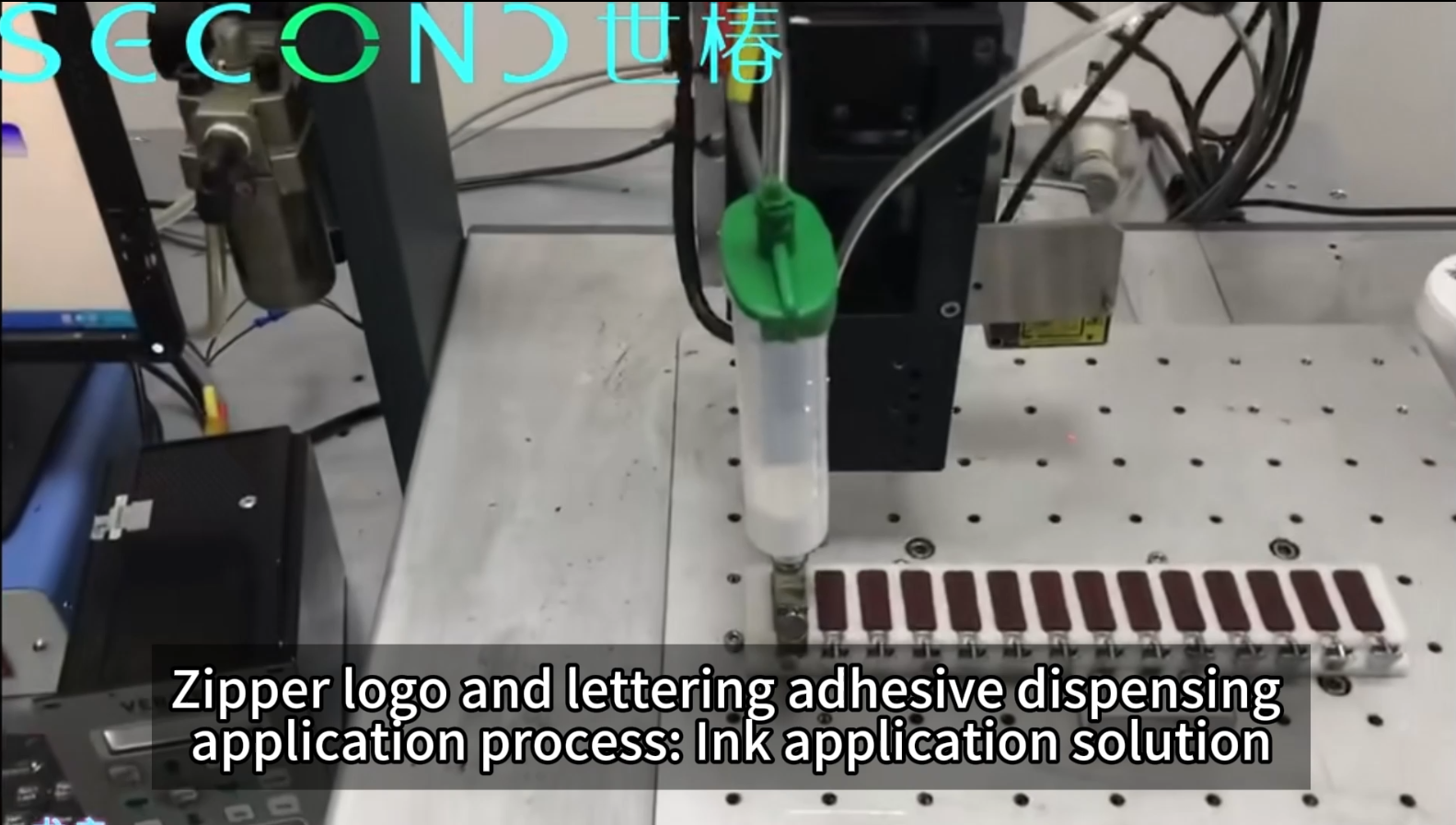
2.Rotary Dispensing: A rotating platform drives the workpiece or needle to precisely apply adhesive along the housing contour.
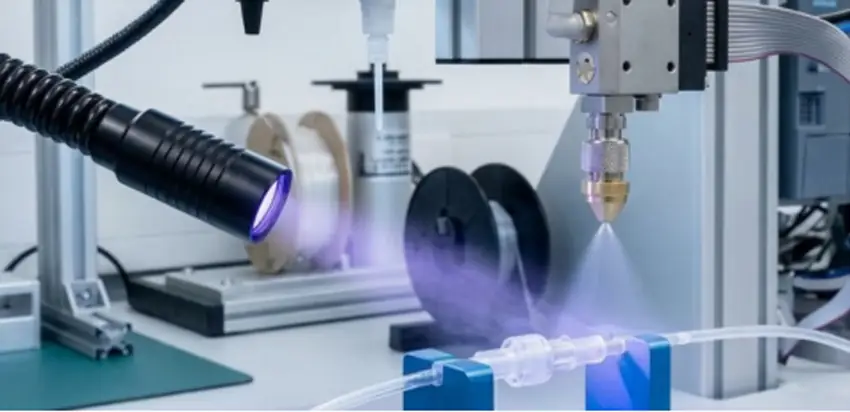
3.Curing:Depending on the adhesive type (e.g., UV-cured silicone, single-component heat-curing silicone, etc.), UV LED irradiation (typically 30±5s) or heating is used to set the adhesive.
4.Inspection: Examine the airtightness and appearance (for bubbles, flaking, and cracks) under a microscope, and conduct a waterproof test according to the IPxx standard.
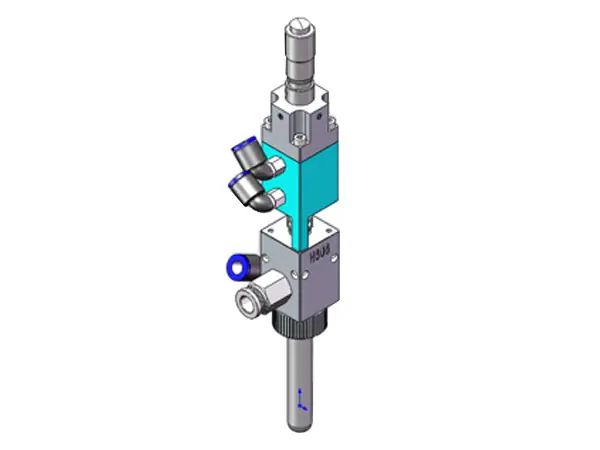
Pneumatic Dispensing Spray Valve H-808
Ⅵ.Selection and Implementation Recommendations
For companies planning to introduce a rotary dispensing solution, the following points can serve as a decision-making reference:
Accuracy indicators must be based on actual measurements. The supplier’s stated “±1% glue volume accuracy” and “±0.005mm positioning accuracy” should be verified under actual glue and workpiece conditions. It is recommended to conduct small-batch trial production during the selection phase, focusing on the consistency of glue line width, edge stringing, and glue volume variation coefficient.
The glue valve configuration should be tied to the glue system. If the production line needs to be compatible with multiple sealing materials such as UV glue, epoxy glue, and silicone, choosing a rotary platform with quick valve body replacement or support for multiple valve switching is more practical. Pneumatic jet valves are suitable for high-speed, non-contact operations with low-viscosity UV glues, while positive displacement screw valves or rotary pumps perform better with high-viscosity filler sealants.
Evaluate the total cost of ownership rather than the unit price of the equipment. The initial investment in a rotary dispensing machine is usually higher than that of a conventional three-axis platform, but its advantages in glue volume utilization, rework rate, and changeover efficiency will significantly impact long-term operating costs. Taking adhesive waste as an example, non-contact spraying technology can reduce adhesive residue to below 0.03%, resulting in significant material savings for high-priced specialty sealants.
The supplier’s process support capabilities are crucial. Application parameters for Type-C sealants often require collaborative adjustments with both adhesive and equipment manufacturers. Choosing an equipment supplier with experience in cross-brand adhesive compatibility and the ability to provide process parameter optimization support will significantly shorten the ramp-up period from equipment delivery to stable mass production.
Second Intelligent has played an important role in theresearch, development, manufacturing, pre-sales and after-sales services of fluid dispensing robot, potting and coating solutions which range from various types of automatic fluid dispensing, potting, two-component potting machines and coating machines with desktop, free-standing, inline or cobot combined systems, and widely used in global electrical, electronics, home appliances, automobile, telecom, pharmaceutical, automotive electronics, semiconductor, aerospace, LED and more