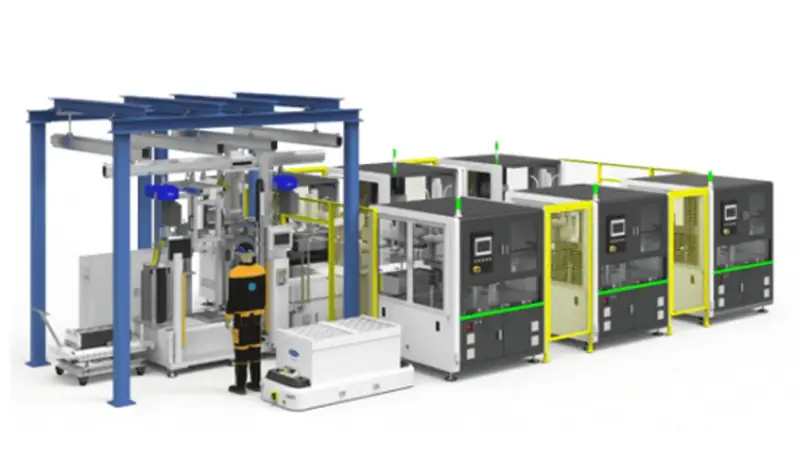
In the era of high-volume manufacturing of power and energy-storage batteries, adhesive dispensing machine for PACK enclosures has evolved from an auxiliary step into a core manufacturing process — sealing protection, thermal management, structural strength, and electrical safety all depend on this layer of adhesive. This article addresses the key questions: why dispense, where to dispense, which adhesive to use, which equipment to configure, and how to drive yield above 99.5%.
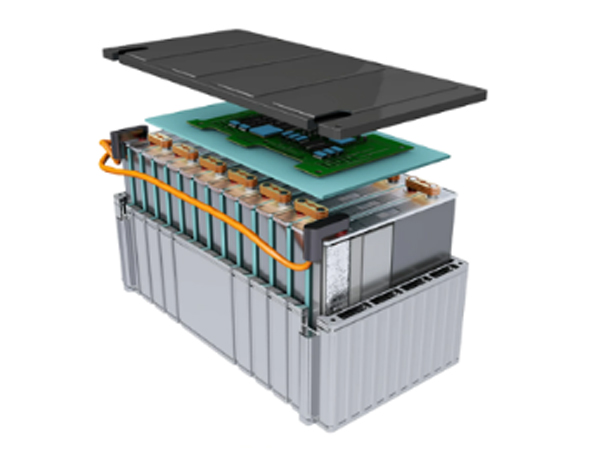
I. Why Is PACK Enclosure Adhesive Dispensing So Critical?
The Lithium-Ion battery PACK is the core safety assembly of a new-energy vehicle. The enclosure delivers five critical functions — structural support, dust/water ingress protection, heat dissipation and conduction, electrical insulation, and vibration buffering. Each of these functions relies heavily on a standardized adhesive-dispensing process.
When the dispensing process fails, the consequences are immediate and visible: moisture ingress causing cell corrosion and short circuits, localized heat accumulation triggering thermal runaway, structural loosening and abnormal noise, and high-voltage breakdown or leakage. In short, adhesive dispensing is the prerequisite for the battery pack to pass core certifications including IP protection, thermal-runaway resistance, vibration durability, and insulation withstand voltage.
II. Four Core Adhesive-Dispensing Scenarios
Application Scenario | Dispensing Location | Mainstream Adhesive Type | Key Specifications |
Enclosure Sealing (FIPG / CIPG) | Flange mating surfaces, connector openings | Silicone adhesive, polyurethane adhesive | IP67 or higher, wide-temperature cycling from −40 °C to 85 °C |
Thermal Interface (TIM) | Interface between cells and cold plate / bottom guard plate | Two-component thermally conductive structural adhesive | Thermal conductivity 1.0–3.0 W/(m·K) |
Structural Bonding | Module frame, end plates, reinforcement parts | Epoxy or polyurethane structural adhesive | High shear strength, fatigue resistance |
Insulation & Flame Retardancy | Pole posts, busbars, inner walls of the enclosure | Insulation and flame-retardant adhesive | High volume resistivity, UL94 flame-retardant rating |
III. Three Principles of Adhesive Selection
Do not select based on a single parameter. Follow the three-dimensional principle of substrate compatibility → service environment → process window:
● Inspect the substrate. Anodized aluminum, coated sheet metal, PC/ABS, and aluminum cell housings each require special consideration. Surfaces with low surface energy may need plasma treatment or a primer to improve adhesion.
● Inspect the environment. Verify temperature resistance, electrolyte resistance, damp-heat resistance, and salt-spray resistance.
● Inspect the process. Consider the working time, curing mechanism, initial tack, and compatibility with the production tact time.
Each adhesive type involves trade-offs. Two-component thermally conductive dispensing machine adhesive combines thermal conduction and structural function in one, but it imposes extremely strict requirements on mix-ratio accuracy. Silicone sealants offer excellent elasticity and aging resistance but cure relatively slowly. Polyurethane adhesives deliver high strength and are paintable, yet are sensitive to ambient humidity. Epoxy structural adhesives are extremely rigid, but they are brittle and therefore unsuitable for high-frequency vibration conditions.
IV. How to Configure an Automated Production Line (Shichuang Solution)
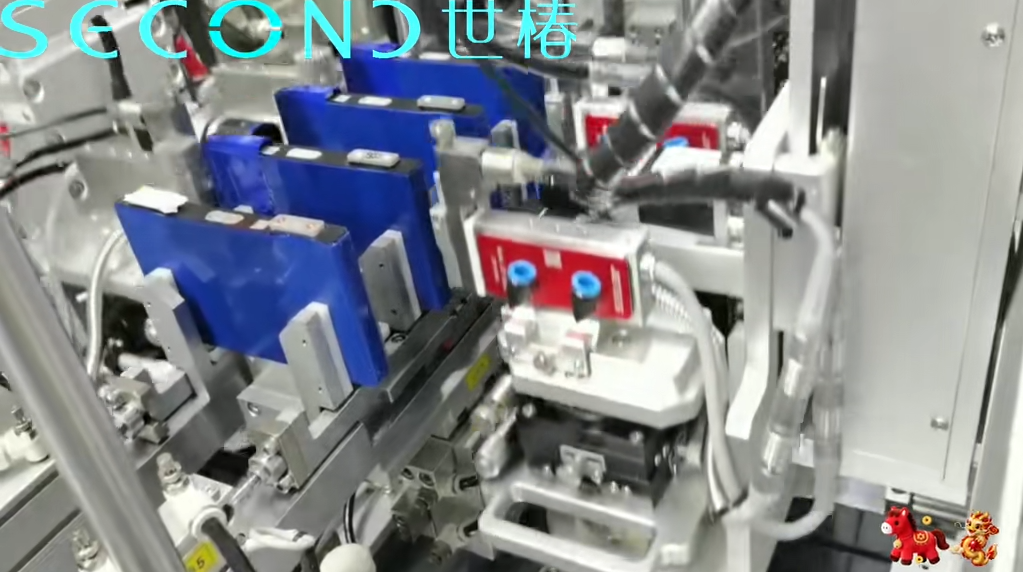
A standardized PACK adhesive-dispensing line consists of five modules: metering and supply, execution mechanism, vision positioning, inline inspection, and data traceability.
Core selection recommendations:
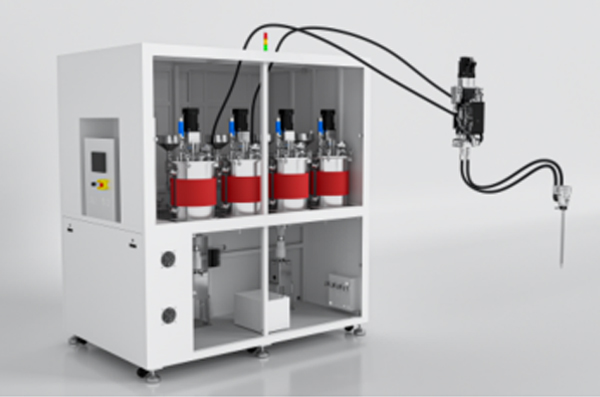
● Metering and supply: The SEC-S700B/BH two-component thermally conductive potting machine uses a servo-driven ceramic piston pump, achieves a mix-ratio accuracy of ±2%, accommodates ultra-high-viscosity adhesives from 100 to 500,000 cps, and supports constant-temperature heating and vacuum degassing. It is purpose-built to address wear and uneven flow caused by highly filled thermally conductive adhesives.
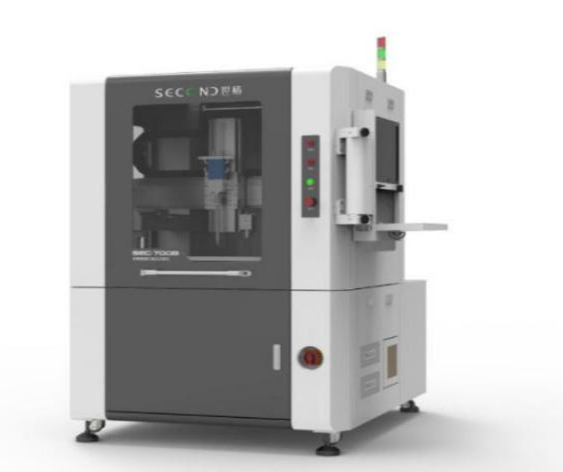
● High-precision dispensing: The SEC-S20-DH and SEC-S40-DH lithium-battery-specific dispensers deliver a mix-ratio and shot-volume accuracy of ±1%, meeting the high-precision requirements of mass-produced power batteries.
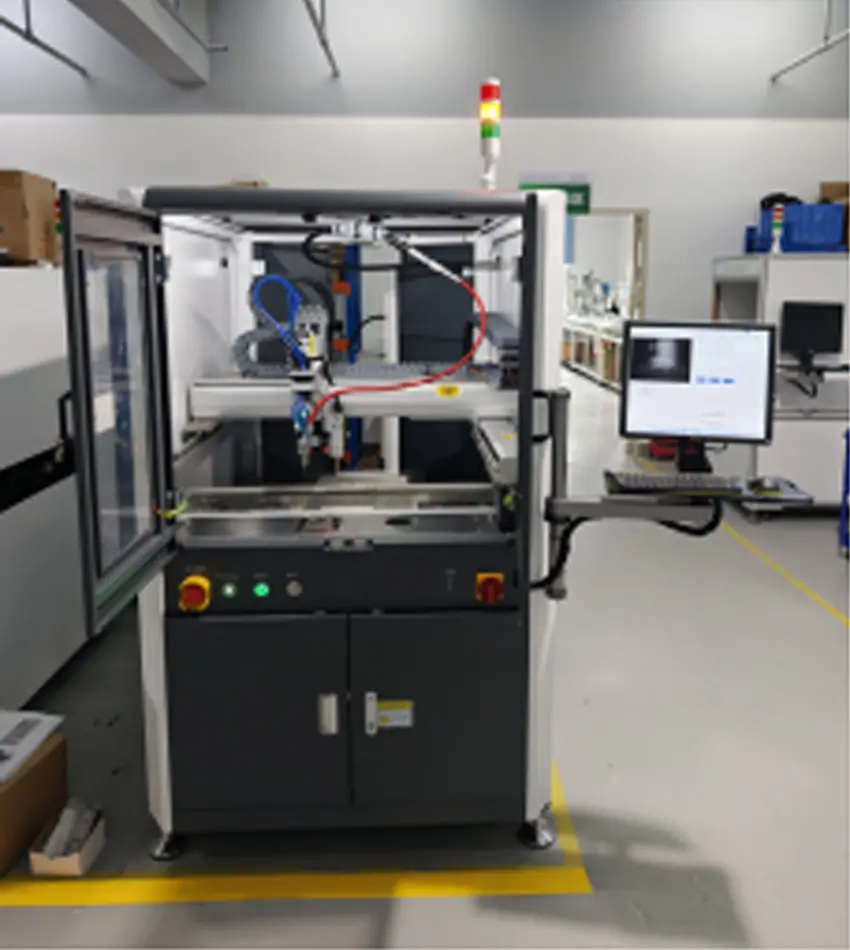
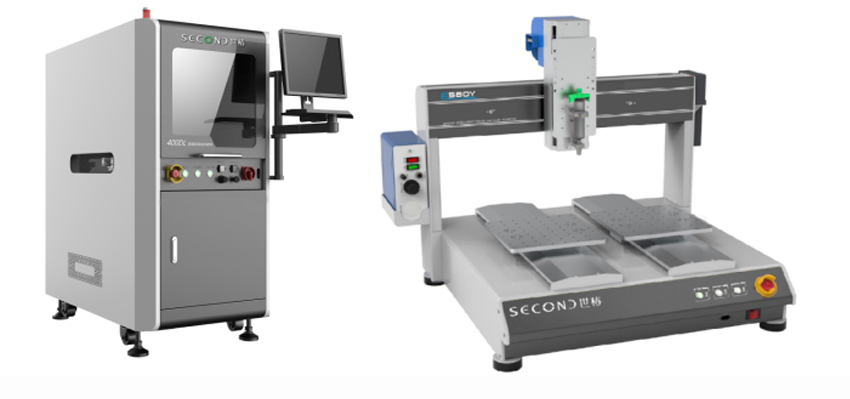
● Execution platform: The in-line SEC-DH400L (with CCD vision, ±0.01 mm repeatability, SMEMA interfacing) supports high-volume continuous production, while the benchtop E series (E380 / E480 / E580) is suited to sample trials and rework stations.
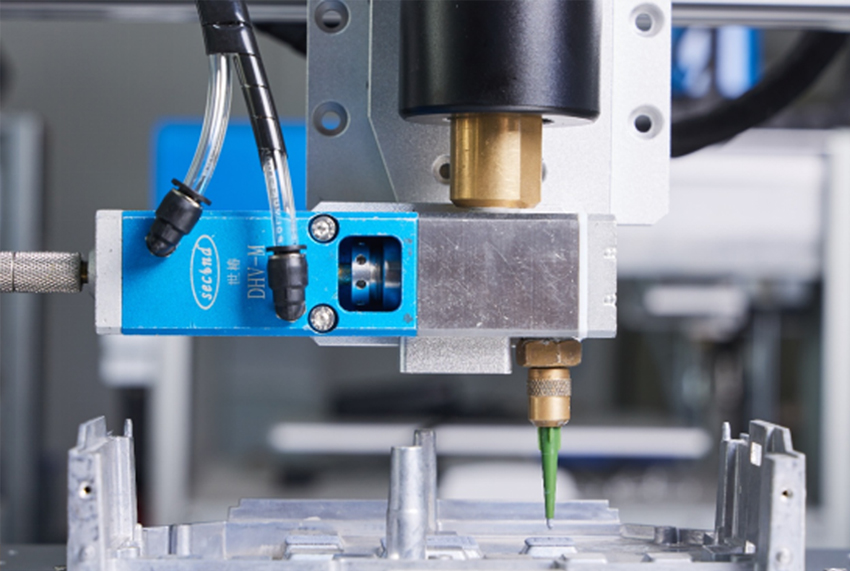
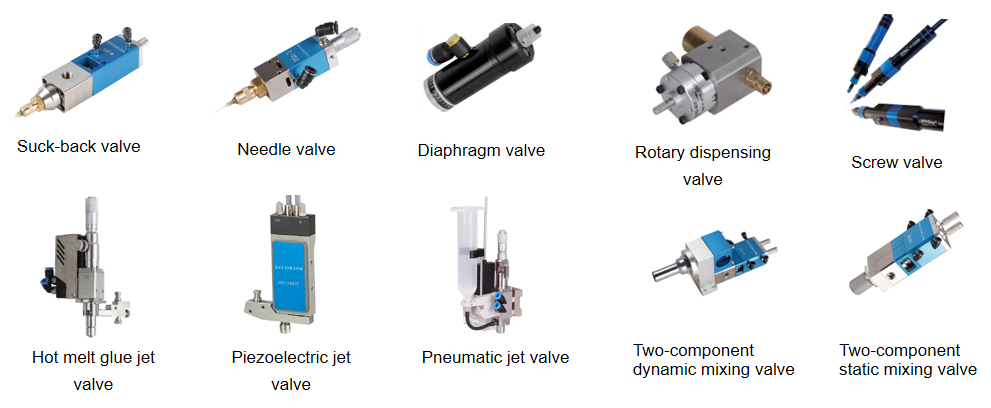
● Valve matching: Use a high-pressure screw valve for highly filled thermally conductive adhesives, and a needle valve or piezo jet valve for small-volume, high-speed precision bead dispensing. This eliminates bead breakage, stringing, and adhesive build-up.
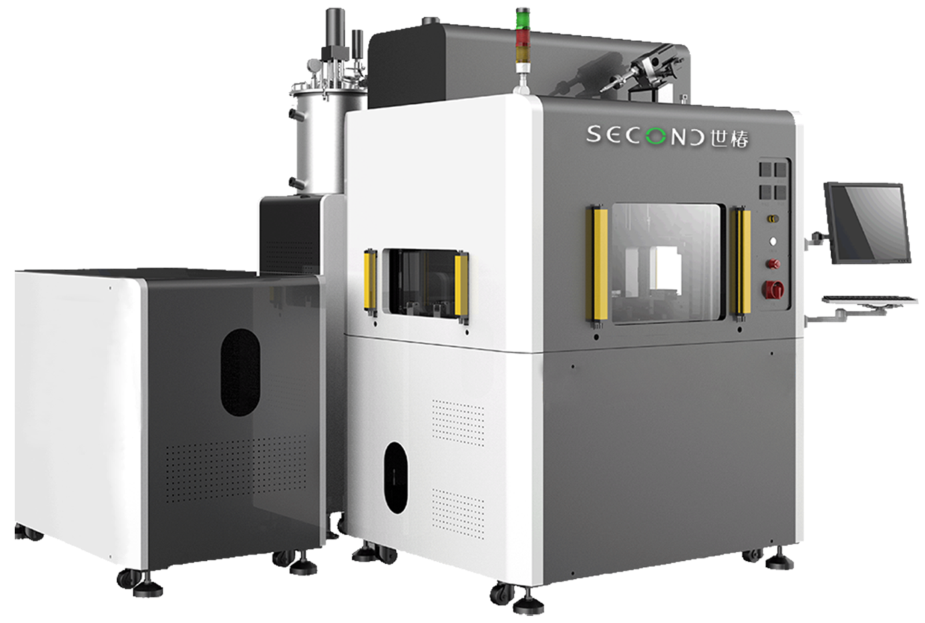
●Vacuum potting:The SEC-S400-Z and S400-ZL provide automatic metering, precise mixing, vacuum degassing, and stepped potting, completely eliminating internal voids.
●Inspection and traceability:CCD positioning compensates for incoming-part deviation, 2D vision detects defects, and 3D laser measures bead width, bead height, and cross-sectional area. The Second Fluent system links with the MES to bind each serial number, enabling full-process traceability.
Ⅴ.How to Ensure Mass-Production Yield in PACK Adhesive Dispensing Automated equipment alone does not deliver high yield automatically. Truly stable mass production requires a complete process-control system.
① Control shot volume. Perform regular shot-volume calibration and verification to prevent drift caused by long-term operation.
② Control bead geometry. Monitor bead width, bead height, path trajectory, velocity, and corner transitions to avoid breakage, build-up, stringing, and under-dispensing.
③ Control mix ratio. Abnormal A/B ratios can cause under-cure and reduced strength, so the mix ratio must be monitored in real time.
④ Control voids. For high-viscosity thermally conductive adhesives and potting compounds, combine vacuum degassing, proper adhesive transfer, and mixing processes to reduce the thermal resistance and insulation risk introduced by voids.
⑤ Perform visual inspection. Use 2D/3D vision to perform inline inspection of bead breakage, missing adhesive, overflow, path deviation, bead width, and bead height.
Conclusion
Enclosure adhesive dispensing may appear to be a simple bead-laying operation, but in reality it is a systems engineering effort that combines material selection, precision metering, path control, visual inspection, curing management, and data traceability. Under the new trends of CTP/CTC integration and 800 V high-voltage platforms, choosing the right adhesive system, matching the right automated equipment, and managing the mass-production process tightly are the only ways to keep yield, cost, and product competitiveness firmly in hand.
Shichuang Intelligent provides comprehensive adhesive-dispensing solutions for the three major cell formats — pouch, cylindrical, and prismatic — covering everything from standalone equipment, process development, and full-line integration to MES interface. We welcome your inquiries on customized requirements.