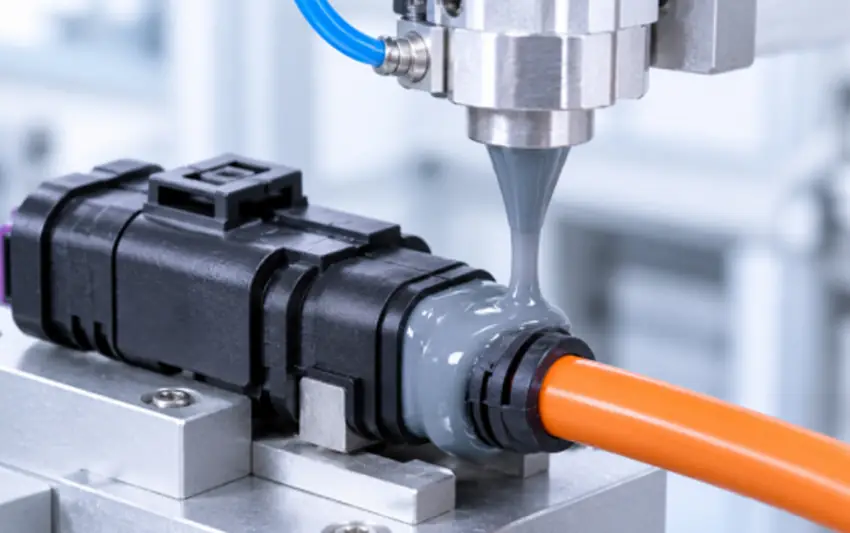
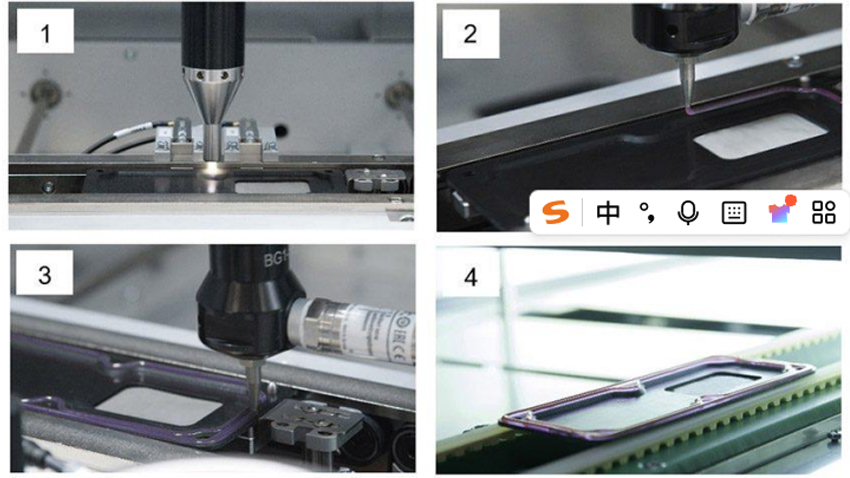
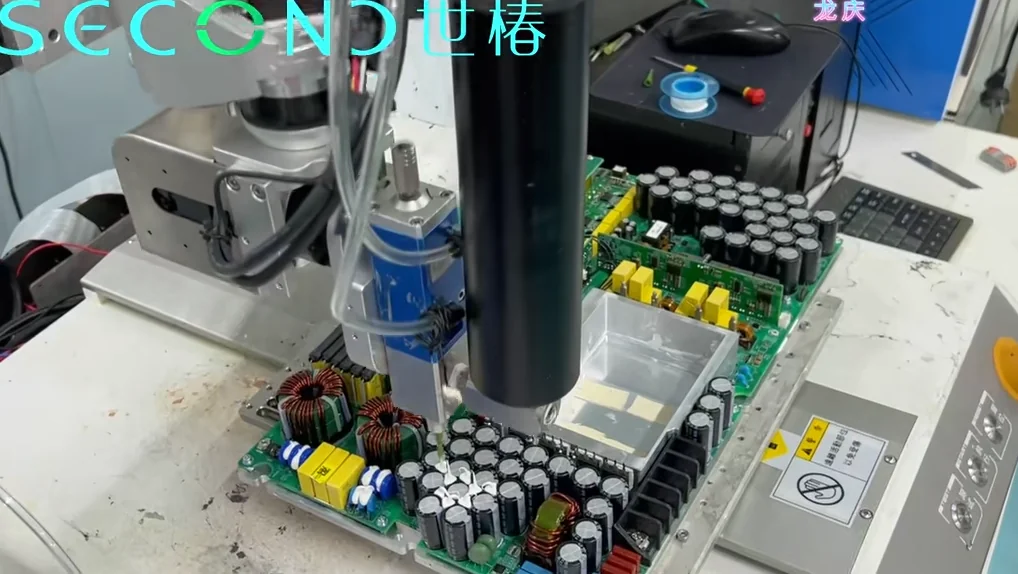
When you’ve been in power supply mechanical design long enough, you realize that a lot of seemingly odd manufacturing processes are actually forced out of real-world headaches. Take this setup: a PCB sits at the bottom of the housing, a battery rests right on top of it, and a two-part potting compound machine with a specific gravity above 1.6 is poured into the base—just enough to completely submerge the PCB and reach halfway up the battery. You see this all the time in outdoor power stations, rugged industrial gear, cordless tools, and automotive modules. Put simply, it’s a middle-ground compromise between reliability, safety, thermal management, and cost—and a pretty smart one at that.
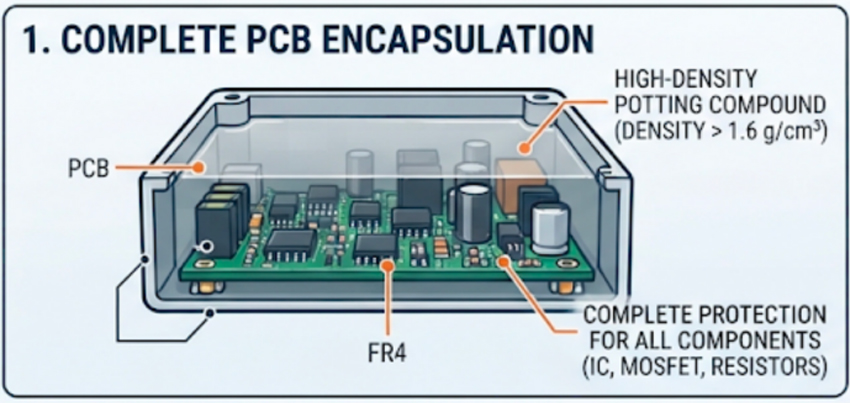
Let’s start with the most obvious part: completely submerging the PCB is all about longevity and abuse tolerance.
That bottom board is packed with MOSFETs, inductors, driver ICs, and current-sense resistors—if any one of them goes down, the whole unit is dead. In the field, most failures don’t happen because the circuit design was bad; they happen because moisture creeps in and dust settles, leading to pad oxidation, electrical creepage, or short circuits. Or the unit takes a few hard drops and constant vibration, tearing heavy inductors and electrolytic capacitors right off their solder pads. Burying the entire PCB in potting compound seals the board off from air, moisture, and mechanical shock. Even if the outer enclosure isn’t sealed to perfection, that inner layer of potting takes the brunt of environmental exposure and drop impacts.
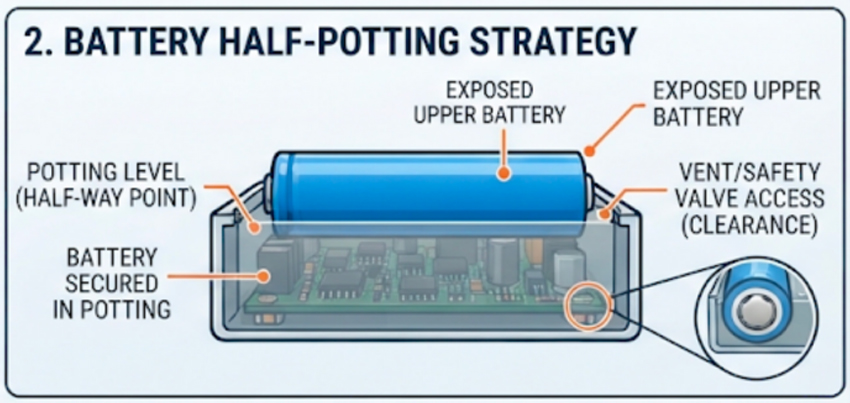
Next, why only submerge the battery halfway instead of filling the whole cavity?
This is crucial, and it’s where rookies tend to overthink things. Lithium-ion cells inevitably swell and build up a bit of internal gas over their lifecycle, especially under high temperatures or fast-charging loads. Plus, cylindrical and prismatic cells almost always have a safety vent valve on top. If you encapsulate the battery from top to bottom, the cured resin locks everything in rigid—any slight cell expansion pushes right back against the casing, creating internal mechanical stress, and worse, you risk blocking the vent path, which is a serious safety hazard. Submerging just the lower half anchors the base of the cell firmly in place so it won’t shift on impact or rip the nickel tabs and welds loose, while leaving the upper half open for thermal breathing room and safe venting.
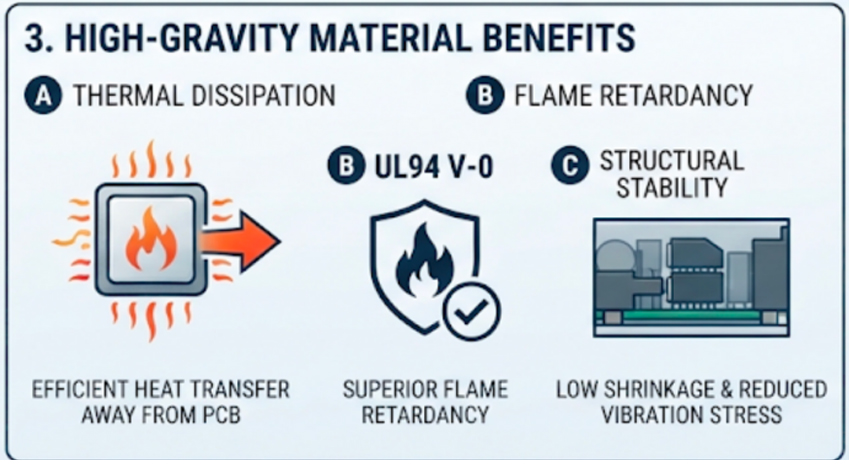
So why insist on a high-gravity compound with a density over 1.6 g/cm³?
Standard unfilled resins sit around 1.1 g/cm³; anything north of 1.6 means it’s heavily loaded with inorganic fillers like alumina, aluminum hydroxide, or silica powder. Anyone who builds power supplies knows that adding fillers is first and foremost about heat dissipation and flame retardancy. Under load, MOSFETs, transformers, and inductors run hot, and the underside of the battery needs to shed heat too. Unfilled resin is basically a thermal insulator—trapped heat will either blow a MOSFET or cook the battery prematurely. High-density fillers build a thermal pathway that pulls heat out toward the housing and evens out hot spots. On top of that, passing safety certifications like UL94 V-0 is non-negotiable for power products, and mineral fillers like aluminum hydroxide naturally suppress flames and keep a fault from turning into a fire.
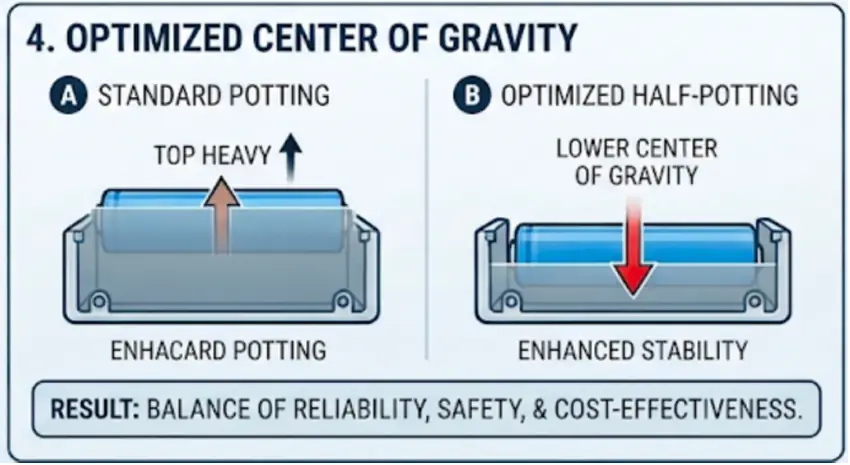
Beyond heat and fire safety, high-filler formulas bring two very practical perks: low shrinkage and a lower center of gravity.
Resins shrink a bit as they cure, which can put stress on tiny SMD components. High-density, heavily filled compounds have much tighter cure shrinkage and a lower coefficient of thermal expansion (CTE), so thermal cycling won’t crack miniature ceramic capacitors on the board. Meanwhile, having all that dense material sitting at the very bottom acts like built-in ballast. It keeps the unit from feeling top-heavy, makes it sit more solidly on a bench or inside equipment, and gives the end product a sturdy, well-built heft in the hand instead of feeling hollow and cheap.
Of course, saving material and controlling costs is always part of the math. High-gravity functional potting compounds aren’t cheap—you pay for them by the gram and by the kilo. Filling the entire enclosure to the brim would send your BOM cost through the roof and make the unit way too heavy. Stopping the fill line just above the PCB and halfway up the battery cuts resin usage dramatically, while still protecting the vulnerable electronics and locking down the heaviest component. Leaving the top half of the battery exposed also makes life much easier on the production line when operators need to scan batch codes or do tear-down diagnostics.
At the end of the day, this isn’t a flashy design—it’s practical, workhorse engineering. Every gram of potting compound earns its keep: the board gets protected, the battery gets room to breathe, and thermal, safety, drop-test, and cost requirements each give a little to land on a solution that actually works on the factory floor and holds up in the real world.
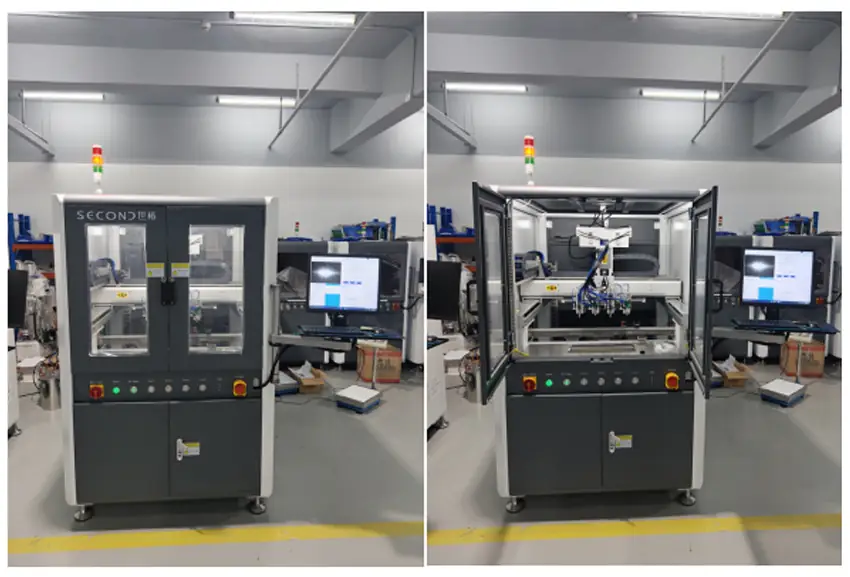
So how to find a good manufacture to supply a reliable and stable potting machine to ensure those high quality product? Shenzhen Second Intelligent Equipment Co., Ltd. with over 21 years experience and thousands of clients, including many top players in the world, will be a dependable choice.