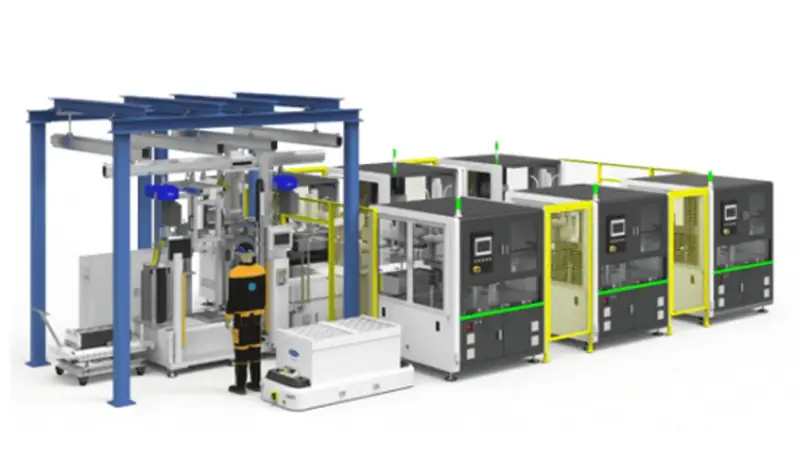
“From Application to Optimization: Thermally Conductive Gel Facilitates Precision Dispensing of Electronic Component Caps” is a highly specialized process topic. Simply put, the core idea is to leverage the plasticity, high fluidity, and thixotropy of thermally conductive gels through precision dispensing technology to achieve precise filling, sealing, and heat dissipation of the top (caps) of electronic components (especially irregularly shaped or high-heat-generating components), and to improve yield and reliability through continuous optimization of process parameters.
The following will elaborate on this from two perspectives: “Application Value” and “Optimization Direction”:
I. Application: Why Choose Thermally Conductive Gel for Cap Dispensing?
In the cap packaging of electronic components (such as power modules, MOSFETs, inductors, capacitors, BGA chips, etc. around CPUs/GPUs), traditional methods (applying thermal pads, applying thermal grease) have limitations. The advantages of thermally conductive gel dispensing are:
1. Adaptability to Complex Geometric Shapes
“Caps” often have height differences, leads, and uneven surfaces. The thermally conductive gel can flow naturally and adhere to the top and sidewalls after dispensing, eliminating air gaps and providing a tighter fit than solid gaskets.
2. Low Stress and Vibration Damping: The gel remains elastic after curing, preventing hard stress on components (avoiding damage to solder joints or chips) and buffering vibrations.
3. Thermal Conductivity and Sealing: Typically has a thermal conductivity dispensing of 1-8 W/m·K, meeting the heat dissipation requirements of most power devices. It also provides moisture, dust, and chemical protection, safeguarding the delicate internal structure of the cap.
4.High Efficiency in Automated Production: High-speed, quantitative, and targeted coating can be achieved via pneumatic or screw pump dispensing, suitable for mass production.
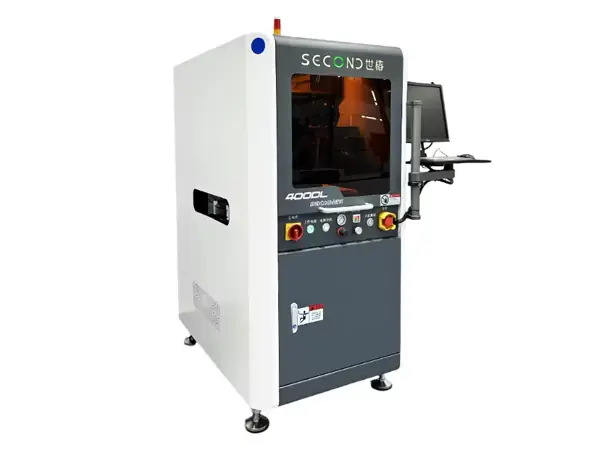
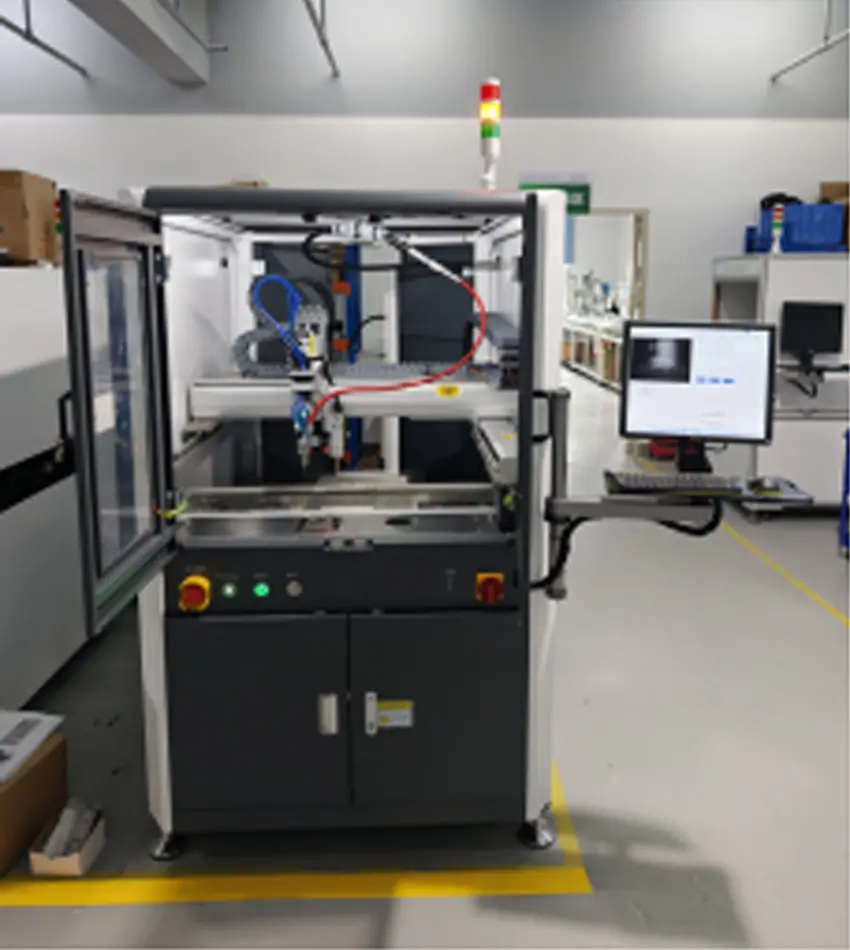
Automatic In-line PCB Glue Dispensing Machine SEC-DH400L
Second Intelligent In-line Automated Glue Dispensing Machine SEC-DH400L adopts an integrated mineral casting design, with ultra-high precision and super stability, powerful expansion capabilities, and can realize ion cleaning, dispensing, detection, UV exposure and other functions;
Adopting a gantry structure, it can bear large loads, stable structure, and a powerful CCD visual positioning system, which can meet the requirements of Mark point positioning, edge positioning, and 3D scanning positioning; strong scalability, and can expand AOI detection 3D detection, UV exposure curing and other functions;
Strong platform compatibility, contact and non-contact dispensing, single-head and multi-head synchronous dispensing, automatic compensation and adjustment of double-head spacing, five-axis dispensing function based on needle A/R displacement, etc.
II. Optimization: How to Achieve Precision Dispensing Process Control?
“Optimization” refers to resolving common defects (stringing, bubbles, overflow, uneven thickness) by adjusting equipment parameters, adhesive properties, and path planning.
Optimization Dimension: Colloidal Rheology; Key Measures: Select gels with high thixotropic index and moderate yield stress; control viscosity (typically 300,000~800,000 cP); Problem Solved: Prevent collapse or spikes after dispensing, ensuring clear edges;
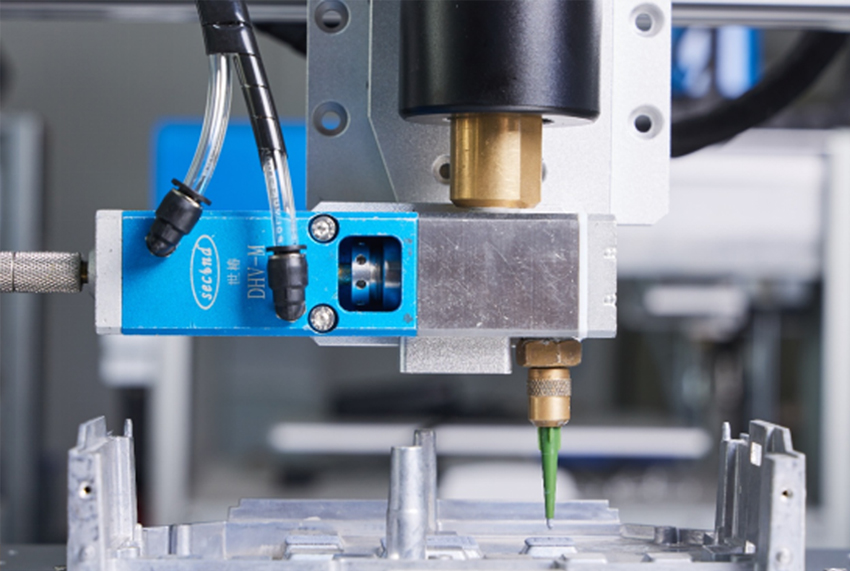
Optimization Dimension: Dispensing Valve and Dispensing Pump; Key Measures: Use volumetric screw valves (such as PCP pumps) or piezoelectric jet valves with conical needles to achieve microliter/millisecond precision dispensing, eliminating dripping;
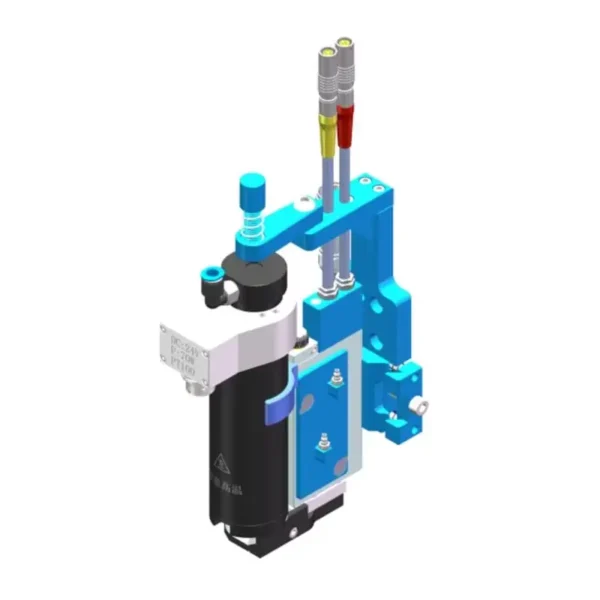
piezoelectric jet valves FP-102
Optimization Dimension: Temperature Control; Key Measures: Heat the glue cartridge or needle (30-45℃) to reduce viscosity and improve flowability;
Optimization Dimension: Trajectory and Height; Key Measures: Program according to the cap shape: circular, reciprocating, single-point pre-compression, etc.; needle distance from workpiece 0.3-1.0mm;
Problem Solved: Ensure consistent glue layer thickness (typically 0.5-2mm), without voids;
Optimization Dimension: Curing Process Key measures: Control temperature/time according to TDS (e.g., 80℃/30min), addressing the following issue: ensuring full curing without microcracks;
III. Typical Application Scenarios
● 5G Base Station Power Amplifier Module Cap: Top-mounted adhesive for thermal conductivity and EMI shielding, with internal potting.
● Automotive ECU Control Unit: Cap-style potting of inductors and capacitors, providing both heat dissipation and vibration resistance.
● Power Module/Inverter: Manually applied adhesive caps to MOSFET and IGBT chips, replacing traditional insulating gaskets.
IV. Development Trends
Future directions include:
● Low-oil-permeability, high-reliability gels (avoiding contamination of sensitive contacts)
● Adaptive dispensing systems integrated with AI vision (real-time identification of component height changes and automatic correction of adhesive dosage)
● Ultra-high thermal conductivity gels (>12 W/m·K) for heat dissipation in next-generation 800V high-voltage module caps
Summary:
Thermally conductive gel cap dispensing is a precision manufacturing process deeply coupled with materials and processes. Applications solve the integrated challenge of heat dissipation and protection for irregularly shaped heat-generating components; optimization achieves micron-level precision and zero-defect production through rheological control, precision valves, temperature management, and trajectory planning. If you would like to learn more about dispensing parameters or equipment selection for specific components (such as chips, capacitors, or connectors), I can provide further detailed guidance.
Second Intelligent has played an important role in theresearch, development, manufacturing, pre-sales and after-sales services of fluid dispensing robot, potting and coating solutions which range from various types of automatic fluid dispensing, potting, two-component potting machines and coating machines with desktop, free-standing, inline or cobot combined systems, and widely used in global electrical, electronics, home appliances, automobile, telecom, pharmaceutical, automotive electronics, semiconductor, aerospace, LED and more.