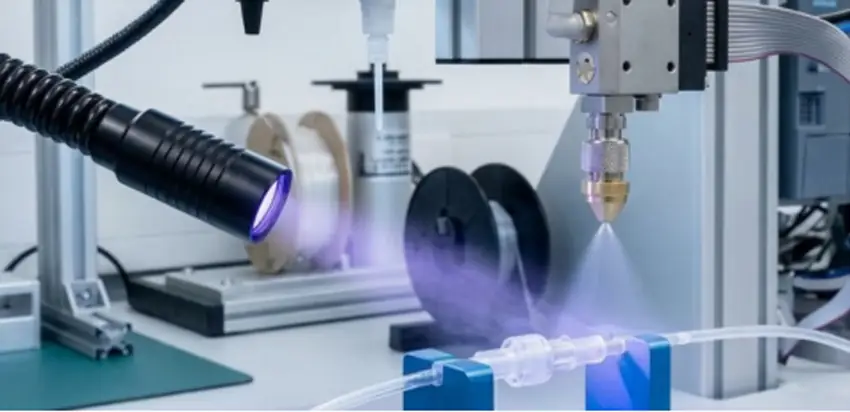
Solder Paste Jetting and Dispensing Technology: A Key Process Analysis in Semiconductor Micro-Assembly
Ⅰ.Semiconductor Solder Dispensing: Solder Paste Jetting and Dispensing?
In the miniaturization wave of semiconductor packaging and surface mount technology, traditional stencil printing is facing unprecedented challenges. As pad spacing moves from millimeters to micrometers, and as flexible substrates and three-dimensional circuits become commonplace, a more flexible and precise solder paste application method—solder paste jetting and dispensing technology—is becoming a key player in advanced packaging production lines.
The Leap from “Contact” to “Non-Contact” Traditional solder paste application mainly relies on stencil printing, a mature and reliable method in standardized, high-volume SMT production. However, for small-batch, multi-variety sample production, or precision scenarios such as chip-scale packaging (CSP) and system-in-package (SiP), stencil mold opening costs are high, the cycle is long, and it is difficult to handle uneven substrates.
This process is similar in principle to inkjet printers, with core advantages in “speed, accuracy, and flexibility”:
Non-contact operation: The jet valve maintains a certain distance from the substrate, eliminating the need for vertical movement. This not only significantly increases speed but also avoids damage to precision chips or uneven substrate surfaces.
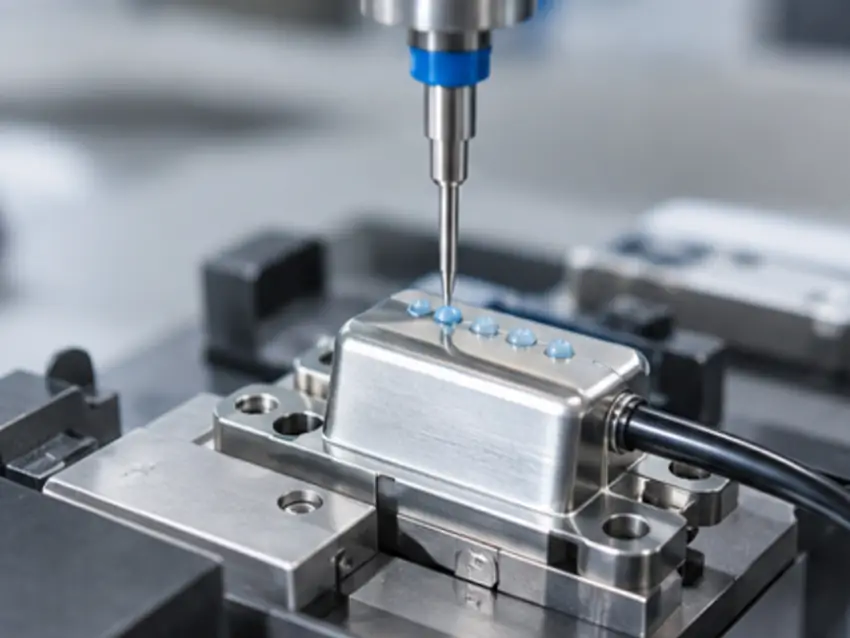
Extremely high precision and control: It can spray tiny solder dots with diameters from 150μm to 250μm, with volumes precisely controlled at the 1-2 nanoliter (nL) level. For small-batch, multi-variety production or R&D prototyping, it eliminates the need for stencils, allows for program switching at any time, and offers exceptional flexibility.
The core advantage of solder paste jetting dispensing technology lies in its non-contact operation. It no longer relies on needles contacting pads to transfer solder paste; instead, it uses piezoelectric or pneumatic components to generate instantaneous high pressure, spraying the solder paste into the target location in a “jet” form. The jet valve maintains a certain distance from the substrate, eliminating the need for Z-axis vertical movement. This not only significantly improves production efficiency but also fundamentally avoids chip scratches or pad damage caused by needle collisions.
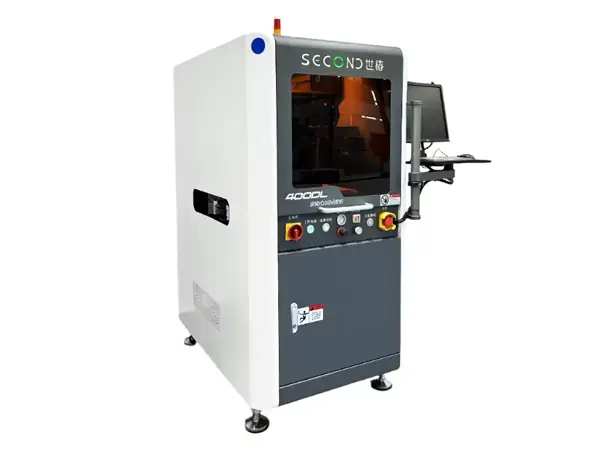
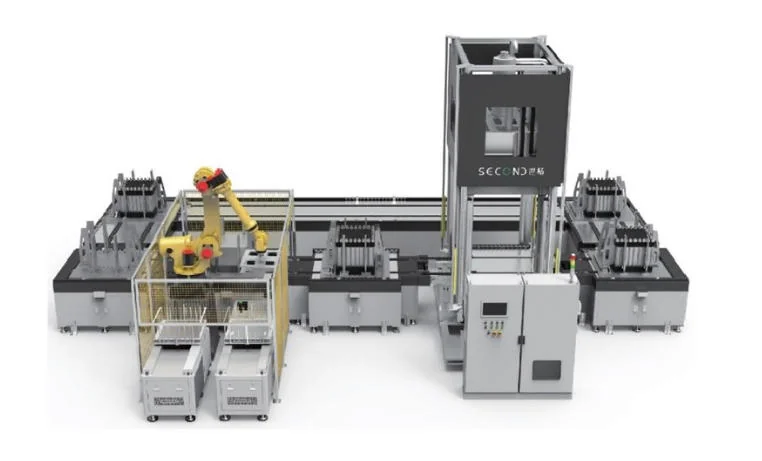
Automatic In-line PCB Glue Dispensing Machine SEC-DH400L
Second Intelligent In-line Automated Glue Dispensing Machine SEC-DH400L adopts an integrated mineral casting design, with ultra-high precision and super stability, powerful expansion capabilities, and can realize ion cleaning, dispensing, detection, UV exposure and other functions;
Adopting a gantry structure, it can bear large loads, stable structure, and a powerful CCD visual positioning system, which can meet the requirements of Mark point positioning, edge positioning, and 3D scanning positioning; strong scalability, and can expand AOI detection 3D detection, UV exposure curing and other functions;
Strong platform compatibility, contact and non-contact dispensing, single-head and multi-head synchronous dispensing, automatic compensation and adjustment of double-head spacing, five-axis dispensing function based on needle A/R displacement, etc.
Ⅱ.How Does Spraying Technology Achieve High Precision?
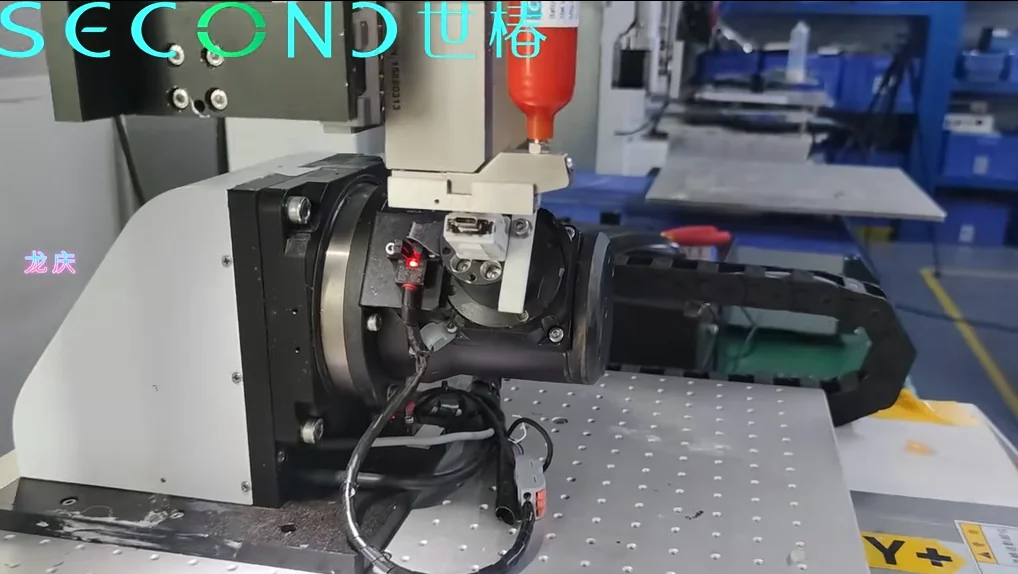
Among various Spray Dispensing Valve solutions, piezoelectric jet valve are currently the mainstream choice for high-precision applications. Its principle is similar to inkjet printing: the piezoelectric actuator generates a tiny deformation under the drive of an electrical signal, driving the ejector pin to rapidly strike the nozzle, forcing the solder paste to form tiny droplets that fly out at high speed.
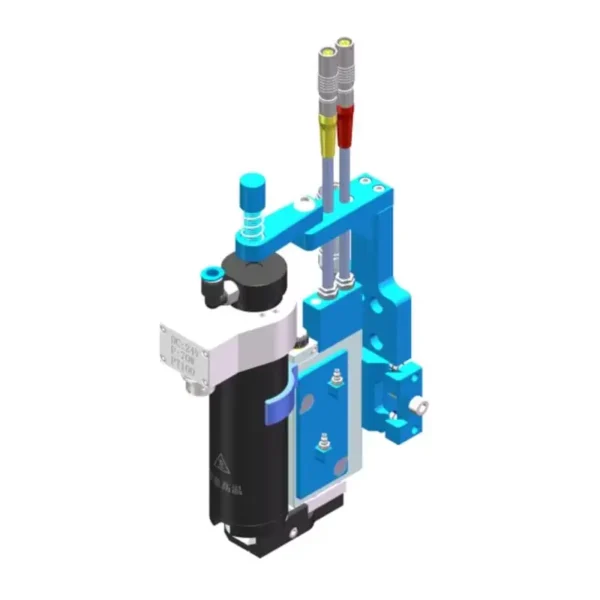
Thanks to this precise control mechanism, Piezoelectric jet dispensing valve can achieve a level of precision unattainable by traditional methods. Currently, mainstream equipment can achieve a minimum spray dot diameter of 150μm to 250μm and a spray frequency of 500Hz to 1000Hz, meaning that hundreds of highly consistent solder dots can be stably sprayed per second. For example, Tengsheng Precision’s Sherpa700 equipment can achieve a dot diameter of 150±10μm, while some high-end piezoelectric valves can even handle minimum amounts of 1-2 nanoliters (nL) of adhesive.
Materials and Equipment: A Systems Engineering Process Where 1+1>2
Solder paste spraying is not something that can be perfectly achieved by equipment alone; it is a systems engineering process involving materials, valves, and motion control.
From a materials perspective, sprayed solder paste dispensing machine differs significantly in formulation from traditional printed solder paste. To ensure smooth passage through narrow nozzles without clogging, the solder powder particles in the paste must be sufficiently fine (typically requiring T4 to T7 powder, i.e., particle size below 20μm), and its rheological properties must be specially designed to ensure stable dispensing volume and no tailing under high-speed spraying, and minimal viscosity change after prolonged storage. Indium’s PicoShot® NC-6M sprayed solder paste, using No. 6 alloy powder, can control the volume of a single solder dot to 1.6 nanoliters (approximately 230μm in diameter) and maintain a lifespan of over 8 hours, representing a typical example of material adaptation technology.
On the equipment side, whether it’s a shaft-controlled screw valve closed-loop control scheme or spray valve systems from manufacturers like Mycronic and Vermes, both emphasize consistent dispensing volume and dispensing height compensation. Real-time detection of substrate warping using a laser height detection module and automatic compensation of the spray height are key technologies to ensure uniform size of each solder point.
III. Application Scenarios: From PCBA to Advanced Packaging
The flexibility of solder paste jetting technology allows it to find applications in various manufacturing stages:
● PCBA Repair and Solder Replenishment: In mass production, if individual pads are short of solder, precise solder replenishment can be performed directly using the jetting valve without reopening the stencil, resulting in significantly higher efficiency than manual soldering.
● Multi-variety, Small-batch Production: In the R&D prototyping stage or for customized products in military, aerospace, and other applications, jetting technology eliminates the need for a stencil, allowing for rapid product switching and significantly shortening delivery cycles.
● Advanced Packaging:In fields such as System-in-Package (SiP), MEMS devices, and POP (Package-on-Package), where pad sizes are extremely small and the layout is three-dimensional, jetting technology is currently almost the only method that can achieve high-precision, non-contact micro-solder paste application.
Conclusion:
“Solder paste jetting” is not simply a dispensing action; it represents an important direction for the evolution of electronic manufacturing towards higher density, higher flexibility, and higher efficiency. With continuous breakthroughs in piezoelectric technology, precision fluid control, and specialized solder paste materials, this technology is breaking through the physical limitations of traditional stencil printing, becoming an indispensable precision “paintbrush” connecting chip design with the physical world.
Second Intelligent has played an important role in theresearch, development, manufacturing, pre-sales and after-sales services of fluid dispensing robot, potting and coating solutions which range from various types of automatic fluid dispensing, potting, two-component potting machines and coating machines with desktop, free-standing, inline or cobot combined systems, and widely used in global electrical, electronics, home appliances, automobile, telecom, pharmaceutical, automotive electronics, semiconductor, aerospace, LED and more