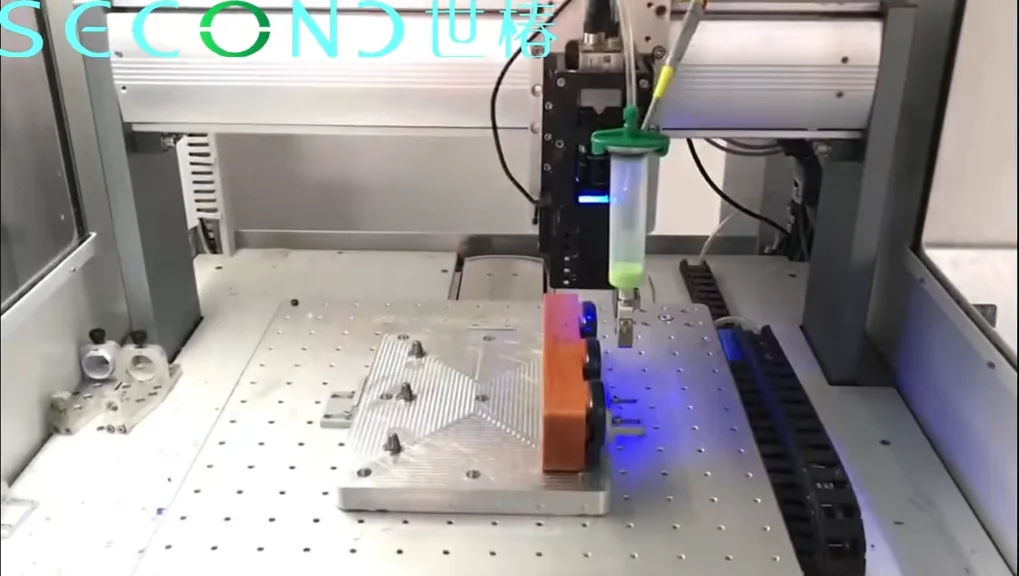
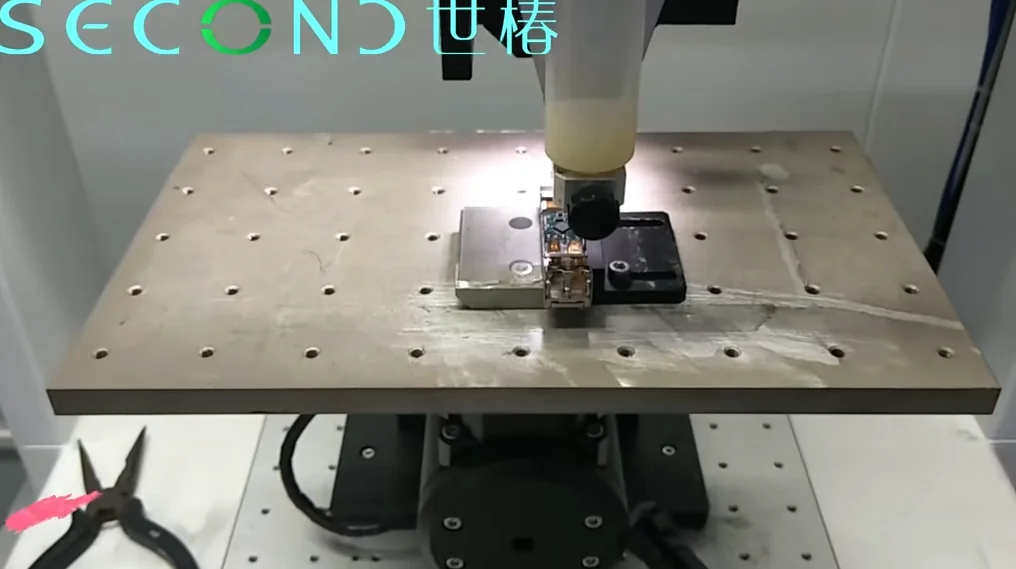
In the electronics manufacturing, automotive electronics, and new energy industries, RTV silicone has become the preferred material for component reinforcement due to its excellent shockproof, waterproof, insulating, and sealing properties. However, this seemingly perfect material presents process engineers with a thorny problem: stringing and excess adhesive.
RTV silicone has a high viscosity (typically tens to hundreds of thousands of cps) and is thixotropic. During automated dispensing, when the nozzle stops dispensing, the adhesive often forms “stringy” patterns due to incomplete release of internal pressure or its own viscosity, or overflows due to residual pressure at the end of dispensing. This not only affects the product’s appearance but can also lead to serious quality defects such as short circuits or poor sealing.
To solve this problem, the key lies in the “braking system” of the dispensing valve—the back suction valve. This article will delve into how the back suction valve uses precise mechanical principles to achieve “instantaneous” control of RTV silicone dispensing machine, helping you say goodbye to stringing and excess adhesive.
Ⅰ.The Core Principle of the Back-Suction Valve: More Than Just “Shut Down” Ordinary dispensing valves can only “stop the glue supply,”
but residual pressure remains in the nozzle. The ingenuity of the back-suction valve lies in its “clean glue cut-off” design.
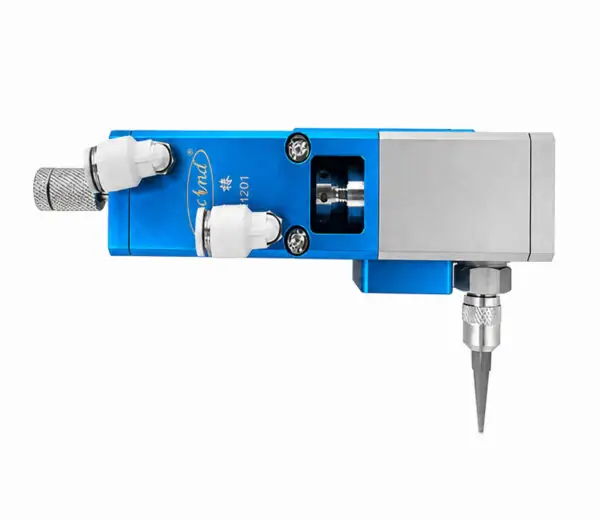
suction back glue dispensing valve F-H201
Its working logic consists of three steps:
Glue Supply Advance: The air inlet drives the piston downward, pushing the glue out of the nozzle.
Instant Back-Suction: As the dispensing action is about to end, the unique dual-air-path design inside the back-suction valve drives the piston to move rapidly in the opposite direction. This action creates a brief negative pressure zone in the flow channel.
Glue Retraction: This negative pressure generates a “pull-back force,” instantly sucking back the glue that is about to drip or be dragged from the nozzle tip into the flow channel.
For highly viscoelastic materials like RTV silicone dispensing machine, this synergistic “push-pull” mechanism effectively overcomes the tensile stress of the glue, cleanly cutting off the tail of the glue strip, thus preventing stringing.
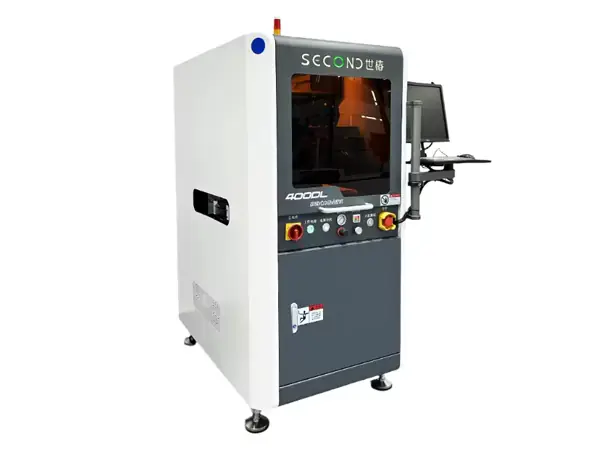
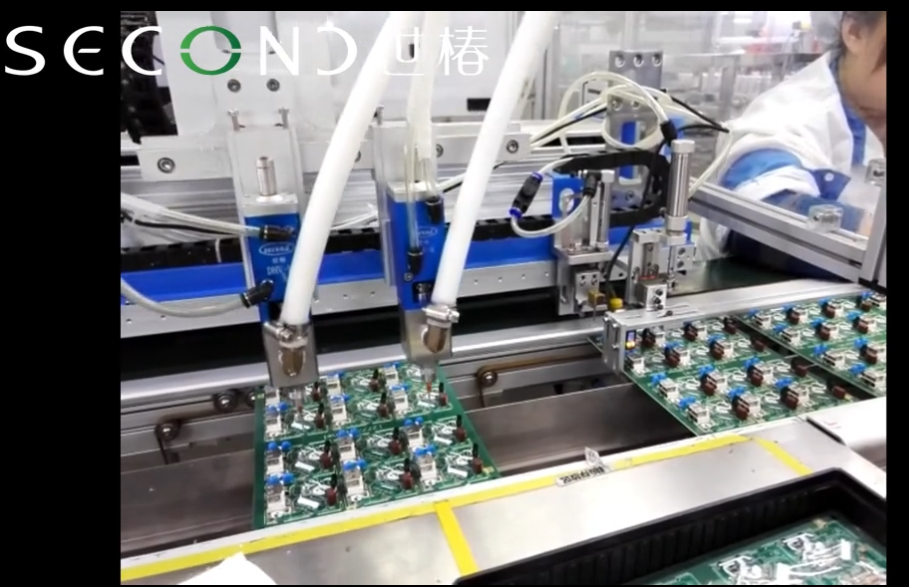
Automatic In-line PCB Glue Dispensing Machine SEC-DH400L
Second Intelligent In-line Automated Glue Dispensing Machine SEC-DH400L adopts an integrated mineral casting design, with ultra-high precision and super stability, powerful expansion capabilities, and can realize ion cleaning, dispensing, detection, UV exposure and other functions;
Adopting a gantry structure, it can bear large loads, stable structure, and a powerful CCD visual positioning system, which can meet the requirements of Mark point positioning, edge positioning, and 3D scanning positioning; strong scalability, and can expand AOI detection 3D detection, UV exposure curing and other functions;
Strong platform compatibility, contact and non-contact dispensing, single-head and multi-head synchronous dispensing, automatic compensation and adjustment of double-head spacing, five-axis dispensing function based on needle A/R displacement, etc.
Ⅱ.Process Breakdown: Three Steps of the Back-Suction Action?
1.Glue Supply and Dispensing: At the start of the dispensing action, compressed air enters the drive cylinder through the first air inlet, pushing the piston and the connected poppet downwards. This opens the previously closed glue flow channel, allowing the glue to flow out from the nozzle under pressure for application.
2.Instant “Braking” and Back-Suction:As the dispensing action is about to end, the crucial back-suction action is initiated. At this time, the control system switches the air path, and compressed air enters the other side of the cylinder through the second air inlet, driving the piston and poppet to move rapidly in the opposite direction (lifting).
3.Instant Glue Cut-off: As the poppet lifts to close the glue outlet, a brief negative pressure zone (which can be understood as a “pull-back force”) is generated in the valve body flow channel. This force instantly pulls the glue that is about to drip or string at the nozzle due to inertia or viscosity back into the flow channel, achieving a clean and crisp glue cut-off.
III. Key Processing Considerations for RTV Silicone
RTV silicone has high viscosity (often tens of thousands to hundreds of thousands of cps) and often contains wear-resistant fillers. Therefore, two points require special attention in the process:
● Adjustable Backflow:For RTV silicone of different viscosities, the backflow stroke of the backflow valve needs to be adjusted. Too small a stroke will result in incomplete glue cut-off, while too large a stroke may draw in air, causing air bubbles in the glue dots. Many precision backflow valves have graduated adjustment functions for precise control.
● Wear-Resistant Design:Due to the abrasive properties of fillers such as silica in RTV silicone, ordinary valve bodies are prone to wear. Therefore, high-efficiency backflow valves typically use all-stainless steel structures or valve seats made of special materials (such as UHMW PE) to ensure lifespan and stability under high pressure and abrasive conditions.
Conclusion
The backflow valve is a “miracle cure” for RTV silicone stringing and overflow. It solves the dripping problem caused by fluid inertia by generating negative pressure through mechanical backflow. For companies pursuing precision manufacturing, selecting a dedicated back-suction valve with a wear-resistant structure and adjustable back-suction function is a key step in achieving efficient and precise reinforcing dispensing of RTV silicone.
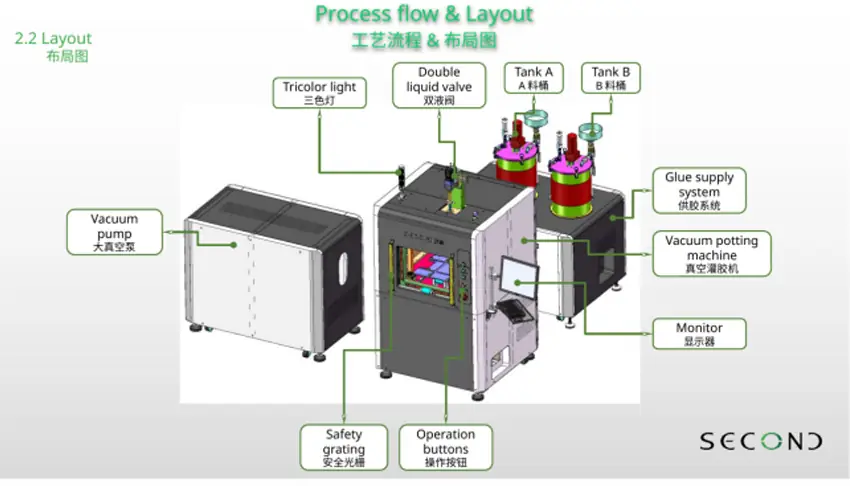
Second Intelligent has played an important role in theresearch, development, manufacturing, pre-sales and after-sales services of fluid dispensing robot, potting and coating solutions which range from various types of automatic fluid dispensing, potting, two-component potting machines and coating machines with desktop, free-standing, inline or cobot combined systems, and widely used in global electrical, electronics, home appliances, automobile, telecom, pharmaceutical, automotive electronics, semiconductor, aerospace, LED and more