Essential Conformal Coating for PCB Reliability
1.Introduction
Electronic products must operate reliably in increasingly harsh environments—automotive controls, renewable energy systems, industrial automation, and medical electronics. PCBs face humidity, condensation, contaminants, chemical vapors, and thermal cycling. While components improve, environmental exposure remains a leading cause of longterm reliability loss.
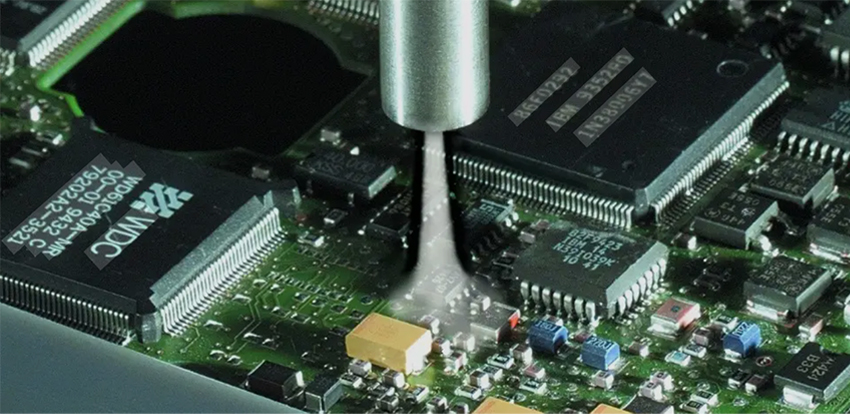
Conformal coating has therefore become essential. At first glance it is only a thin transparent polymer film a few tens of micrometers thick, often viewed as a secondary process. In reality its purpose is not merely to “protect the PCB,” but to preserve the electrical and mechanical stability of the entire assembly by reducing environmental stress over the product’s service life.
Failures rarely begin with visible peeling. Uneven thickness, poor edge coverage, incomplete wetting, or precoating contamination can silently degrade protection long before defects appear. Understanding why conformal coating works is therefore more important than knowing only how it is applied.
2. Engineering Background
Electronic assemblies experience continuous temperature swings, humidity fluctuations, and airborne contamination. Even mild conditions accumulate over years and can determine whether a product remains reliable.
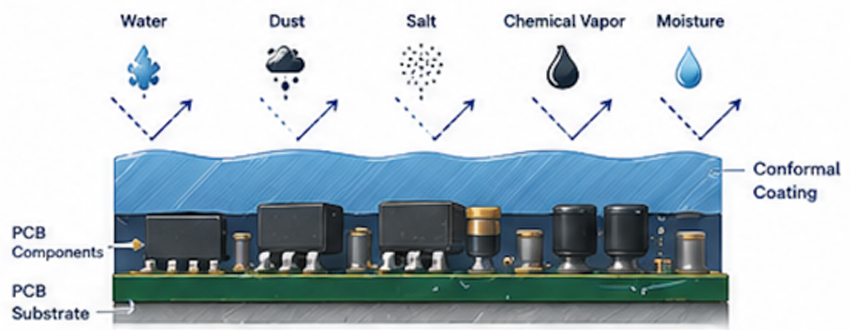
Unlike mechanical structures, circuits are highly sensitive: a microscopic film of condensed moisture containing ionic residues can raise leakage current, promote electrochemical migration, or start corrosion. Conformal coating acts as an environmental barrier rather than a waterproof seal. Its goal is to slow degradation mechanisms by limiting direct contact between the environment and sensitive conductors.
This protection grows more critical as designs move toward higher density, tighter spacing, lower voltages, longer lifetimes, and harsher operating conditions. Reliability now depends as much on environmental resistance as on component quality.
3.Engineering Analysis
3.1 Moisture Is Often More Critical Than Liquid Water
Occasional liquid water is usually noticed and removed. Persistent moisture, however, can remain undetected for months or years. When humidity combines with ionic manufacturing residues under an electric field, ions migrate between conductors—electrochemical migration—creating leakage paths or failures.
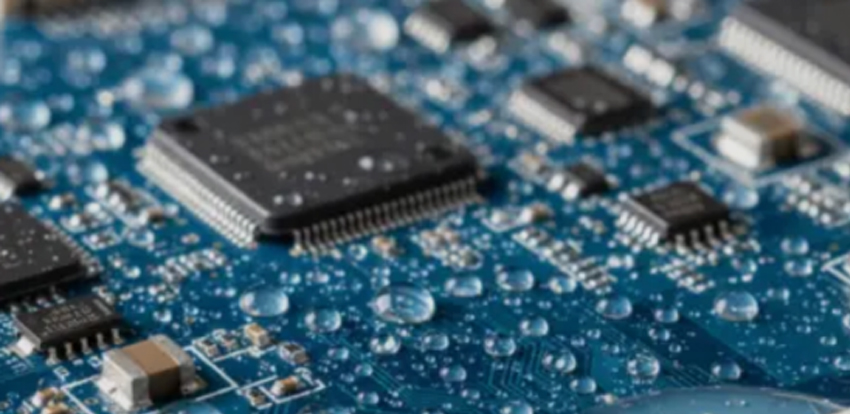
Coating does not stop every water molecule; it greatly reduces the chance of moisture accumulation and slows degradation.
3.2 Protection Does Not Depend on Thick Coatings
Thicker is not always better. Performance hinges on continuity and uniformity more than absolute thickness. Too thin a film leaves sharp edges and solder joints underprotected; too thick a film creates curing stress, reduces flexibility, and complicates repair. Industrial practice aims for a balanced engineering window of protection, manufacturability, and longterm reliability.
3.3 Uniformity Is More Important Than Average Thickness
Two boards with identical average thickness can behave very differently if one has uniform coverage and the other has thin spots near pins, heavy buildup around large components, and incomplete edge coverage. Reliability depends primarily on consistency. Uniform films minimize localized stress, reduce exposed conductors, and improve environmental isolation. Modern processes therefore emphasize repeatability over simply increasing coating volume.
3.4 Material Selection Is Only Part of the Solution
Acrylics, silicones, polyurethanes, and epoxies each offer distinct advantages for temperature range, flexibility, or reworkability. Yet identical materials can yield very different field results under different process conditions. Surface cleanliness, application method, curing, thickness control, and process consistency all shape final performance. Two manufacturers using the same chemistry may achieve markedly different reliability.
4.Process Analysis
Consistent protection in volume production depends as much on process control as on the coating chemistry itself. A mature process ensures the film performs reliably throughout the product’s intended life.
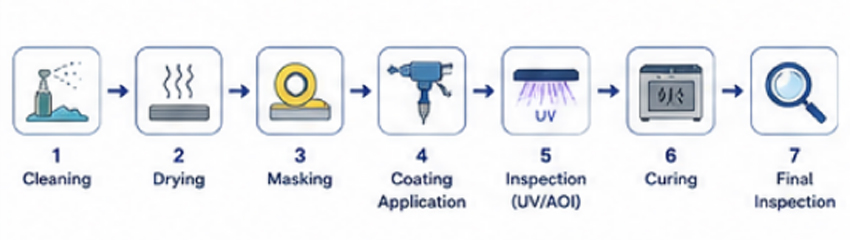
4.1 Surface Preparation Determines Coating Performance
Coatings bond to clean surfaces, not contamination. Residual flux, fingerprints, oils, dust, or moisture—even if invisible—can cause incomplete wetting, pinholes, delamination, or poor edge coverage. Cleaning and drying before coating improve the interface between coating and substrate and are widely regarded as essential prerequisites.
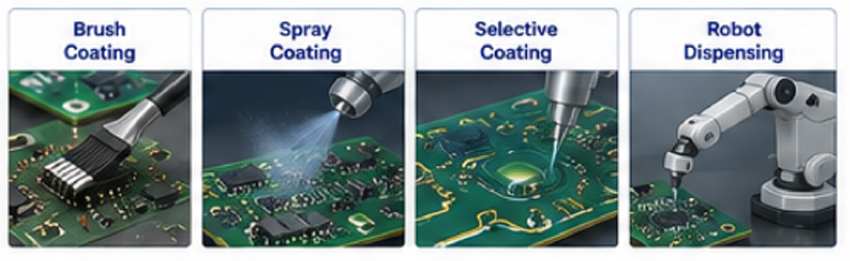
4.2 Different Coating Methods Serve Different Needs
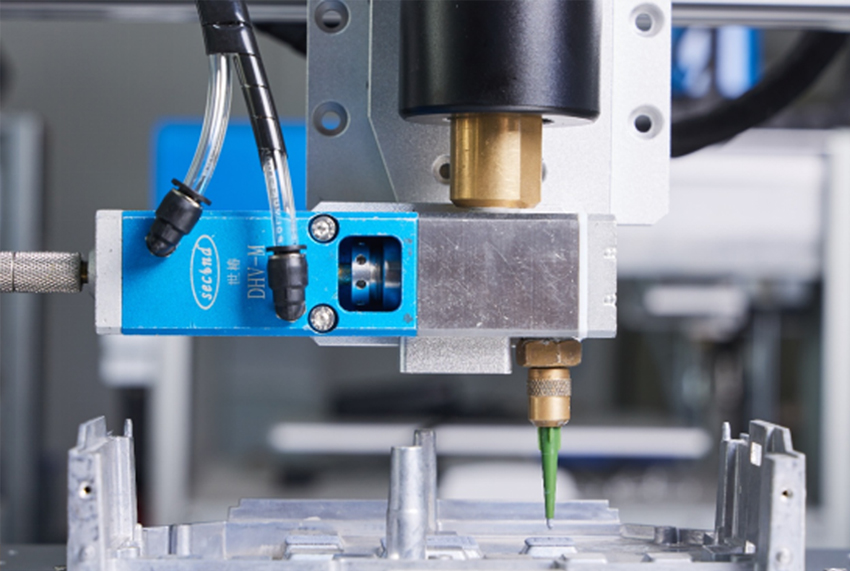
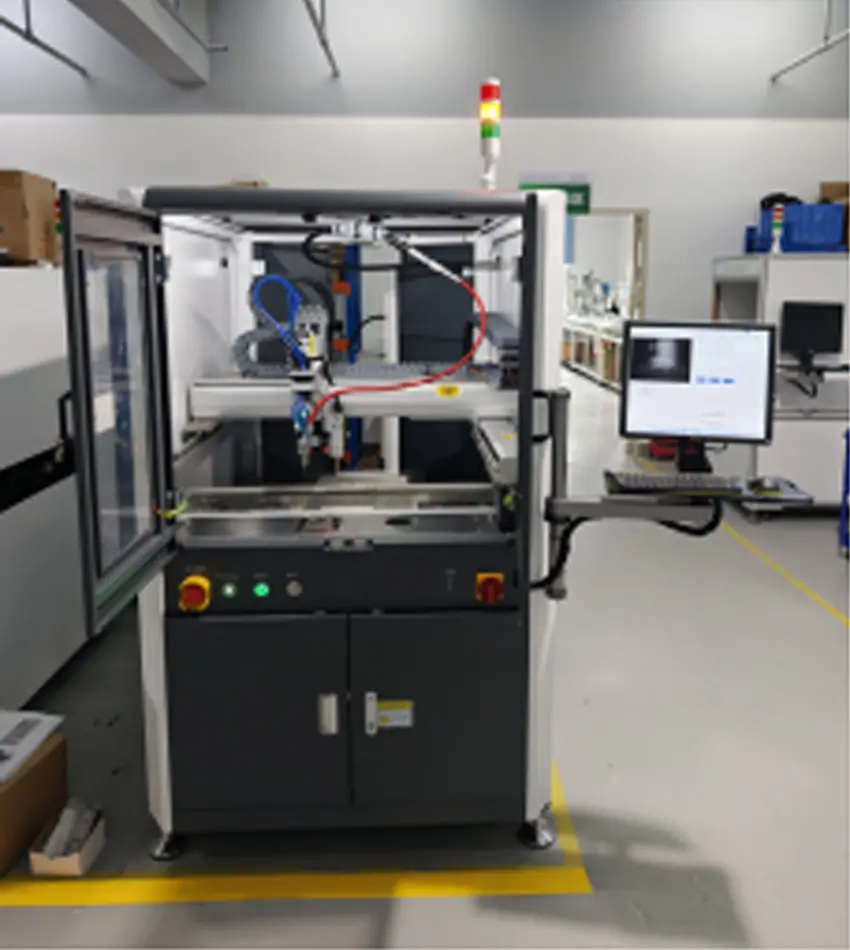
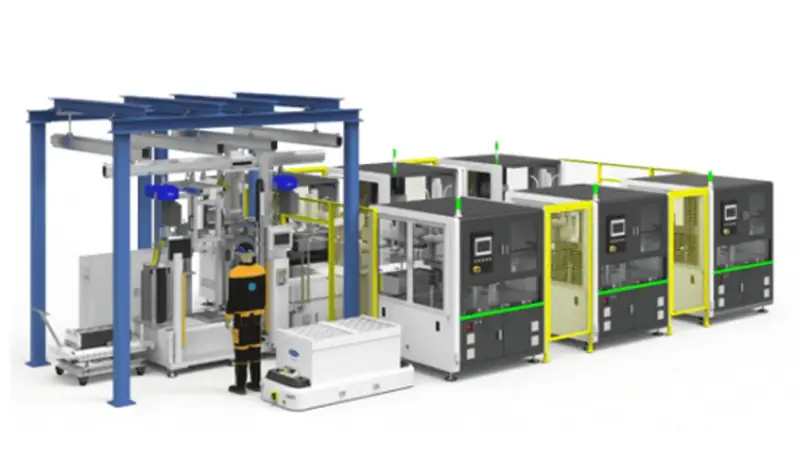
Choice of method balances production volume, board complexity, accuracy, and cost. Selective coating has become common because it deposits material only where protection is needed, reducing masking and material use. Modern selective systems rely on programmable platforms that maintain consistent paths and process repeatability rather than automation alone.
4.3 Process Stability Is More Important Than Individual Parameters
Thickness, pressure, and speed matter, but they interact with viscosity, ambient temperature and humidity, surface energy, board geometry, and curing conditions. Changing one variable often affects others. Engineers therefore seek a stable process window that delivers repeatable results over long production runs rather than a single “best” setting.
5. Typical Defects & Failure Analysis
Most defects arise from interactions among material, surface condition, and process.
Air bubbles: Trapped during application or curing; large voids can reduce insulation and create moisture paths.
Dewetting (fish eyes): Coating retracts, leaving exposed copper or solder, usually from contamination or low surface energy.
Shadowing: Tall components block the coating path, leaving underprotected zones—an issue that grows with density.
Excessive edge accumulation: Material flows to sharp edges and corners before curing, creating stress, inspection difficulties, or repair problems. Uniformity remains the primary goal.
6. Future Development
Higher integration, smaller components, and tougher environments demand greater consistency and efficiency. Industry trends include wider use of selective coating, UVtraceable materials for automated inspection, digital process monitoring and traceability, better compatibility with automated lines, and lowerVOC formulations.
Despite these advances, the fundamental objective is unchanged: establish a stable protective barrier that preserves longterm reliability under real operating conditions. Technology evolves, yet the underlying engineering principles remain remarkably consistent.
Shenzhen Second Intelligent Equipment Co., Ltd., with more than 20 years experience in the conformal coating, can provide various solution for PCB covering hundreds of application, is one of the best choice on this application for you.