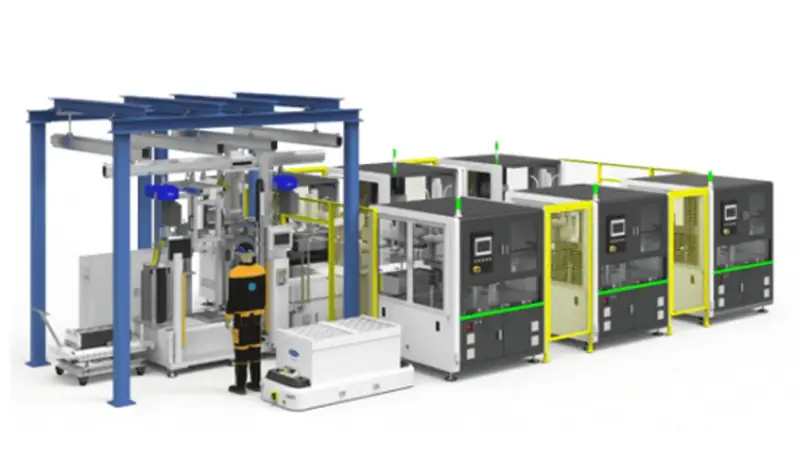
Key to Overcoming the Electronic Heat Dissipation Challenge
With the ever-increasing power density requirements of electronic devices in fields such as 5G communication, new energy vehicles, and high-performance computing, heat dissipation has become a core bottleneck restricting product reliability. Industry statistics show that over 55% of electronic device failures are directly related to poor thermal management. Among numerous thermal interface materials, 300cc thermal conductive gel, with its excellent plasticity, low thermal resistance, and automated adaptability, is replacing traditional thermal pads and becoming the preferred solution for high-end electronic heat dissipation.
However, the high viscosity and high thixotropy of thermal conductive gel pose severe challenges to its dispensing process—uneven glue application, stringing, and air bubble entrainment frequently plague production lines. The introduction of servo-assisted bonding technology provides a systematic solution to this problem.
Ⅰ.Why Choose 300cc Thermal Conductive Gel?
Compatible with Wide Tolerance Design Flexibility
300cc thermal conductive gel is a pre-crosslinked, soft, paste-like thermal interface material, composed of a silicone gel filled with thermally conductive ceramic powder. Its most significant feature is that it requires no post-curing and exhibits excellent thixotropy: it flows and fills gaps of varying thicknesses under low pressure, making it suitable for complex scenarios where multiple heat-generating devices share the same heatsink.
This means that design engineers don’t need to be overly concerned with the dimensional tolerances between the heatsink and the chip—the gel adaptively fills under assembly pressure without applying excessive mechanical stress to sensitive electronic components, effectively protecting them.
Balance Between Thermal Conductivity Dispensing Machine and Operational Efficiency The 300cc thermal conductive gel covers a wide thermal conductivity range from 1.5W/m·K to 10W/m·K, meeting diverse needs from consumer electronics to high-power servers. More importantly, the 300cc cartridge is the standardized packaging for automated dispensing equipment, allowing for direct use without secondary repackaging, significantly reducing material waste and refill time.
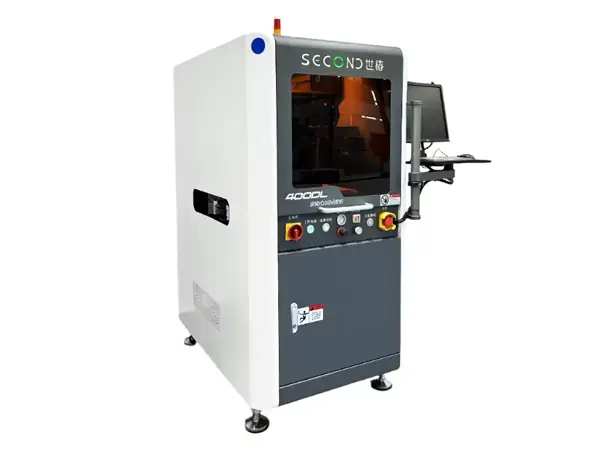
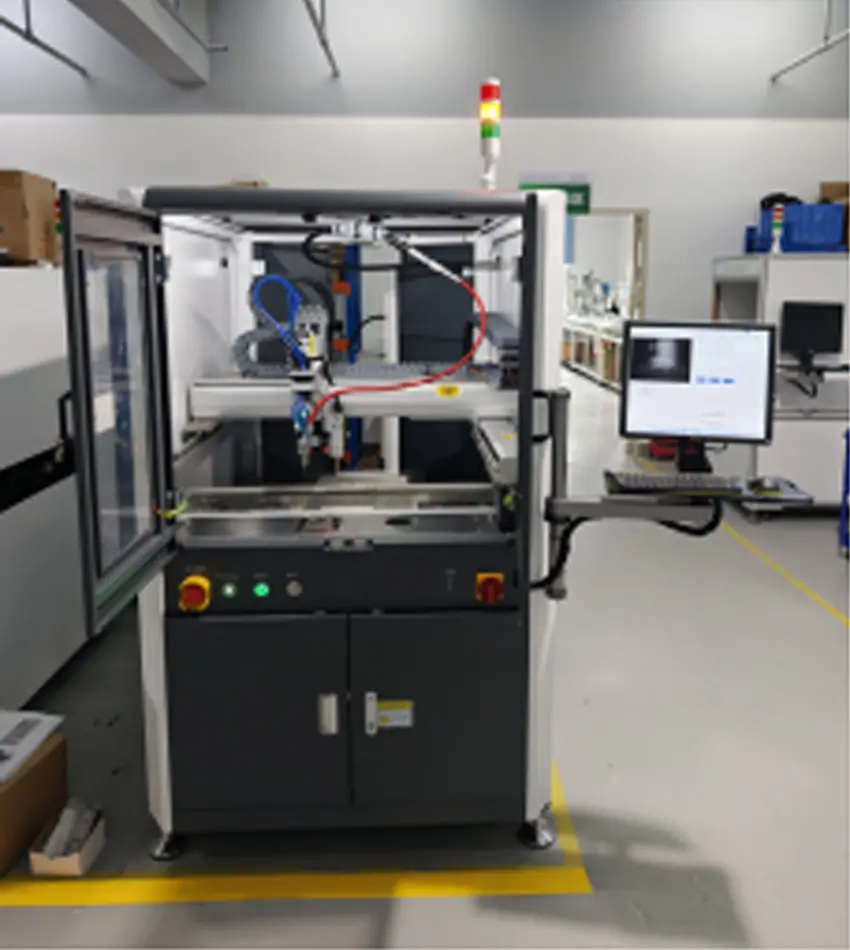
Automatic In-line PCB Glue Dispensing Machine SEC-DH400L
Second Intelligent In-line Automated Glue Dispensing Machine SEC-DH400L adopts an integrated mineral casting design, with ultra-high precision and super stability, powerful expansion capabilities, and can realize ion cleaning, dispensing, detection, UV exposure and other functions;
Adopting a gantry structure, it can bear large loads, stable structure, and a powerful CCD visual positioning system, which can meet the requirements of Mark point positioning, edge positioning, and 3D scanning positioning; strong scalability, and can expand AOI detection 3D detection, UV exposure curing and other functions;
Strong platform compatibility, contact and non-contact dispensing, single-head and multi-head synchronous dispensing, automatic compensation and adjustment of double-head spacing, five-axis dispensing function based on needle A/R displacement, etc.
Ⅱ.Three Major Pain Points in Thermally Conductive Gel Dispensing
In actual production, the automated coating of thermally conductive gels often faces the following challenges:
1.Difficulty in controlling dispensing accuracy: The high viscosity of the gel causes large pressure fluctuations in traditional pneumatic dispensing, resulting in a dispensing volume deviation of 5%-10%, causing uneven adhesive layer thickness and increased thermal resistance.
2.Severe stringing and tailing: The viscoelasticity of the gel makes it prone to “stringing” when dispensing. The trailing adhesive strings may contaminate adjacent pads or components, posing a short circuit risk.
3.Poor environmental adaptability: The viscosity of the gel is sensitive to temperature changes. Temperature differences in the workshop can lead to inconsistent dispensing volumes at different times for the same program, making it difficult to guarantee batch stability.
Servo-based pressure dispensing solution: Core technology and value
Servo-based pressure dispensing technology replaces traditional pneumatic dispensing with a “servo motor + precision metering mechanism,” fundamentally solving the above pain points.
Precise Metering: Dispensing accuracy within ±2%
Instant Dispensing Cut-off: Motor Reverse Suction Technology
Addressing the issue of stringing and tailing, the servo-assisted dispensing solution employs a motor reverse suction cut-off method. At the moment dispensing ends, the servo motor rotates in the opposite direction by a small angle, generating negative pressure at the nozzle to cleanly and neatly cut off the glue tail, eliminating the common tailing phenomenon of high-viscosity gels, ensuring neat coating edges, and preventing contamination.
Constant Temperature Closed-Loop Control: Eliminating the Influence of Environmental Fluctuations
The high-end servo-assisted automatic dispensing system integrates a temperature-viscosity closed-loop control module, providing constant temperature control for the glue cylinder and pipeline throughout the process, ensuring the glue remains within the optimal operating temperature range. Simultaneously, the system monitors extrusion pressure and flow rate in real time, dynamically adjusting servo parameters and automatically compensating for viscosity changes caused by filler settling or temperature fluctuations, ensuring consistent glue quantity during long-term continuous production.
Typical Application Scenarios
The servo-assisted adhesive bonding solution, paired with a three-axis or multi-axis motion platform, can adapt to various dispensing paths—center dot application, S-shaped dispensing, U-shaped or straight-line coating. Typical applications include:
●5G communication base stations:Filling the heat dissipation interface of high-power modules such as AAU and BBU.
●New energy vehicles:Thermal potting and heat dissipation for servo motor controllers and power battery CCS integrated busbars.
●Servers and data centers:High-precision thermally conductive coating between CPUs, GPUs, and heat sinks.
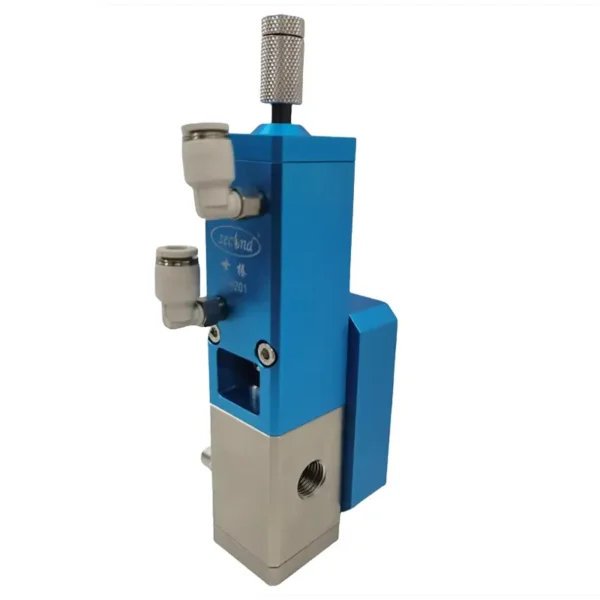
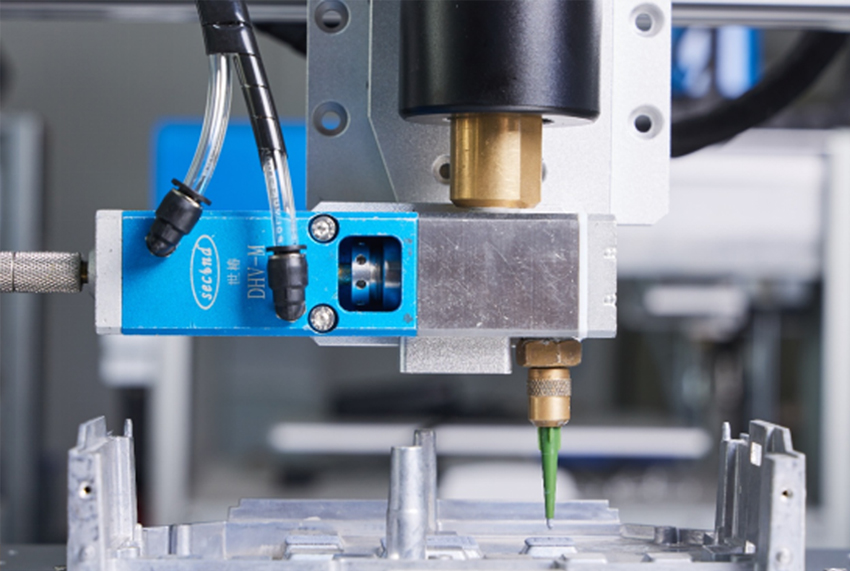
suction back glue dispensing valve
Conclusion:
The 300cc thermally conductive gel servo-assisted adhesive bonding solution, through three core technologies—precision metering, back-suction dispensing valve, and closed-loop control—achieves high-precision and high-consistency coating of high-viscosity thermally conductive materials on electronic components. It not only solves the precision and contamination problems of traditional processes but also significantly improves production line efficiency through standardized packaging and automated processes, providing a solid technical foundation for high-reliability thermal management of electronic equipment.
Second Intelligent has played an important role in theresearch, development, manufacturing, pre-sales and after-sales services of fluid dispensing robot, potting and coating solutions which range from various types of automatic fluid dispensing, potting, two-component potting machines and coating machines with desktop, free-standing, inline or cobot combined systems, and widely used in global electrical, electronics, home appliances, automobile, telecom, pharmaceutical, automotive electronics, semiconductor, aerospace, LED and more