The key to dispensing adhesive onto the back cover of a mobile phone lies in addressing the precision challenges posed by 3D curved surfaces and ultra-narrow bezels. Traditional three-axis dispensing equipment struggles to meet these requirements, while the combination of a five-axis dispensing machine and a piezoelectric jet valve is the mainstream solution to this problem. Simply put, the advantages of this system are: five-axis linkage allows the dispensing head to “point and shoot,” the piezoelectric jet valve ensures the adhesive reaches the target area “fast and accurately,” and the vision system ensures the entire process is “flawless.”
Core Feature 1: Five-Axis Dispensing Machine – Achieving Precise Trajectory on 3D Curved Surfaces
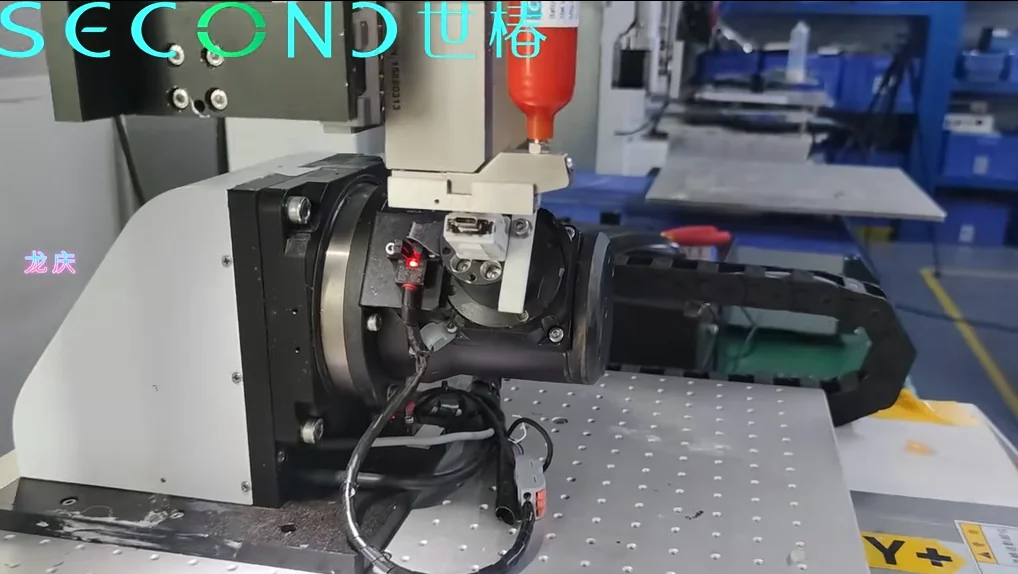
The five-axis dispensing machine adds an A-axis (flip) and a C-axis (rotation) to the existing X, Y, and Z linear axes, enabling the dispensing valve to always be perpendicular to the workpiece’s cross-section or maintain the optimal angle. It excels at handling the sides, curved surfaces, and corners of the mobile phone’s frame.
Its “intelligent brain” is its powerful motion control system, capable of performing various complex interpolations such as spatial arcs and spirals. In practical applications, it can meet the stringent specifications for adhesive application on the sides of mobile phones, such as:
Adhesive thickness: uniformly controlled within 0.25mm ± 0.05mm
Initial dispensing drop: controlled within ±0.06mm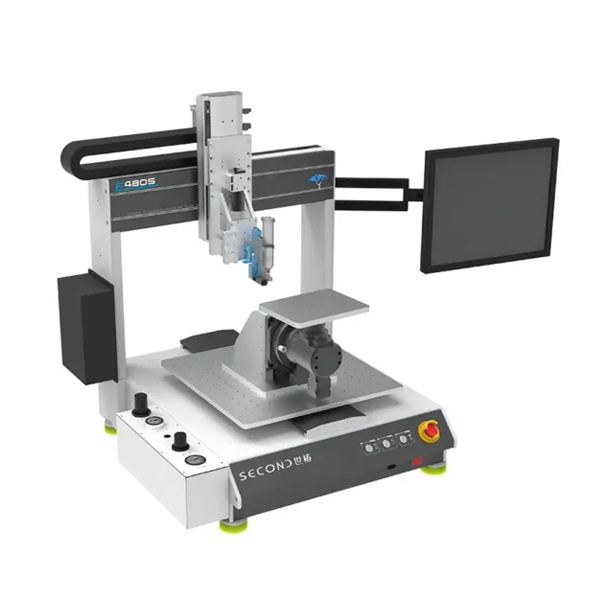
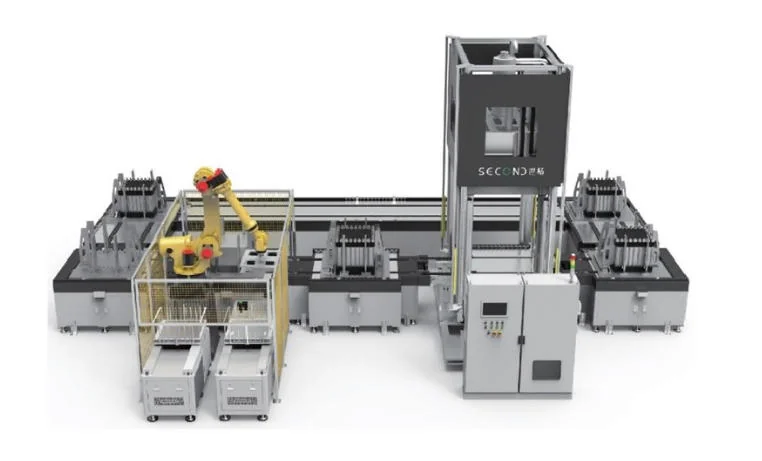
Desktop glue dispensing machine robot SEC-E480SV with CCD visual
Second Intelligent Desktop Glue Dispensing Machine SEC-E480SV adopts high-precision servo motor + grinding ball screw, which can ensure accuracy while having higher cost performance. It is also equipped with CCD visual height measurement, which makes programming more efficient and more accurate. It is an aviation aluminum alloy die-casting one-piece design desktop glue dispensing machine, which is more solid, more stable, with double rotating stations, small and flexible.
Core Feature 2: Piezoelectric injection valve – enabling non-contact high-speed injection
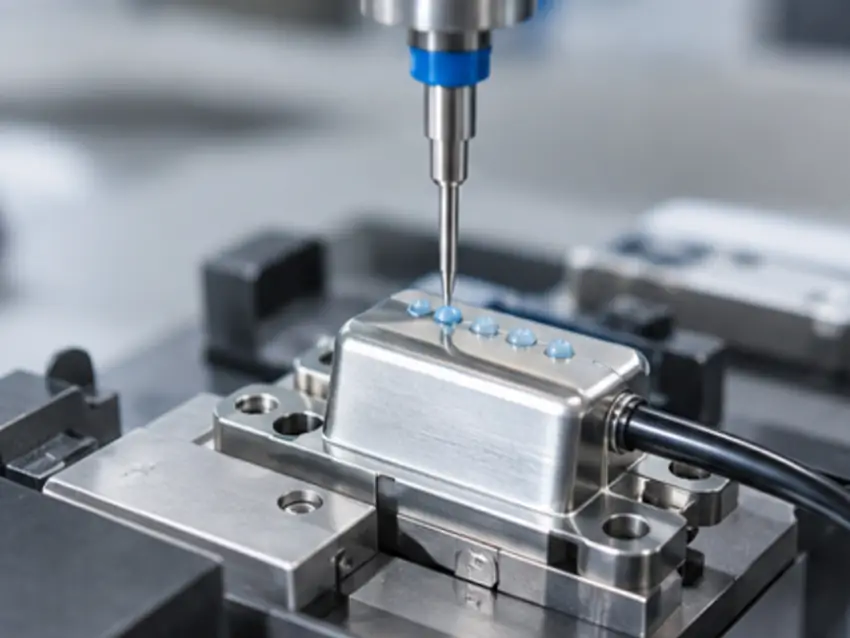
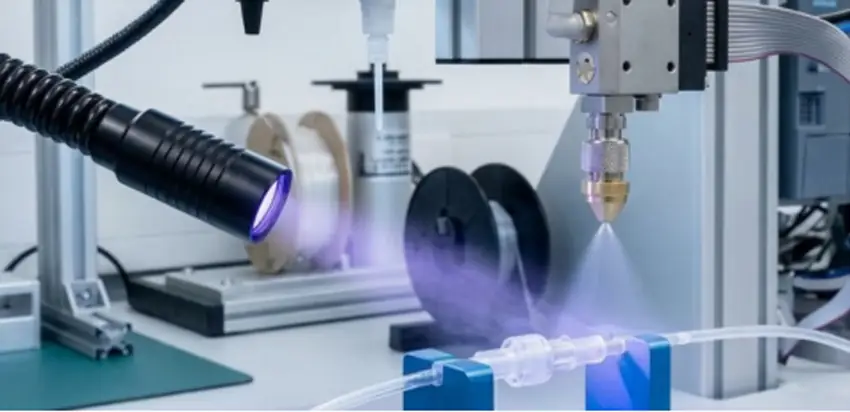
The piezoelectric jet valve is the core component for achieving “non-contact” jetting. It utilizes the inverse piezoelectric effect of piezoelectric ceramics to drive a striker in high-speed reciprocating motion within the nozzle (up to 1000 times/second), spraying the adhesive onto the substrate in “dots” or “lines.” Throughout the entire process, the valve body does not come into contact with the product or the adhesive.
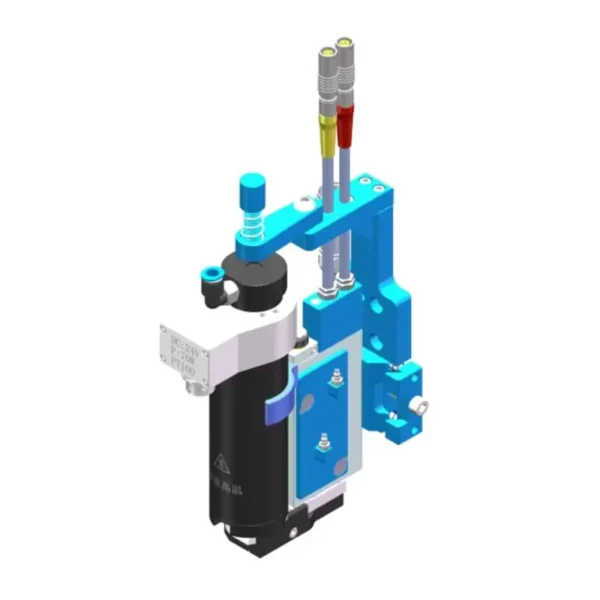
Piezoelectric jet valve F-P102
Its core advantages are:
● Ultra-high frequency and precision: Minimum dot diameter can reach 0.14mm, and minimum adhesive volume can be as low as 1nl, suitable for narrow bezels and small areas;
● Wide adhesive compatibility: Can handle fluids with viscosities ranging from 1 to 200,000cps, including thermally conductive gels, UV adhesives, epoxy resins, etc.;
● Stable adhesive dot consistency: Precisely controls the amount of adhesive per drop, achieving a consistency of ±2%, ensuring highly uniform waterproofing and bonding effects for every phone;
The finishing touch: Vision system – closed-loop control ensures precision. Powerful mechanics and valves alone are not enough; real-time calibration with “eyes” and a “brain” is also required. A complete vision system performs the following closed-loop control:
1.High-precision positioning and compensation:Through 3D line laser or CCD image scanning, the actual position and contour of the product are acquired. After comparison with standard procedures, the system automatically calculates the offsets of the X, Y, and Z axes and performs dynamic compensation, thereby correcting minor errors in incoming materials or positioning.
2.Online Inspection (AOI): After dispensing is completed, the vision system will immediately perform a 100% inspection of the glue path to detect defects such as glue breakage, glue overflow, and uneven glue width, and record the data in real time to achieve quality traceability throughout the product life cycle.
Summary: Collaborative Workflow
A typical precision dispensing cycle looks roughly like this:
Product Placement: The phone’s mid-frame is delivered to the dispensing station.
Visual Positioning: The camera captures product feature points (such as Mark points), and software calculates the precise position and deflection angle.
Path Compensation: The control system corrects the preset five-axis motion trajectory in real time based on the visual data.
High-Speed Spraying: The piezoelectric spray valve sprays adhesive at high speed to the designated location in a non-contact manner according to the corrected path.
Online Inspection: After dispensing is completed, the vision system immediately scans the adhesive line for quality assessment.
Second Intelligent has played an important role in theresearch, development, manufacturing, pre-sales and after-sales services of fluid dispensing robot, potting and coating solutions which range from various types of automatic fluid dispensing, potting, two-component potting machines and coating machines with desktop, free-standing, inline or cobot combined systems, and widely used in global electrical, electronics, home appliances, automobile, telecom, pharmaceutical, automotive electronics, semiconductor, aerospace, LED and more.