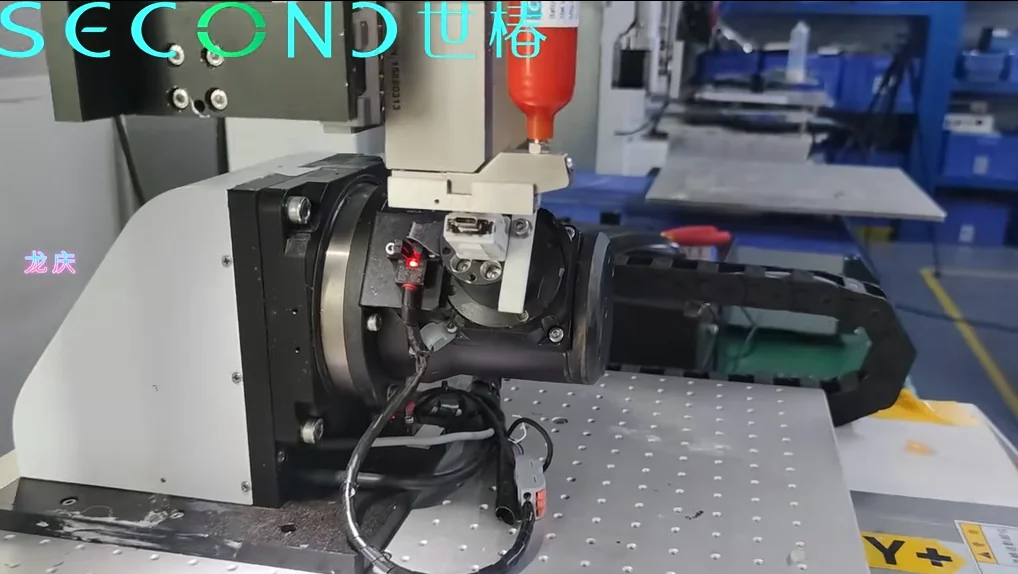
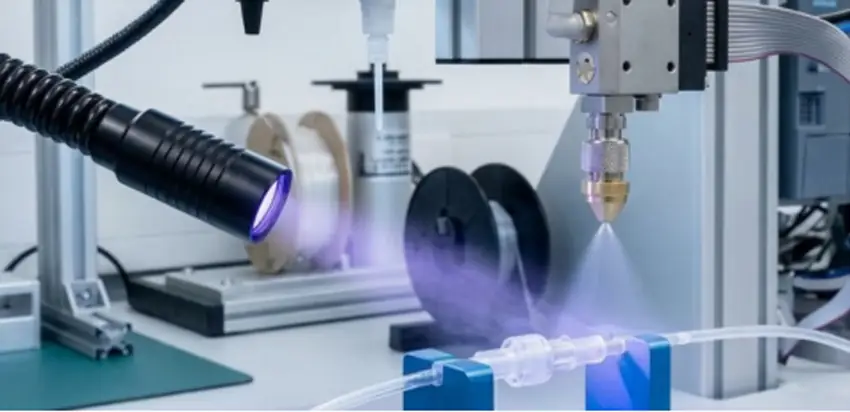
As a leading enterprise in China’s fluid application sector, SECOND has long been dedicated to providing high-precision glue dispensing system solutions for industries such as 3C electronics, semiconductors, and new energy. Amid the waves of Industry 4.0 and intelligent manufacturing, the integrated application of vision positioning and laser height measurement technologies is profoundly transforming traditional dispensing processes, emerging as a critical technological pathway for enhancing dispensing quality and efficiency.
I. Vision Positioning System: The “Eyes” of Dispensing Precision
In modern dispensing processes, vision systems play an irreplaceable role. The high-resolution CCD vision systems integrated into SECOND glue dispensing equipment achieve sub-pixel positioning accuracy through image capture, feature extraction, and coordinate conversion. This technological breakthrough effectively addresses issues such as dispensing position deviation caused by incoming material tolerances, fixture inaccuracies, or PCB warping.
In practical applications, the vision system enhances process effectiveness in the following ways: Firstly, using template matching and contour recognition technologies, even with positional deviations of up to ±1mm in incoming materials, the system can automatically compensate and correct, ensuring the dispensing path perfectly aligns with the product design. Secondly, the vision system can perform glue shape inspection, judging in real-time whether the glue width and height meet process requirements, thereby achieving closed-loop quality control. For example, in Micro-LED encapsulation dispensing, the vision system ensures the positioning accuracy of the sealant around each chip reaches ±0.02mm, significantly reducing the risk of short circuits.
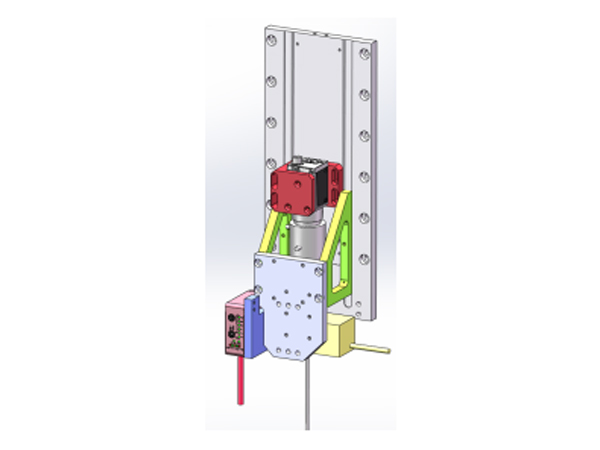
II. Laser Height Measurement Technology: The “Ruler” in Three-Dimensional Space
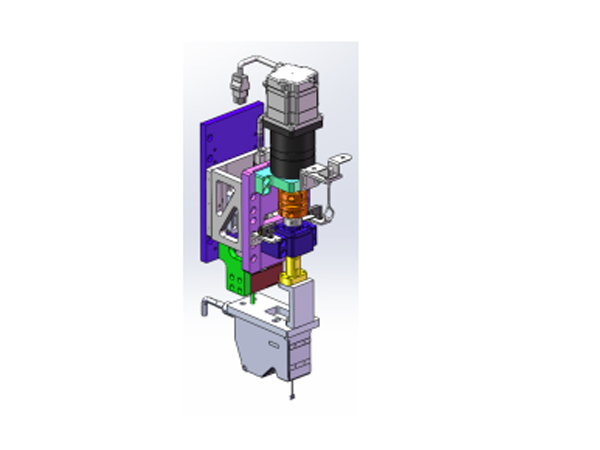
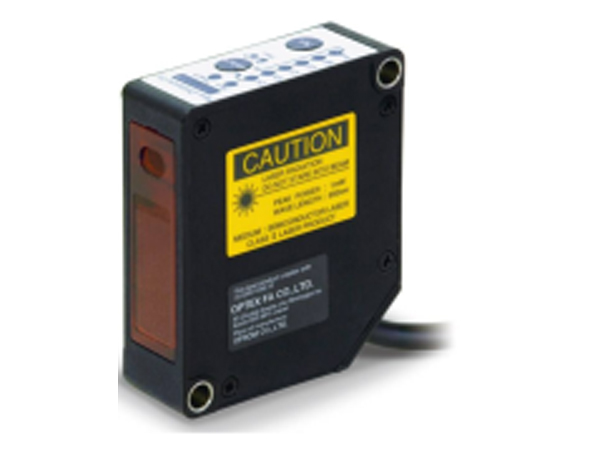
Traditional dispensing equipment often plans paths based on a two-dimensional plane, ignoring height variations on the workpiece surface. The laser displacement sensors introduced by SECOND utilize the principle of triangulation to measure the distance between the needle and the workpiece surface in real-time with micron-level accuracy. This innovation offers three core advantages:
First, adaptive Z-axis compensation. For curved workpieces or warped PCBs, laser height measurement can perform surface scanning before dispensing to generate a 3D elevation map, dynamically adjusting the Z-axis height to maintain a constant glue dispensing distance. For example, in new energy battery module gluing, facing height variations of 1.5mm, the system achieves automatic following, ensuring glue line uniformity.
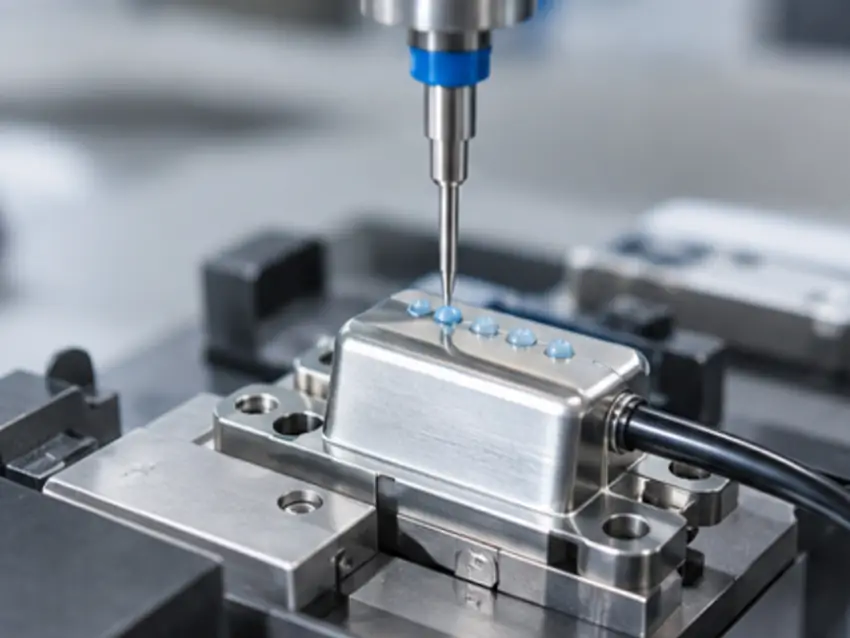
Second, precise glue volume control. According to fluid dynamics principles, a 10% change in dispensing height results in approximately a 15% change in glue dot diameter. By maintaining a constant needle-to-workpiece distance, laser height measurement eliminates the impact of height variations on glue discharge volume. Data shows that this technology enables SECOND equipment to achieve a dispensing volume repeatability accuracy of ±1%.
Third, collision prevention protection. During high-speed dispensing, the laser continuously monitors for obstacles ahead; upon detecting an abnormal protrusion, it immediately triggers an emergency stop, effectively protecting the precision needle.
III. Synergistic Effects of Technology Integration
The combination of vision and laser height measurement achieves comprehensive perceptual capabilities encompassing “XY positioning + Z-axis height measurement.” SECOND’s SUPER series dispensing machines demonstrate the value of this technological synergy in the following ways:
In mobile phone mid-frame dispensing applications, the system first uses vision to locate the FPC connector position, then laser-scans the curved surface profile of the frame, and finally generates a 3D dispensing path. This solution successfully reduces the dispensing defect rate from over 5% with traditional methods to below 0.3%. Particularly in chip underfill processes, the vision system accurately locates the four corners of the chip while the laser monitors the substrate flatness in real-time, working together to ensure the glue penetrates evenly without overflow.
IV. Challenges and Countermeasures in Technology Implementation
Although vision and laser technologies offer significant advantages, they still face challenges in practical application. Ambient light variations can affect vision recognition stability, and reflective surfaces can interfere with laser height measurement accuracy. SECOND employs multi-light source adaptation strategies (such as coaxial light and ring light) and anti-interference algorithms to effectively improve detection reliability under complex working conditions. Meanwhile, the company’s established process parameter database provides optimized parameter combinations for different materials and adhesive types, significantly lowering the debugging threshold.
V. Future Development Trends
As industrial requirements become increasingly precise, SECOND is advancing three technological upgrades: First, upgrading from 2D vision to 3D vision to directly obtain three-dimensional information of the workpiece. Second, developing AI vision algorithms to achieve intelligent classification and root cause analysis of glue path defects. Finally, utilizing digital twin technology to simulate the dispensing process in a virtual environment for further optimization of process parameters.
In summary, vision and laser height measurement technologies have become indispensable supports for modern dispensing processes. As an industry benchmark, SECOND through continuous technological innovation and process optimization, not only enhances dispensing precision and efficiency but also drives the entire industry toward intelligent and digital transformation. In an era of ever-increasing precision manufacturing demands, this integrated technology application model will provide sustained momentum for industry development.