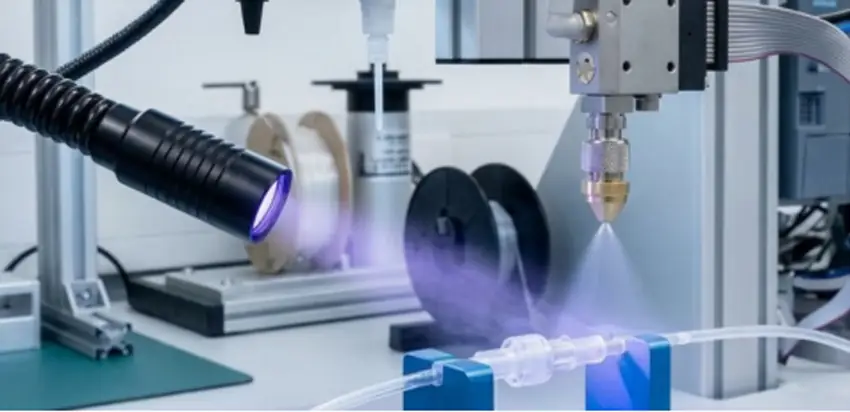
In the fields of 5G communication, new energy vehicle electronic control, and high-power LED lighting, aluminum alloy heat sinks have become the mainstream structural choice for thermal management. However, as hardware power density continues to rise, traditional thermal pads and single-component dispensing processes are facing the dual bottlenecks of high interfacial thermal resistance and the contradiction with automation.
The industry is urgently seeking a coating solution that can both fill microscopic gaps and adapt to high-speed automation. Against this backdrop, the combination of two-component thermal conductive gel and servo-driven pressure bonding systems is redefining the process standard for “precision thermal conduction.”
Ⅰ.Why Does Aluminum Alloy Heat Dissipation Require “Dispensing” Instead of “Pad Placement”?
After CNC machining or die casting, aluminum alloy surfaces exhibit micron-level roughness and flatness fluctuations (typically ±0.1mm to ±0.3mm). While traditional thermal pads can fill these gaps, their compressive stress can easily cause deformation of the PCB board or IGBT module; furthermore, pads are “prefabricated parts,” and die-cutting is extremely costly for irregularly shaped heat dissipation teeth or stepped structures.
The advantages of dispensing are:
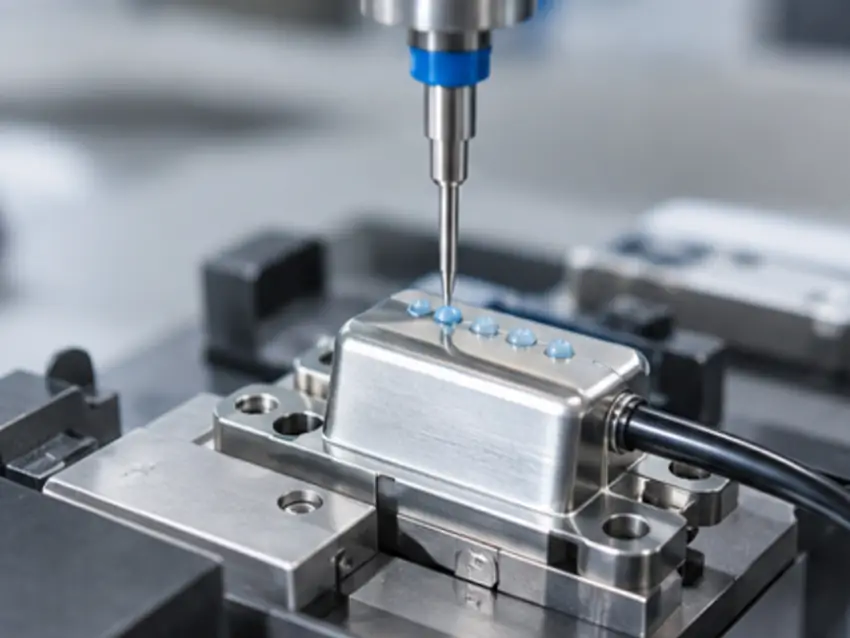
● Zero-stress filling: The gel is in paste form before curing, causing no stress damage to sensitive components.
● Shape-conforming: The liquid gel can automatically penetrate the microgrooves on the aluminum alloy surface, eliminating air and minimizing interfacial contact thermal resistance.
● Automation-friendly: When used with an online dispensing machine, fully automated coating machine can be achieved, eliminating the need for manual film application.
Ⅱ.The “Golden Triangle” Parameters for Two-Component Thermal Conductive Gel Dispensing For aluminum alloy heat dissipation applications, two-component dispensing is not simply a matter of “squeezing it on”; precise control of the balance in the following three dimensions is essential:
Process dimension | Key Indicators | Recommended values for aluminum alloy heat dissipation scenarios |
Mixing ratio accuracy | A: Volume ratio error of B | ≤ ±1% (depending on servo screw synchronization) |
Adhesive application trajectory line diameter | Width/Height after Flattening | Width = Gap height × 1.3~1.5 times (to ensure full filling and no outward expansion after pressing) |
glue dispensing speed | Delay between dispensing head movement and dispensing start | Delay compensation should be < 50ms (to prevent glue buildup or spikes at corners). |
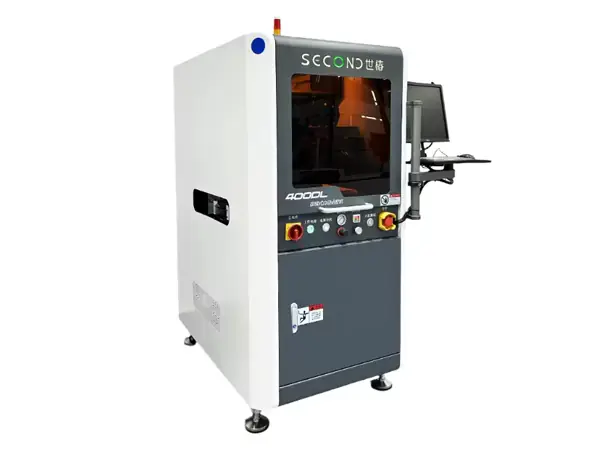
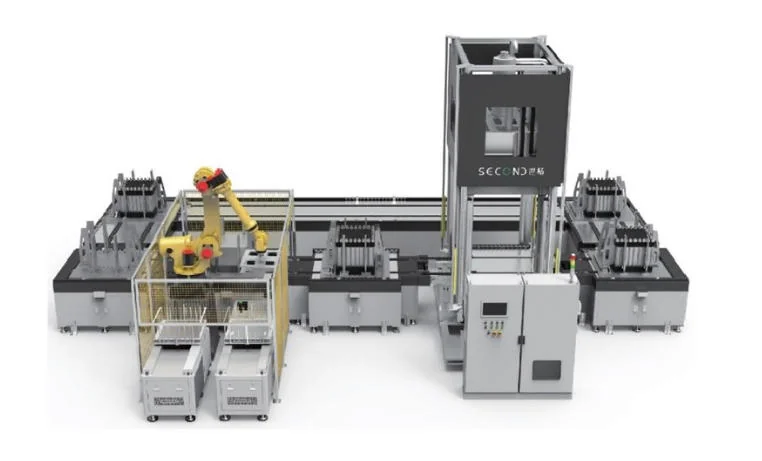
Automatic In-line PCB Glue Dispensing Machine SEC-DH400L
Second Intelligent In-line Automated Glue Dispensing Machine SEC-DH400L adopts an integrated mineral casting design, with ultra-high precision and super stability, powerful expansion capabilities, and can realize ion cleaning, dispensing, detection, UV exposure and other functions;
Adopting a gantry structure, it can bear large loads, stable structure, and a powerful CCD visual positioning system, which can meet the requirements of Mark point positioning, edge positioning, and 3D scanning positioning; strong scalability, and can expand AOI detection 3D detection, UV exposure curing and other functions;
Strong platform compatibility, contact and non-contact dispensing, single-head and multi-head synchronous dispensing, automatic compensation and adjustment of double-head spacing, five-axis dispensing function based on needle A/R displacement, etc.
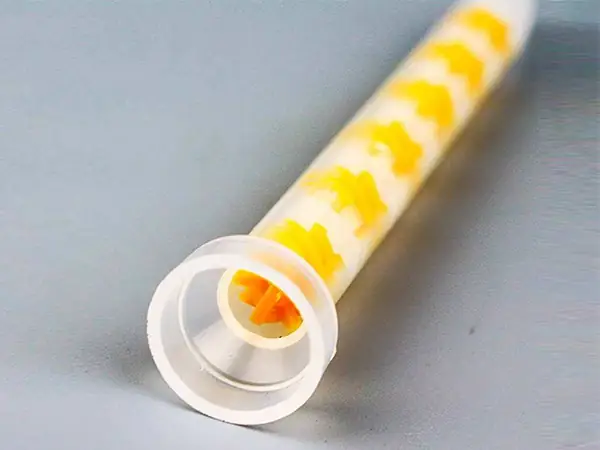
Special Note: Static mixing tubes for two-component gels are an easily overlooked blind spot in the process. It is recommended to use KM series (square spiral core) mixing tubes with at least 24 sections to ensure that the A/B components of the high-filler (>85% solids content) adhesive are thoroughly homogenized before entering the aluminum alloy surface.
III. Servo-Assisted Dispensing: The Precise Key to Ending “Dispensing Volume Fluctuations”
In the application of two-component thermally conductive gels, the biggest process challenge is not the material itself, but rather the imbalance in proportions and dispensing volume drift. Due to the viscosity difference between components A and B (usually component B catalyst has a lower viscosity), traditional pneumatic dispensing or gear pumps are prone to mixing ratio imbalances due to air pressure fluctuations or pump wear—resulting in poor curing or, in severe cases, gel that doesn’t dry, causing the entire batch of aluminum alloy casings to be scrapped.
The introduction of servo-assisted dispensing systems has completely changed this situation. Its core technology is based on closed-loop feedback control:
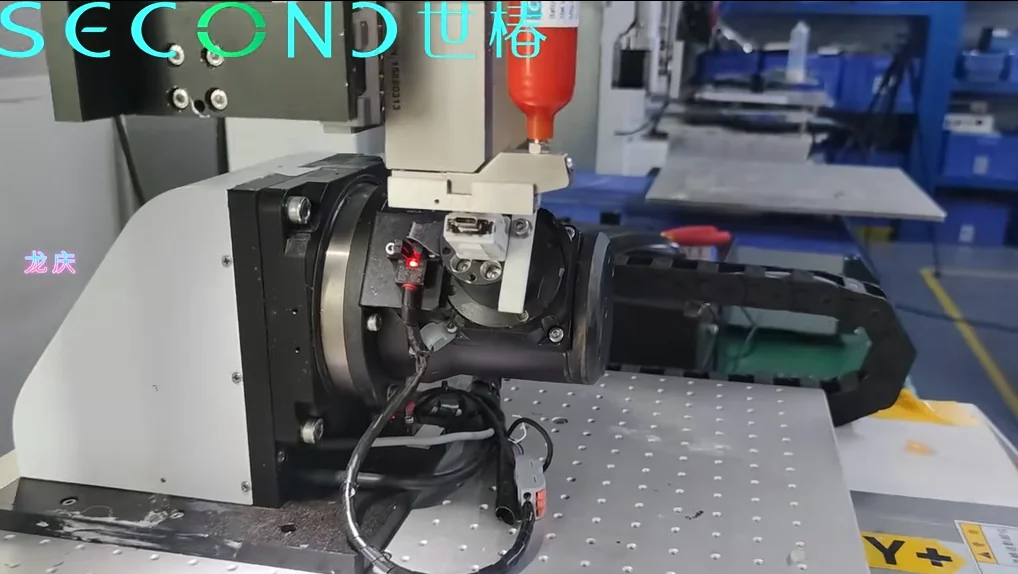
● Precision Screw Valve + Servo Motor: A servo motor drives a high-precision screw to extrude the adhesive in a forward displacement manner. The dispensing volume is only related to the screw speed, and is independent of the remaining glue in the glue tank, completely solving the problem of “remainder deviation”.
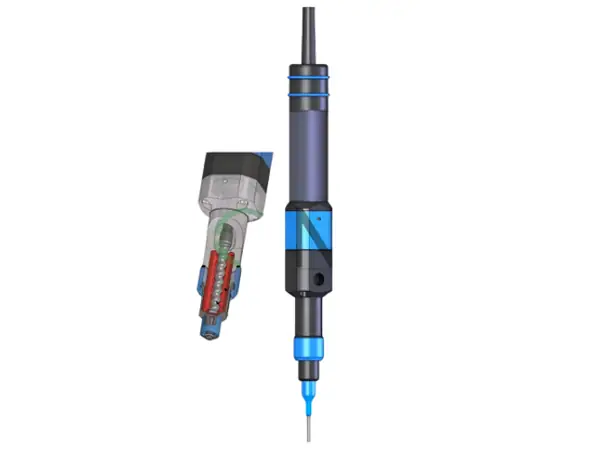
screw glue dispensing valve
● Real-time pressure monitoring: The system has a built-in pressure sensor. When abnormal pipeline pressure is detected (such as slight nozzle blockage), the speed compensation is automatically adjusted to ensure consistent glue application trajectory.
● Proportional synchronization control: For two-component systems, dual servo linkage is used to ensure that the pressure difference between A and B glues is constant before entering the static mixing tube, and the mixing ratio error is controlled within ±1%.
Ⅳ.Practical Application Scenarios and Process Parameter Recommendations: This solution performed excellently in the prototyping verification of cold plates for new energy vehicle power batteries and domain controller housings:
● Application Point: Thermal filling between aluminum alloy water-cooled plates and MOSFET power transistors.
● Adhesive Line Design:Employ a “single continuous C-shaped” or “double parallel line” trajectory to avoid closed loops that could lead to air bubble trapping.
● Key Parameters:
a.Needle Specification: 20G – 22G (inner diameter 0.41mm – 0.51mm), selected based on gap height.
b.Adhesive Dispensing Speed: Recommended setting is 15mm/s – 25mm/s, with speed fluctuation < 5% in servo mode.
c.Adhesive Pressure: Servo torque setting is 0.2 – 0.4 N·m to ensure continuous adhesion of the thixotropic adhesive under low shear force.
Actual test data feedback: Compared to traditional gasket solutions, using servo-bonded two-component gel reduced the chip junction temperature (Tj) by an average of 8°C – 12°C. Furthermore, after 1000 thermal shock cycles from -40°C to 125°C, the gel showed no cracking or oil separation, and its adhesion remained intact.
Ⅴ.Avoidance Guidelines: 3 Key Nodes for Implementing the New Solution
While the servo-bonded solution offers significant advantages, please pay attention to the following engineering details when implementing it on aluminum alloy production lines:
1.Aluminum Alloy Surface Cleanliness:Residual mold release agent on die-cast aluminum alloys is the main cause of decreased adhesion between the gel and the substrate. It is recommended to add a plasma cleaning process before dispensing to improve the surface dyne value.
2.Mixing Tube Replacement Cycle:The two-component adhesive gradually cures within the mixing tube. It is essential to set the frequency of automatic dispensing and mixing tube replacement based on the adhesive’s pot life. Replacement every 4-6 hours is recommended.
3.Preventing glue from curing in the nozzle:If the production line stops for more than 10 minutes, the servo back suction function should be activated to back the glue in the nozzle by 1-2mm to prevent the nozzle from becoming clogged and causing the glue to burst when the line starts up again.
In conclusion,
aluminum alloy thermal dispensing is evolving from “rough application” to “precise digital control.” The servo-press application of two-component thermally conductive gel represents not only an upgrade in adhesive materials but also a leap forward in process capability index (Cpk) in intelligent manufacturing. It makes every drop of thermally conductive medium “traceable and precisely controllable,” providing the ultimate solution for thermal management of high-reliability electronic devices.
If you are struggling with the heat dissipation efficiency or dispensing yield of aluminum alloy housings, consider introducing a servo-press two-component system—it may be the “key adhesive” to enhancing your product’s competitiveness.
Second Intelligent has played an important role in theresearch, development, manufacturing, pre-sales and after-sales services of fluid dispensing robot, potting and coating solutions which range from various types of automatic fluid dispensing, potting, two-component potting machines and coating machines with desktop, free-standing, inline or cobot combined systems, and widely used in global electrical, electronics, home appliances, automobile, telecom, pharmaceutical, automotive electronics, semiconductor, aerospace, LED and more.