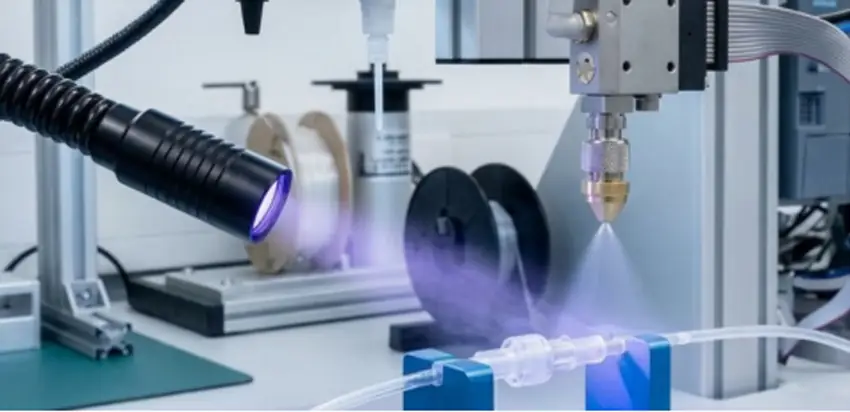
The protection performance and lifespan of LED driver power supplies are highly dependent on the quality of the potting process. This article focuses on an integrated potting solution that uses a two-component dynamic mixing tube as the core stirring unit, integrating precision metering and dispensing systems. This process utilizes a high-speed rotor built into the dynamic mixing tube to perform forced shearing and homogenization of the two-component adhesive, effectively solving the mixing challenges of high-viscosity, high-filler, and dissimilar adhesive ratios. Combined with closed-loop metering and precision dispensing control, this solution provides a systematic process guarantee for high-reliability applications such as outdoor lighting and industrial power supplies, ensuring uniform mixing, dispensing accuracy, and production consistency.
I. Introduction: Technological Challenges and Evolution of LED Power Supply Encapsulation
As the “heart” of a lighting system, the LED driver power supply faces multiple environmental pressures during long-term stable operation, including high humidity, extreme temperature shocks, salt spray corrosion, and dust. Encapsulation, by filling the power supply casing with polymer materials to completely encapsulate electronic components and form a robust physical and chemical protective layer, is a key process for improving the power supply’s IP protection rating and thermal conductivity.
However, encapsulation is far more than a simple “glue injection.” Its core challenge lies in the precise mixing and application of the two-component materials:
●Diversity of Material Systems: From thermally conductive silicone and high-weather-resistant silicone to rigid epoxy resin, the viscosity, gel time, and mixing ratio (ranging from 1:1 to 100:10) of different adhesives vary significantly.
● Bottleneck of Mixing Uniformity: Some adhesives contain a high proportion of thermally conductive fillers (such as alumina and silicon nitride), or the viscosities of components A and B differ considerably. Traditional static mixing tubes rely on passive flow distribution via helical blades, which is highly susceptible to uneven mixing due to flow resistance imbalances, leading to localized poor curing, inconsistent hardness, or a sharp decline in thermal conductivity.
Against this backdrop, the industry urgently needs a mixing technology capable of proactively handling complex adhesive systems. The emergence of the two-component dynamic mixing tube represents a key breakthrough in this process evolution, and its integration with precision dispensing systems constitutes a landmark solution for high-reliability potting.
II. Core Technology Breakdown: Working Principle and Advantages of the Two-Liquid Dynamic Mixing Tube The dynamic mixing tube is the core of the entire solution, and its design concept differs fundamentally from that of the static mixing tube.
2.1 Structural Design and Operating Principle
A dual-fluid dynamic mixing tube typically consists of two parts: an outer stationary spiral sleeve and an inner high-speed rotating rotor. The operating process is as follows:
1.Forced Feeding: Components A and B of the adhesive are precisely delivered to the mixing tube inlet via a metering pump.
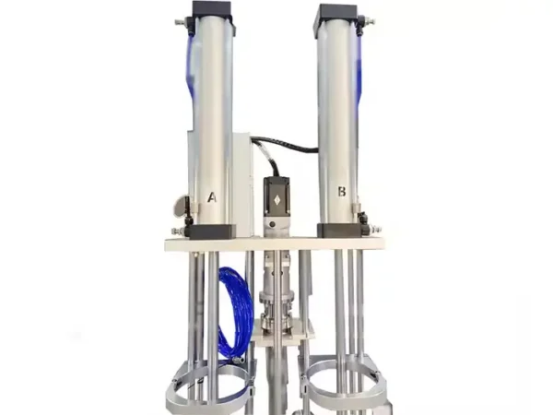
2.Dynamic Shearing and Dispersion: The internal rotor, driven by a precision pneumatic motor or servo motor, rotates at a high speed of hundreds to thousands of revolutions per minute within the sleeve. The rotor blades and the inner wall of the sleeve form a narrow shear gap, applying strong shear force and turbulence to the passing adhesive, forcibly dispersing the two components and internal filler particles at a microscopic scale.
3.Homogeneous Output:After multi-stage dynamic shearing, the uniformly mixed adhesive is discharged from the outlet and directly enters the dispensing stage.
2.2 Significant advantages compared to static mixing
Comparison Dimensions | Traditional static mixing tube | Dual-Component Dynamic Mixing Tube |
Hybrid | Passive diversion based on the adhesive’s own flow pressure | Externally powered, active forced shearing |
Suitable Adhesive Material | Applicable only to low-viscosity systems with a mixing ratio close to 1:1 | Suitable for systems with high viscosity, high filler content, and extreme mix ratios (such as 100:5) |
Mixing Uniformity | It is highly susceptible to flow resistance and is prone to creating mixing dead zones. | Highly uniform, with controllable and stable mixing accuracy |
Adaptability | Changes in adhesive require the use of mixing tubes of different specifications. | It can be adapted to different types of rubber by adjusting the rotational speed, offering high flexibility. |
Solidification Risks | The mixing chamber has no moving parts and is not prone to clogging. | Be sure to clean the machine when it is shut down to prevent curing residue from causing blockages. |
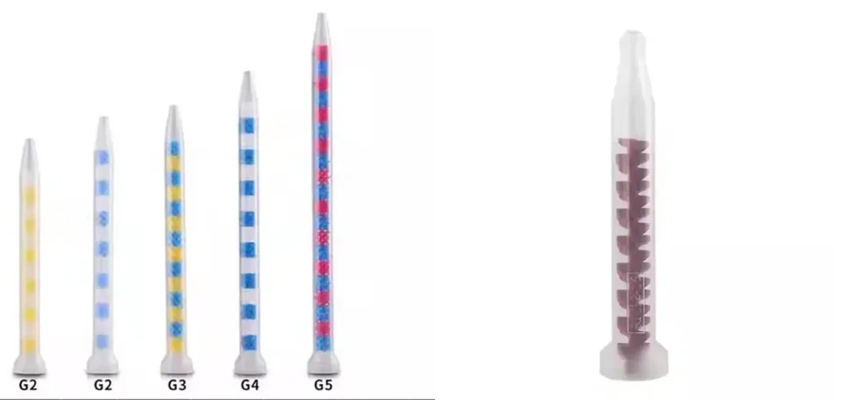
Static Mixing Tube Dynamic mixing tube
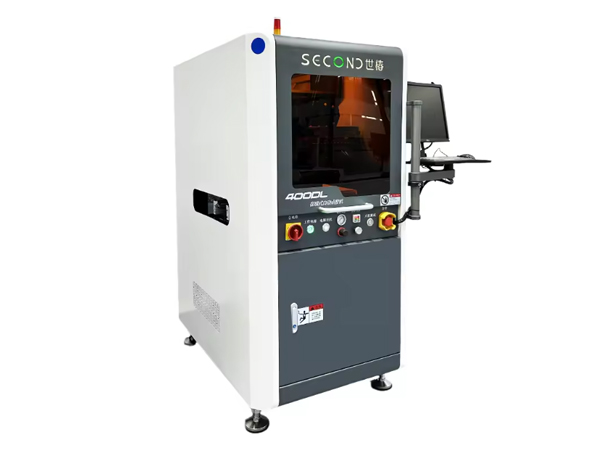
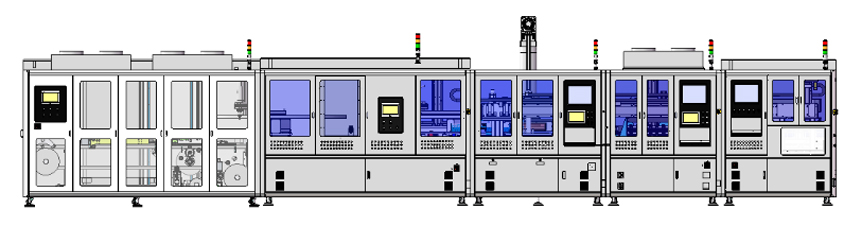
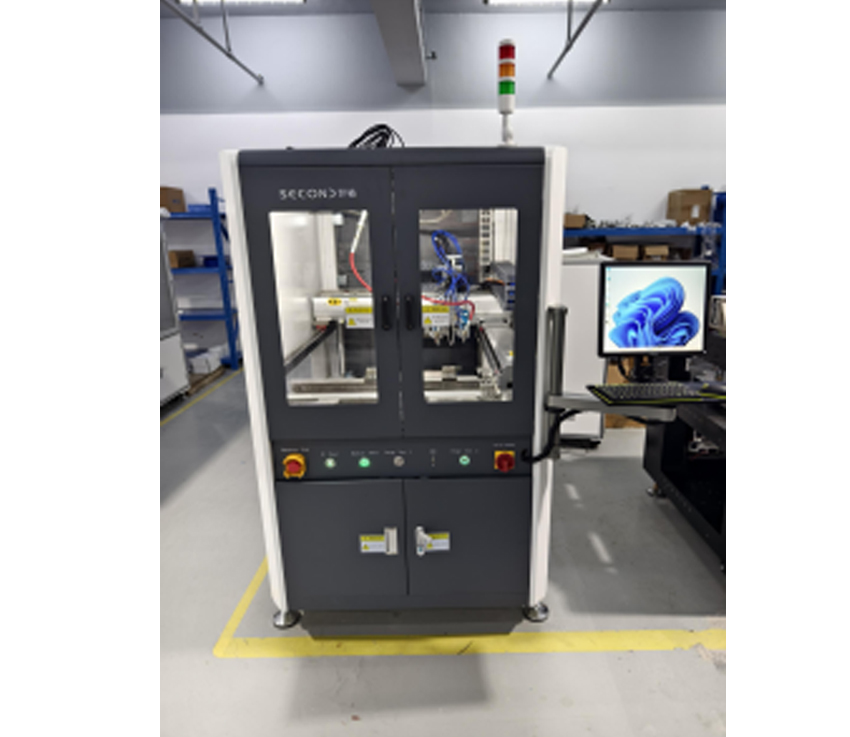
Automatic In-line PCB Glue Dispensing Machine SEC-DH400L
Second Intelligent In-line Automated Glue Dispensing Machine SEC-DH400L adopts an integrated mineral casting design, with ultra-high precision and super stability, powerful expansion capabilities, and can realize ion cleaning, dispensing, detection, UV exposure and other functions;
Adopting a gantry structure, it can bear large loads, stable structure, and a powerful CCD visual positioning system, which can meet the requirements of Mark point positioning, edge positioning, and 3D scanning positioning; strong scalability, and can expand AOI detection 3D detection, UV exposure curing and other functions;
Strong platform compatibility, contact and non-contact dispensing, single-head and multi-head synchronous dispensing, automatic compensation and adjustment of double-head spacing, five-axis dispensing function based on needle A/R displacement, etc.
III. Integrated Process Chain: A Closed Loop from Precise Metering to Precision Dispensing
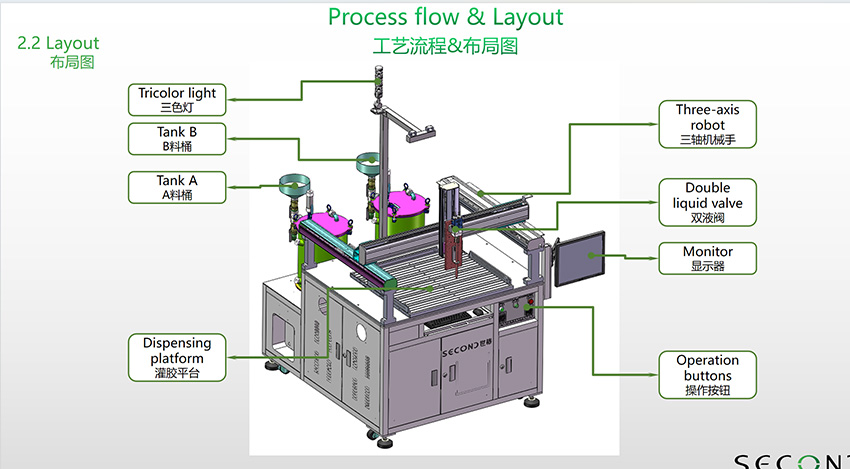
The deep integration of the dynamic mixing tube and Two-component epoxy dispensing system forms a complete and efficient automated potting production line. This integrated solution comprises three core components:
3.1 Precision Metering and Feeding System
Independent Dual-Component Storage: Both A and B tanks are equipped with vacuum degassing, stirring to prevent sedimentation, and heating (for high-viscosity adhesives).
High-Precision Metering Pump: Typically employing gear pumps or plunger pumps, achieving a repeatability of ±0.05% metering accuracy to ensure strict adherence to stoichiometric requirements. The system monitors pump speed and pressure in real time, implementing closed-loop feedback regulation to eliminate supply fluctuations.
3.2 Dynamic Mixing Tube Stirring Execution
As the crucial link between the metering and dispensing systems, the dynamic mixing tube receives precisely proportioned adhesive from the metering pump and performs homogenization. Its rotation speed can be dynamically adjusted according to the adhesive characteristics and dispensing volume, achieving an optimal balance between mixing efficiency and shear heating.
Technical Highlights: For adhesives with fillers prone to sedimentation, the continuous stirring of the dynamic mixing tube also acts as a “resuspending” mechanism, preventing filler settling during transport and ensuring consistent thermal conductivity or flame retardant properties per unit volume of adhesive.
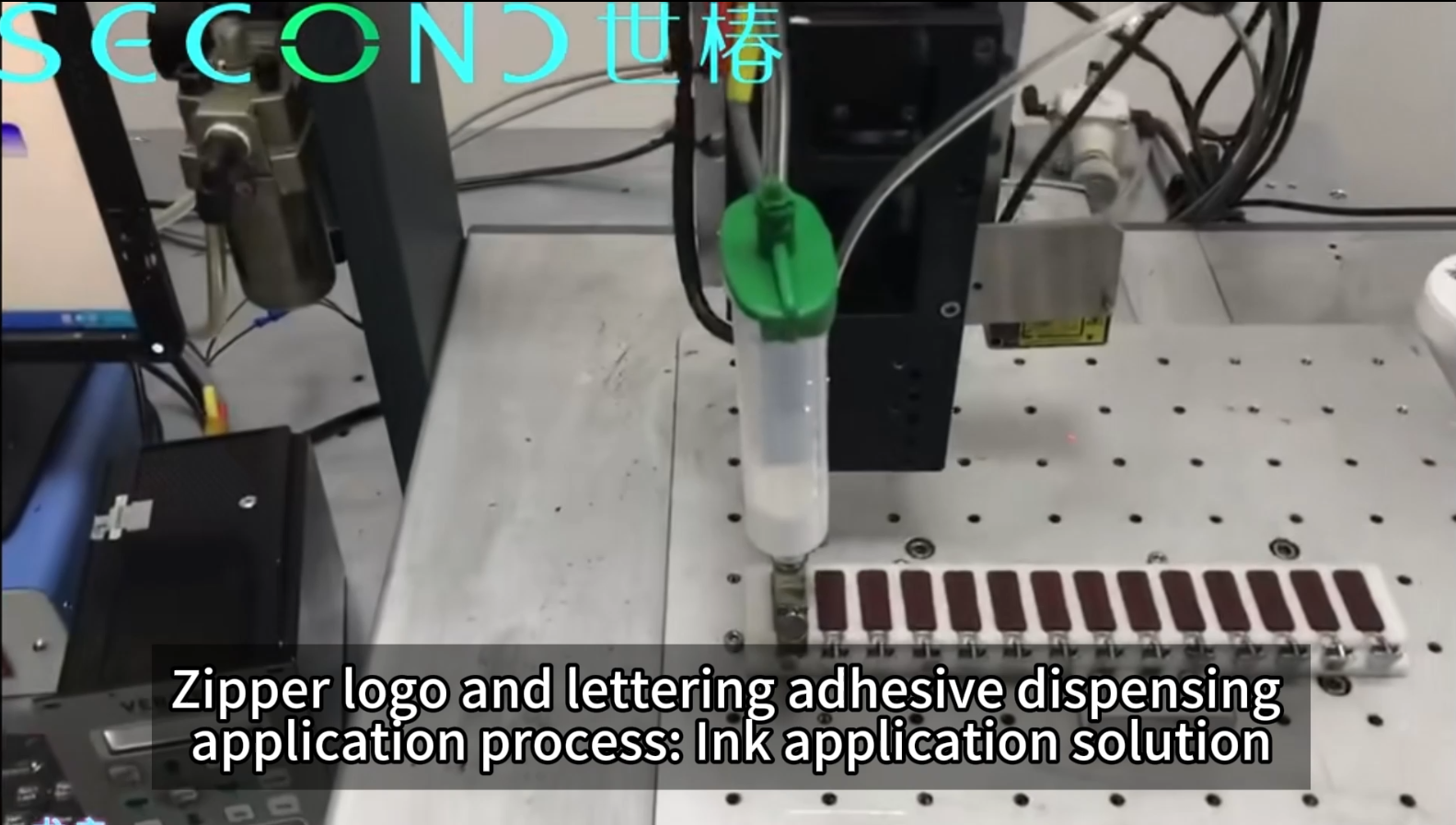
3.3 Precision Dispensing and Path Control: The uniformly mixed adhesive enters the dispensing valve directly, where a three-axis robotic arm or robot, driven by the control system, precisely dispenses the adhesive along a pre-set path on the power supply casing.
Back-Suction and Adhesive Cut-off: A precision adhesive cut-off mechanism is equipped at the dispensing end, instantly shutting off in conjunction with a back-suction action to ensure the adhesive does not string or drip, preventing contamination of the wiring terminals.
Intelligent Monitoring: Integrated pressure sensors and flow monitoring compare the set dispensing volume with the actual dispensing volume in real time. Automatic alarms are triggered if tolerances are exceeded, achieving digital monitoring of the potting process quality.
1.Solution Value: Infusing High-Reliability Power Supplies with “Process Immunity” The value that this integrated potting process brings to LED power supply manufacturing is systematic and multi-dimensional:
Value Dimension | Specific manifestations |
Reliability leap | The uniformly mixed adhesive layer is free of air bubbles and uneven curing, forming a complete and dense protective layer. The power supply exhibits a significantly reduced failure rate after passing dual 85 (85℃/85%RH) aging tests and salt spray tests. The insulation resistance remains stable above 10¹²Ω, eliminating the risk of creepage. |
Heat dissipation performance guarantee | After dynamic stirring, the high-filler thermally conductive adhesive forms a complete thermally conductive network. After potting, the junction temperature of power devices (such as MOSFETs and rectifier bridges) can be reduced by 10-15℃ in actual measurements, and the lifespan of electrolytic capacitors doubles for every 10℃ reduction in operating temperature. |
Process consistency and traceability | Automated formula storage and execution eliminate the arbitrariness of manual operation. The dispensing volume, mixing speed, and dispensing rate of each power supply can be recorded and traced, meeting the requirements of automotive or industrial quality systems. |
Comprehensive cost optimization | The dynamic mixing tube is adaptable to various adhesive systems, offering high equipment versatility and eliminating the need for frequent mixing unit replacements when switching product lines. Precise metering reduces adhesive waste, and combined with stable yield improvements, the equipment investment can typically be recovered within 12-18 months. |
1.Conclusion: Defining New Heights in Power Supply Reliability Through Process Innovation
The competition in LED power supply reliability has evolved from simple circuit design to a deep contest of materials and processes. The integrated process of dual-liquid dynamic mixing tube stirring and precision dispensing, through active and forced mixing, completely breaks through the technical limitations of traditional static mixing in complex adhesive applications. It provides a fully controlled process infrastructure for high-reliability power supplies, from material input and mixing execution to precision molding.
Second Intelligent has played an important role in theresearch, development, manufacturing, pre-sales and after-sales services of fluid dispensing robot, potting and coating solutions which range from various types of automatic fluid dispensing, potting, two-component potting machines and coating machines with desktop, free-standing, inline or cobot combined systems, and widely used in global electrical, electronics, home appliances, automobile, telecom, pharmaceutical, automotive electronics, semiconductor, aerospace, LED and more.