Zipper Logo and Font Glue Application Process: A Complete Analysis of Ink Application from Surface Treatment to Precision Molding
The brand logo on the zipper pull may seem small, but it’s one of the most technically demanding aspects of garment accessories. A zipper pull the size of a fingernail must support a clear logo and sharp font strokes, while withstanding daily pulling, washing, and even sweat – this places stringent requirements on the adhesion between the ink and the substrate. Many zipper pulls experience color fading, blurred font edges, or coating peeling after glue application. The root cause is often not the glue application equipment itself, but rather the neglect of the compatibility between the material surface and the ink system.
Ⅰ.Core Principle: Let the Machine “See” Before Glue Application
Zippers are soft fabrics, easily stretched and deformed during processing. Relying solely on mechanical clamps for positioning will result in significant errors. The mainstream solution is machine vision positioning:
Visual positioning and correction: The machine uses a camera to capture feature points on the zipper (such as fabric texture, chain gaps, or even pre-printed “mark points”). Software calculates the offset between the product’s current actual position and the preset template, then automatically corrects the motion trajectory of the dispensing head. This effectively solves the problem of uneven zipper placement or slight deformation.
Trajectory programming: The dispensing path for logos and fonts is usually quite precise. You can generate motion programs by importing DXF files (directly using the design), image teaching (plotting points on the screen), or using a teach pendant, allowing the dispensing head to accurately follow the outline of the lettering.
Ⅱ.Solution and Equipment Selection
Depending on your production scale and zipper type, you can choose different equipment levels:
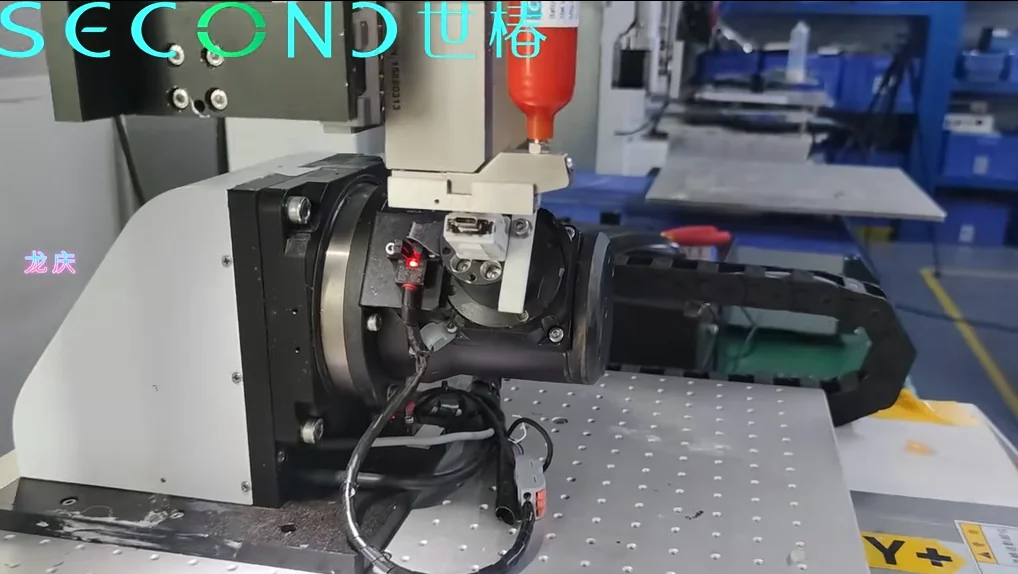
General-purpose visual dispensing machine: This is the most mature solution. The equipment typically includes a CCD camera, a servo-driven gantry (ensuring stable operation), and a precision dispensing system. It can dispense dots, straight lines, draw arcs, and irregular curves, making it ideal for coloring or dripping ink onto zipper heads, pull tabs, or fabric tape.
Dedicated intelligent dotting machine: If you mainly need to make positioning marks or simple logo markings on zipper tape, you can choose a dedicated intelligent integrated zipper dotting machine. This type of machine integrates feeding, straightening, ink dispensing, and automatic detection and replenishment functions, offering high efficiency.
III. Zipper Head Material Determines Ink Selection
The diversity of zipper head substrates is the first variable faced by the dispensing process. Currently, common zipper heads on the market are roughly divided into three categories: metal electroplated zipper heads, TPU (thermoplastic polyurethane) zipper heads, and silicone/PVC soft rubber zipper heads. These three types of materials have vastly different surface energies, and their ink adhesion mechanisms are also completely different.
Metal zipper pulls are typically electroplated, resulting in high surface energy, allowing for good wetting and spreading with ordinary inks. However, residual mold release agents or rust-preventive oils on the electroplated surface are a common problem. Without effective cleaning before application, the ink may appear to adhere well, but in reality, it merely “floats” on the oil film, easily peeling off completely after washing or rubbing.
TPU zipper pulls present an even more challenging situation. TPU itself is a low surface energy material, and with the use of mold release agents during injection molding, the surface energy often drops below 34 dynes. Actual test data shows that the water droplet angle on an untreated TPU zipper pull can reach as high as 91 degrees, causing ink to form “round, undispersed water droplets,” inevitably leading to insufficient adhesion when directly applied.
The surface energy of silicone zipper pulls is also a pain point in the industry. Silicone’s low surface tension and chemical inertness naturally repel most ink systems. After application of ink to an untreated silicone surface, it can be easily peeled off in one piece with a light scratch of a fingernail.
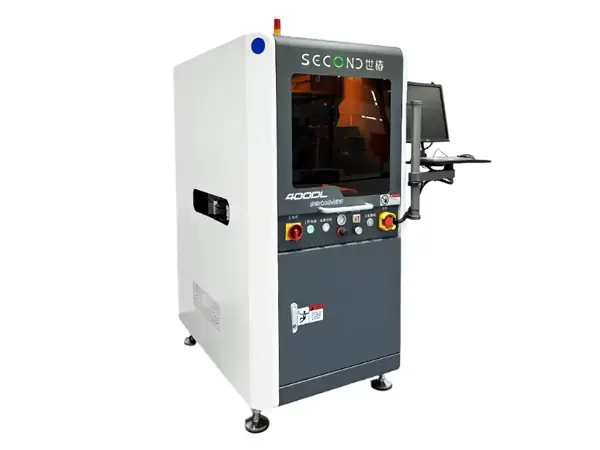
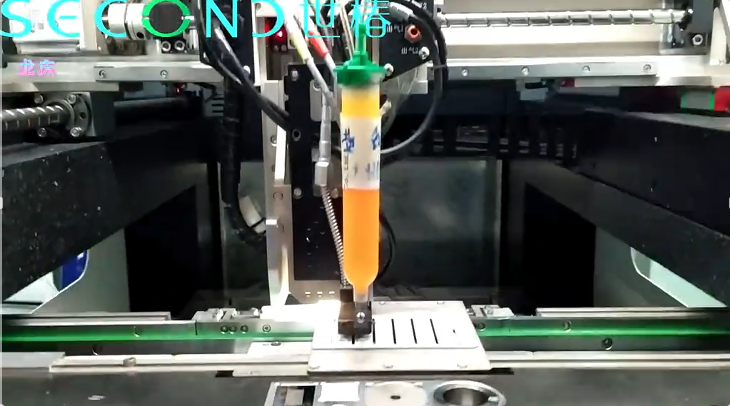
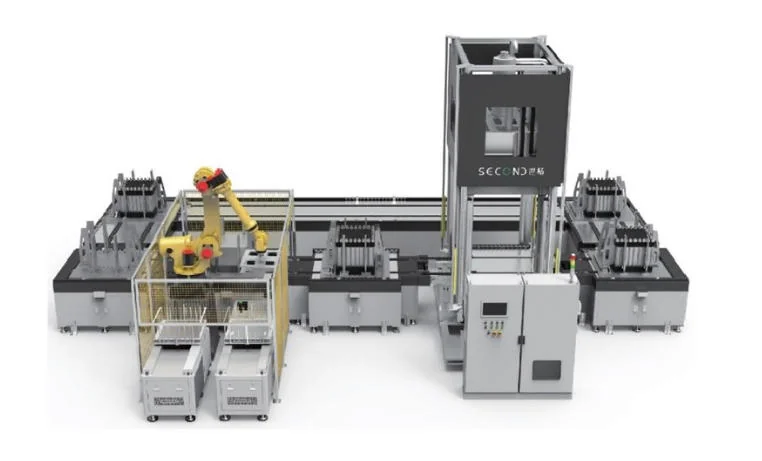
Automatic In-line PCB Glue Dispensing Machine SEC-DH400L
Second Intelligent In-line Automated Glue Dispensing Machine SEC-DH400L adopts an integrated mineral casting design, with ultra-high precision and super stability, powerful expansion capabilities, and can realize ion cleaning, dispensing, detection, UV exposure and other functions;
Adopting a gantry structure, it can bear large loads, stable structure, and a powerful CCD visual positioning system, which can meet the requirements of Mark point positioning, edge positioning, and 3D scanning positioning; strong scalability, and can expand AOI detection 3D detection, UV exposure curing and other functions;
Strong platform compatibility, contact and non-contact dispensing, single-head and multi-head synchronous dispensing, automatic compensation and adjustment of double-head spacing, five-axis dispensing function based on needle A/R displacement, etc.
Ⅳ.Surface Treatment: The Hidden Barrier to Ink Adhesion
Therefore, the surface treatment stage before applying adhesive to the zipper pull is just as important as the adhesive itself. Atmospheric plasma cleaning is currently a relatively mature solution in the industry. Active particles in the plasma act on the zipper pull surface under normal pressure, removing organic contaminants and mold release agent residues. Simultaneously, through surface activation, hydrophilic functional groups (such as hydroxyl and carboxyl groups) are introduced onto the TPU or silicone molecular chains, fundamentally altering the surface energy state of the material.
After plasma treatment, the dyne value of TPU zipper pulls can increase from 34 to over 46, and the droplet angle decreases from 91 degrees to below 28 degrees, allowing the ink to spread evenly instead of shrinking into beads. The physical significance of this change is that the ink changes from “resting on the surface” to “clinging to the surface,” and the source of adhesion changes from weak van der Waals forces to the synergistic effect of chemical bonding and mechanical anchoring.
For silicone zipper pulls, a primer treatment is more common. Specialized silicone treatment agents form a transition layer between the substrate and the ink. One end forms a chemical bond with the silicone surface, while the other end is compatible with the ink system, thus solving the problem of “ink not absorbing silicone.” Some high-end zipper head manufacturers also add a manual wiping process to the mold before applying the adhesive. Although this increases costs, it ensures the cleanliness of the product surface and eliminates the risk of color bleeding and peeling from the source.
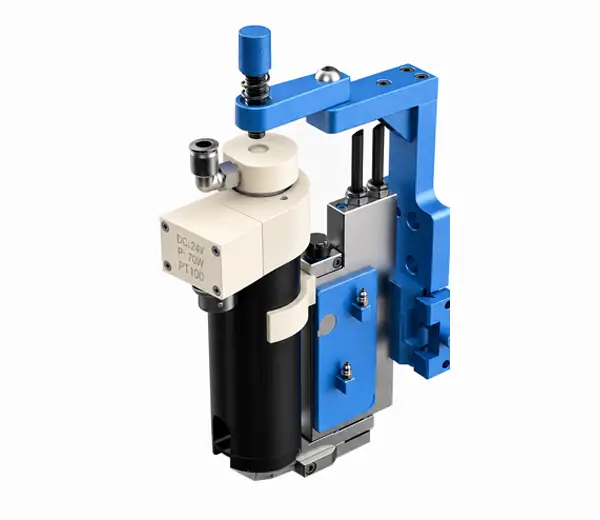
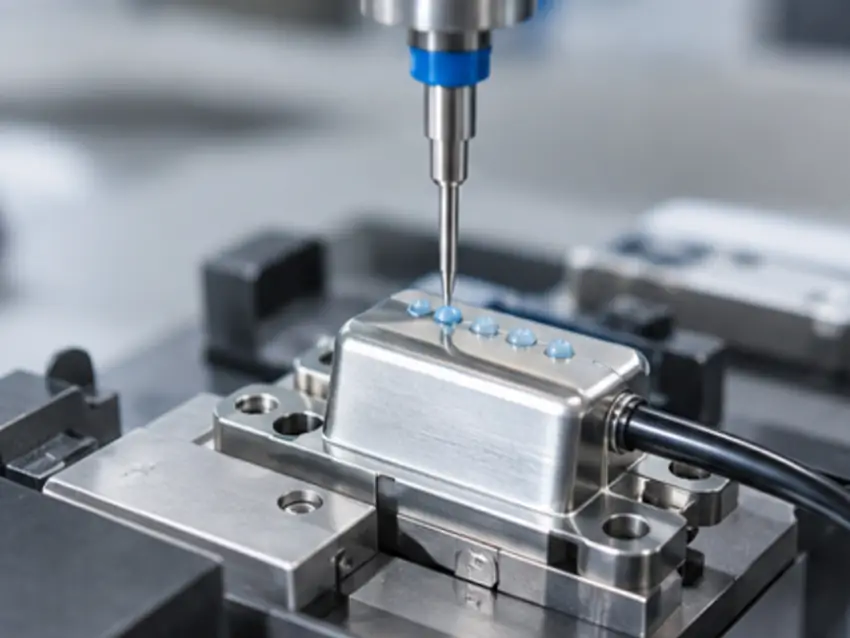
Non-Contact Piezoelectric Jetting Valve F-P102
V.Ink Control in the Dispensing Process
The precision requirements for dispensing logos on zipper pulls far exceed those for ordinary epoxy resin products.
Taking common font strokes as an example, the width of a stroke as thin as a hair may only be 0.3 to 0.5 millimeters. The dispensing needle needs to precisely apply material within such a narrow area, and the amount of adhesive must be just right: too much will overflow the edges of the strokes, resulting in blurred lettering; too little will cause the strokes to break and the color to be incomplete.
Modern vision dispensing machines play a crucial role in this process. The CCD vision system performs 360-degree recognition and positioning of randomly placed zipper pulls, automatically corrects the coordinates, and controls the dispensing head to operate along a preset path. Continuous dispensing speed can reach 300 dots per second, with accuracy controlled within ±0.02 millimeters. However, for ink applications, equipment precision is only the foundation; the rheological properties of the ink itself also require fine-tuning.
Common ink systems for zipper pull dispensing include PU series, epoxy resin glue dispensing machine, and silicone-specific inks. PU inks offer good flexibility, making them suitable for TPU and soft rubber zipper pulls; epoxy resin inks, with their high hardness and gloss, are often used for adhesive coating on metal zipper pulls; silicone inks, however, require compatibility with the vulcanization system of the silicone substrate, otherwise, even with proper surface treatment, interface separation may still occur after long-term use.
Ink viscosity control is a continuous challenge in the dispensing process. Excessive viscosity can cause needle clogging or stringing, and adhesive residue can be dragged into non-target areas, causing color bleeding; insufficient viscosity leads to ink flow and diffusion after dispensing, resulting in lost edge sharpness in the lettering. Some experienced manufacturers program automatic dispensing machines with a 20% to 30% slower dispensing speed than normal, sacrificing some output for stroke clarity and consistency. The addition of thinner also needs to be carefully controlled; excessive dilution, while improving flowability, can damage the ink’s curing performance and final adhesion.
Ⅵ.Curing and Adhesion Verification The curing process after dispensing also determines the final quality.
PU and epoxy inks are typically thermosetting. The baking temperature and time need to be carefully balanced based on the temperature resistance of the zipper pull substrate: too low a temperature results in incomplete curing, a soft coating, and poor washability; too high a temperature may cause TPU zipper pull deformation or silicone aging.
Adhesion testing is the ultimate standard for verifying the quality of ink application. The cross-cut adhesion test is a basic method, but the actual usage scenarios for zipper pulls are much more demanding. A water wash test simulates everyday washing conditions; a qualified zipper pull should retain its adhesive markings intact after multiple washes, without peeling, flaking, or significant fading. Some high-end brands also require sweat immersion tests and abrasion resistance tests to verify the ink’s durability under complex usage environments.
VII. From “On-the-Spot” to “Perfect On-the-Spot”:
The Synergistic Process of Zipper Logo Dispensing The core logic of zipper logo dispensing is not the optimization of a single step, but rather the systematic synergy between surface treatment, ink selection, dispensing parameters, and curing conditions. A brand logo on a zipper pull carries not only the company logo, but also the precision of the manufacturing process and the depth of understanding of materials science.
Only when the ink truly “grows” on the zipper pull surface, rather than merely “lying” on it, can the dispensing process be considered to have progressed from “on-the-spot” to “perfect on-the-spot.” Every improvement in dyne value, every micrometer of adhesive volume control, and every degree Celsius optimization of the curing curve ultimately converges into the consumer’s fingertip pulling experience in that one second—smooth, clear, and enduring.
Shenzhen Second Intelligent possesses more than 21 years of experience in liquid applications and maintains a complete supply-chain capability covering research and development, manufacturing, and sales service for two-component precision mixing and dispensing equipment. Multiple patents have been filed. Its semi-automatic dispensing equipment features automatic mixing, manual dispense control, and various additional functions, enabling it to accurately meet the stringent production requirements of food molds.