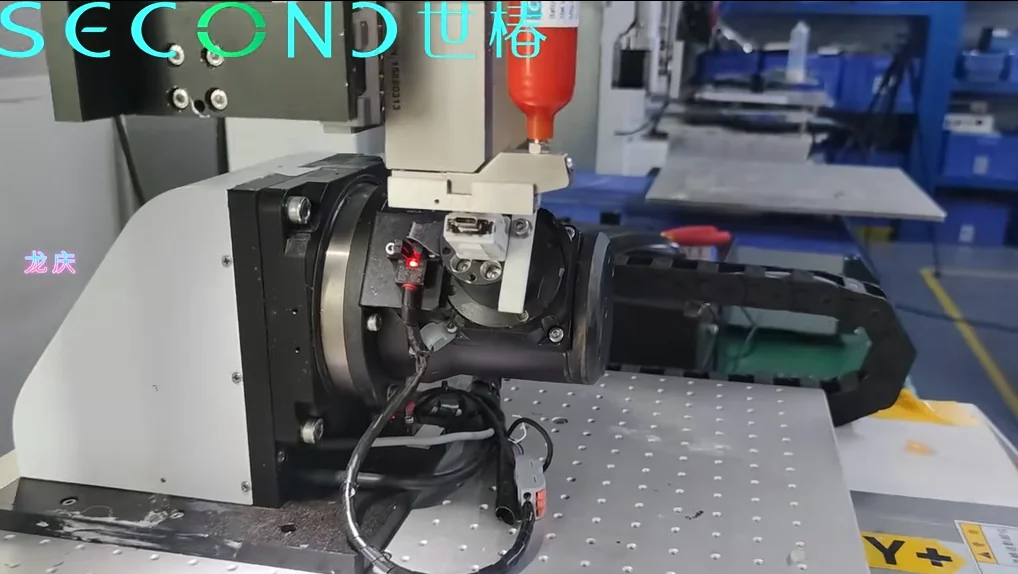
In the field of LED packaging, phosphor dispensing is a core process that determines the consistency of the emitted color, brightness, and color temperature of white LEDs. When this process is applied to COB (Chip on Board) packaging, the technical difficulty increases significantly—multiple chips are integrated on the same substrate, and any deviation in the amount of adhesive or uneven distribution of phosphor will be magnified many times over, directly manifesting as color drift, yellow rings, or localized bluish tint. This article will focus on the practical application of LED chip phosphor dispensing technology in COB packaging in the electronics industry, analyzing the key process points and equipment selection logic.
Ⅰ.Why does COB packaging have higher requirements for phosphor dispensing?
COB packaging directly bonds multiple LED chips onto a metal-based printed circuit board, dissipating heat directly through the substrate. Compared to single-chip SMD packaging, COB modules have a larger light-emitting surface and a denser chip arrangement, placing near-stringent demands on the uniformity of phosphor coating.
a.Consistency is the core challenge. In COB modules, the amount of phosphor at a single point is typically between 0.5 and 5 microliters. A deviation of more than 3% in the amount of phosphor can lead to a color coordinate shift exceeding 3 SDCM, which is perceptible to the human eye. If the amount of phosphor is insufficient, the phosphor concentration in some areas will be too low, and the blue light chip will not be fully converted, resulting in a bluish area with a high color temperature. Conversely, excessive dispensing will result in a low color temperature and a yellowish tint.
b.Phosphor sedimentation is another key variable. Phosphor particle sizes are typically between 5 and 25 micrometers, and they have a natural tendency to settle in the adhesive solution. During the dispensing process, the phosphor content in the phosphor glue dispensed in the early stages may differ from that in the later stages, ultimately leading to color and brightness fluctuations in the same batch of COB light sources -1-9. For multi-chip integrated packaging like COB, uneven deposition can have even more serious consequences: areas with thicker phosphor layers are prone to temperature singularities, posing a threat to the long-term reliability of the product.
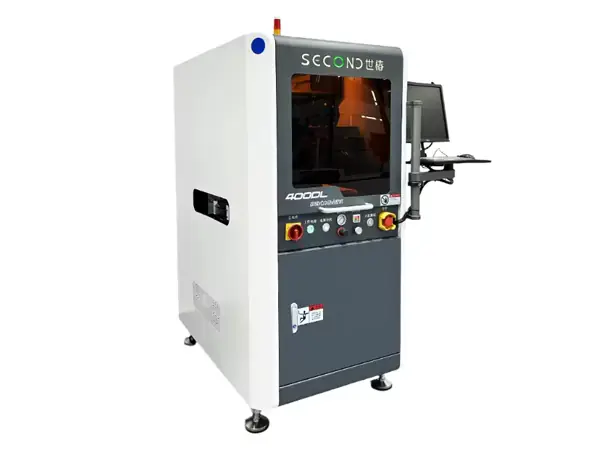
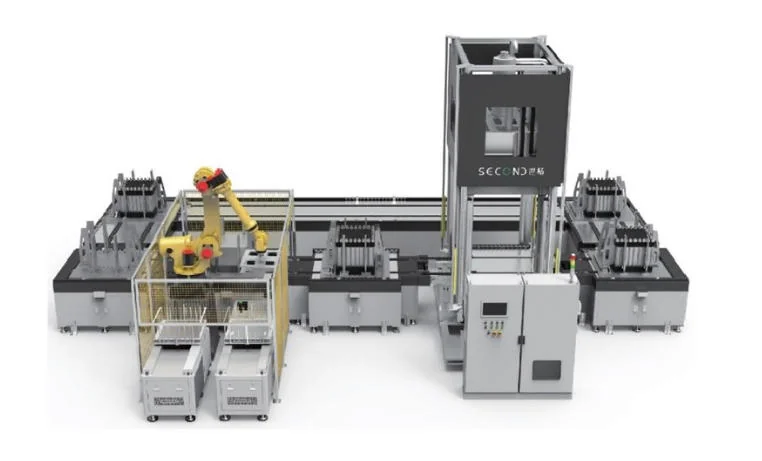
Automatic In-line PCB Glue Dispensing Machine SEC-DH400L
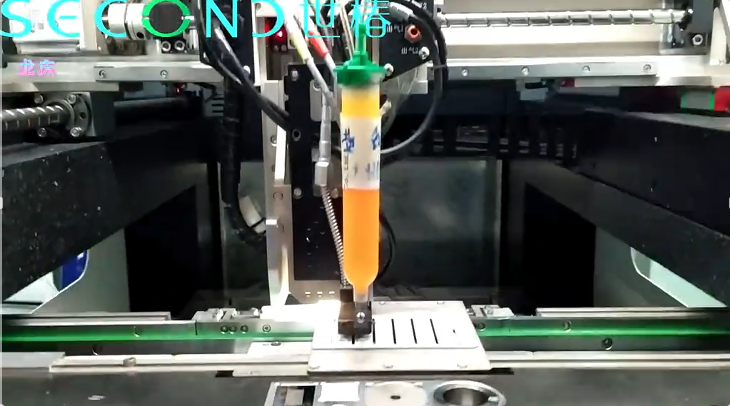
Second Intelligent In-line epoxy glue dispensing machine SEC-DH400L adopts an integrated mineral casting design, with ultra-high precision and super stability, powerful expansion capabilities, and can realize ion cleaning, dispensing, detection, UV exposure and other functions;
Adopting a gantry structure, it can bear large loads, stable structure, and a powerful CCD visual positioning system, which can meet the requirements of Mark point positioning, edge positioning, and 3D scanning positioning; strong scalability, and can expand AOI detection 3D detection, UV exposure curing and other functions;
Strong platform compatibility, contact and non-contact dispensing, single-head and multi-head synchronous dispensing, automatic compensation and adjustment of double-head spacing, five-axis dispensing function based on needle A/R displacement, etc.
Ⅱ.Core Control Points in Phosphor Dispensing Process?
To address the challenges mentioned above, the electronics industry has developed a mature process control system for COB phosphor dispensing.
III. Adhesive Solution Preparation and Anti-Settling Treatment?
The uniformity of the phosphor adhesive is a prerequisite for dispensing quality. In industry practice, A-resin, B-resin, and phosphor are typically mixed according to the target color temperature ratio and stirred at a constant low temperature of 10 to 20 degrees Celsius for 10 to 30 minutes to maximize the uniform dispersion of the phosphor. The low temperature environment increases the viscosity of the adhesive solution, slowing down the settling rate of the phosphor.
The stirred adhesive solution must undergo vacuum degassing treatment, maintained at a vacuum level below 0.1 MPa for 20 to 25 minutes to eliminate microbubbles introduced during stirring. The presence of bubbles not only affects the uniformity of light color but may also form light scattering points after curing, reducing light extraction efficiency.
Ⅳ.Precision Control of the Dispensing Process COB dispensing equipment needs to simultaneously meet the dual requirements of precision and efficiency.
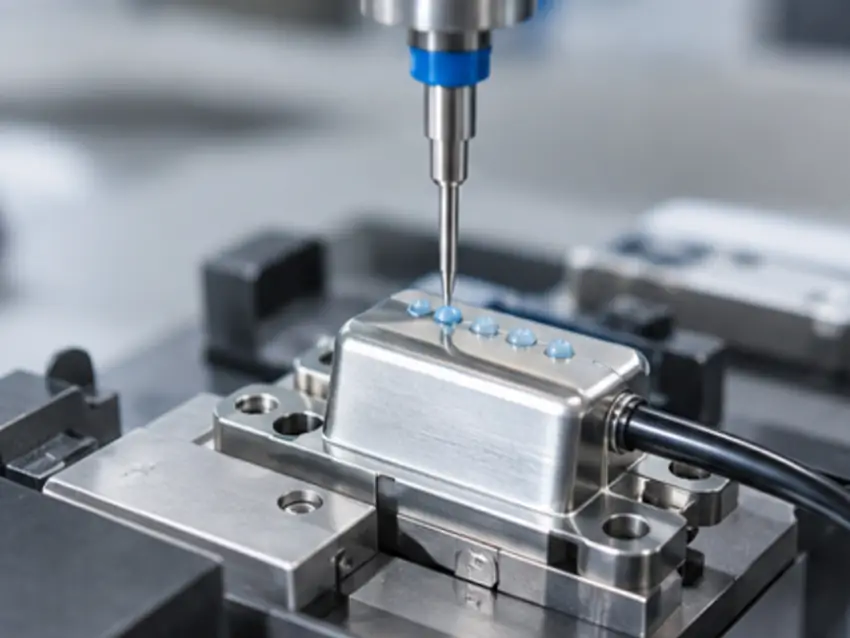
Modern metering dispensing machines employ screw volumetric metering or servo drive technology, achieving adhesive volume control precision at the level of one ten-thousandth, and repeatability accuracy of ±0.006 mm. For irregularly arranged chips in COB modules, the equipment also needs visual recognition capabilities, using CCD positioning to correct the dispensing path in real time.
The design of the dispensing path is equally important. Compared to single-point direct writing, spiral dispensing and multi-path coverage methods can significantly improve the uniformity of adhesive layer thickness. Some advanced solutions also introduce dynamic adjustment of the dispensing gap: the control module monitors the area and size of the adhesive dots in real time via images, compares them with standard values, and automatically adjusts the spacing between adjacent dots to ensure uniform filling of the encapsulation area with fluorescent adhesive.
Ⅴ.Sinking Guidance in the Curing Stage?
The baking and curing stage after dispensing utilizes the phosphor sinking process to optimize the light emission window. The dispensed COB substrate is baked at a constant temperature of 40-80 degrees Celsius for 0.5-3 hours. The phosphor viscosity initially decreases, and the phosphor sinks to the bottom of the colloid under gravity, adhering closely to the chip surface. This “sinking” curing strategy concentrates the phosphor near the chip, reducing ineffective scattering from the upper layer of the colloid and improving light conversion efficiency.
Ⅵ.Key Considerations for COB Phosphor Dispensing Equipment Selection
Selecting suitable dispensing equipment requires a targeted evaluation based on the specific characteristics of COB packaging.
a.Selection of Dispensing Valve Type.Screw valves, based on the volumetric metering principle, offer excellent glue volume stability for high-viscosity silicone containing phosphor particles and are the mainstream choice for COB phosphor dispensing. However, they have requirements regarding phosphor particle size; excessively large particles will exacerbate screw wear. Piezoelectric spray valves operate in a non-contact manner and can spray at frequencies of over 1000Hz, making them suitable for scenarios requiring high-speed dotting, but they are more sensitive to the viscosity range of the adhesive.
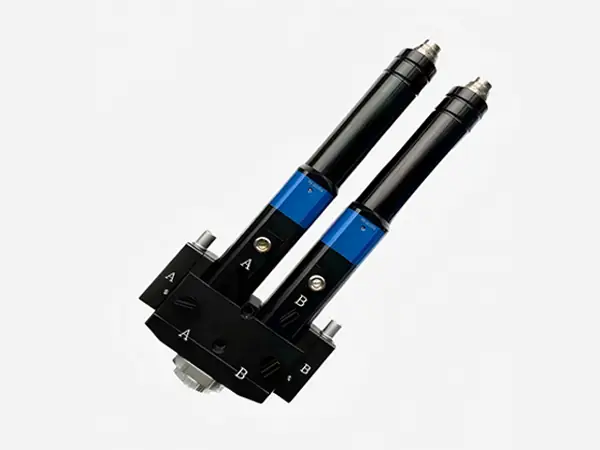
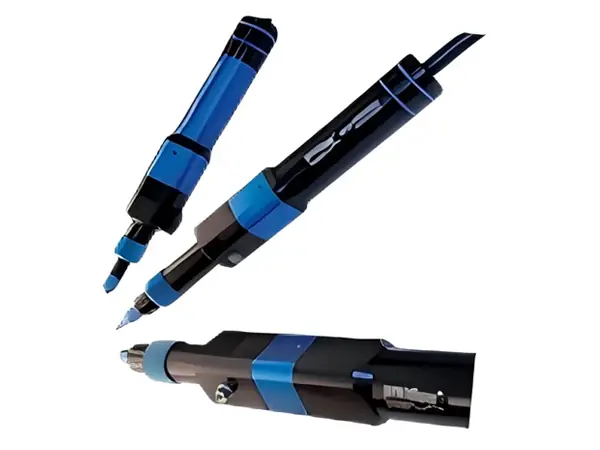
b.The necessity of a temperature control system. The viscosity of fluorescent adhesive is extremely sensitive to temperature. Equipment equipped with a syringe temperature control module maintains the adhesive solution between 30 and 55 degrees Celsius, ensuring fluidity while suppressing excessively rapid phosphor settling. Some high-end models also feature adhesive circulation or stirring functions, further ensuring adhesive uniformity during long-term production.
c.Visual positioning and correction capabilities.Chip positions on COB substrates may deviate upon arrival, and flexible substrates may sway during transport. Dispensers equipped with CCD vision systems can identify the actual chip position in real time, dynamically compensating for dispensing coordinates to ensure the adhesive dot always lands in the chip center, not on the pad or in the gap.
From a capacity perspective, multi-head dispensing solutions are becoming the mainstream choice for COB mass production. By using a rotating wheel assembly with multiple independently adjustable dispensing heads, it is possible to adapt to COB modules with different chip pitches, achieving double or even higher production efficiency.
In conclusion,
COB packaging upgrades the phosphor dispensing process for LED chips dispensing from a single-point process to a systematic engineering project. It requires equipment with not only high-precision glue volume control but also coordinated efforts across multiple stages, including glue management, path planning, and curing strategies. For electronics manufacturers, understanding phosphor settling patterns, mastering the relationship between glue volume and color temperature, and selecting dispensing equipment that matches product characteristics are three key pillars for ensuring the stability of COB light source quality. With the continuous increasing demands for color temperature consistency in Mini LED Dispensing and automotive lighting, the precision of phosphor dispensing processes will further deepen.
Second Intelligent has played an important role in theresearch, development, manufacturing, pre-sales and after-sales services of fluid dispensing robot, potting and coating solutions which range from various types of automatic fluid dispensing, potting, two-component potting machines and coating machines with desktop, free-standing, inline or cobot combined systems, and widely used in global electrical, electronics, home appliances, automobile, telecom, pharmaceutical, automotive electronics, semiconductor, aerospace, LED and more.