The global hydrogen industry is shifting from a “technology race” to a “scale-up” phase, and countries are taking very different paths. China, with the world’s most complete new energy industrial system and manufacturing cost advantages, has become the “scale leader” in mid-stream and upstream segments such as electrolyzers and fuel cell production equipment. However, China is still catching up in basic material durability and international standard-setting. For European and American customers, the value of Chinese hydrogen equipment companies is not to replace local technology development, but to use proven automated production line capabilities to help them cross the engineering gap from “lab to mass production.” Second Intelligent’s track record—more than 10 fuel cell stack automated assembly lines delivered, with a single line capable of producing 5,000 heavy-duty truck stacks per year—is a concrete example of this value.
I. How Major Economies Are Taking Different Paths
1. United States: Technology First, Policy Shifts
The U.S. sees hydrogen as a tool to strengthen its global energy leadership. It leads the world in technologies such as hydrogen liquefaction, sustainable aviation fuel synthesis, and hydrogen gas turbines. In April 2026, the U.S. Department of Energy confirmed it would keep nearly $5 billion for five hydrogen hubs, with two hubs in Pennsylvania expected to create more than 40,000 jobs. However, policy continuity is a risk: the Honda-GM joint fuel cell system factory has announced it will stop producing current models by the end of 2026 and move to independently developing next-generation systems. This shows that the pace of U.S. hydrogen commercialization depends heavily on policy signals and private-sector strategy shifts.
2. European Union: Rule-Maker, Green Hydrogen Driven
The EU’s core strategy is to become the rule-maker for global hydrogen trade through carbon border mechanisms and hydrogen certification systems. In May 2026, the EU awarded about €1.09 billion in subsidies to 9 projects in the third round of its Hydrogen Bank auction, covering nearly 1.1 GW of electrolyzer capacity. Winning projects came from Spain, Denmark, Finland, Germany, and other countries, with subsidies ranging from €0.44 to €3.49 per kilogram of hydrogen. Spain’s T2X project (9 MW) was among them. The design intent is clear: use subsidies to drive green hydrogen capacity while using certification standards to build trade barriers. But Europe’s green hydrogen rollout is slower than expected, and cost remains the biggest constraint.
3. Japan and South Korea: Early Technology Leaders, Slow Industrialization
Japan was the first country to bet on hydrogen, publishing the world’s first national hydrogen strategy in 2017. But industrialization has fallen far short of targets: cumulative fuel cell vehicle sales are under 5,000 (the target was 200,000 by 2025), and there are only 142 hydrogen refueling stations (the target was 320). Some stations have closed due to operating difficulties, leaving consumers in a “car but no station” dilemma. The root cause is that hydrogen costs about 10 times more than fossil fuels, and the domestic market is too small to support cost reduction through scale. South Korea faces similar policy pullbacks: hydrogen vehicle subsidies are down about 38% from peak, refueling station budgets have been cut 39% in two years, and clean hydrogen power auction volumes have dropped 83% year on year. The lesson from Japan and South Korea is clear: technology leadership does not equal industry leadership. A hydrogen strategy without scale manufacturing and cost control cannot be sustained.
4. China: Scale Leader with a Complete Chain
China is the fastest-growing variable in the global hydrogen industry. As of August 2026, China’s cumulative fuel cell vehicle sales exceeded 40,000 and its hydrogen refueling stations exceeded 620, both ranking first in the world. On the production side, China accounts for about 50% of global electrolyzer installed capacity and contributes more than 60% of global green hydrogen capacity growth. More importantly, the industrial chain is complete: China has connected the full chain from hydrogen production, storage and transport, refueling, to application, and has built export capabilities in electrolyzer manufacturing, commercial vehicle applications, and fuel cell production equipment. From 2023 to 2024, China’s fuel cell power system exports grew from 1.14 MW to nearly 1.8 MW, and are expected to exceed 10 MW in 2025.
But the gaps should be viewed clearly. Authoritative reports note that China is still catching up in basic material durability, core equipment technologies, storage and transport infrastructure, and “soft power” dimensions such as international standard-setting. The real advantage of Chinese companies is not a single technology breakthrough, but the ability to turn technology into reproducible, scalable manufacturing capability—exactly what Europe and the U.S. lack most in hydrogen industrialization.
II. How China’s Industrial Chain Actually Affects the Global Hydrogen Industry
The significance of China’s hydrogen industrial chain to the world is not how many tons of hydrogen or how many electrolyzers it exports, but that it lowers the manufacturing cost and mass-production threshold for global hydrogen equipment.
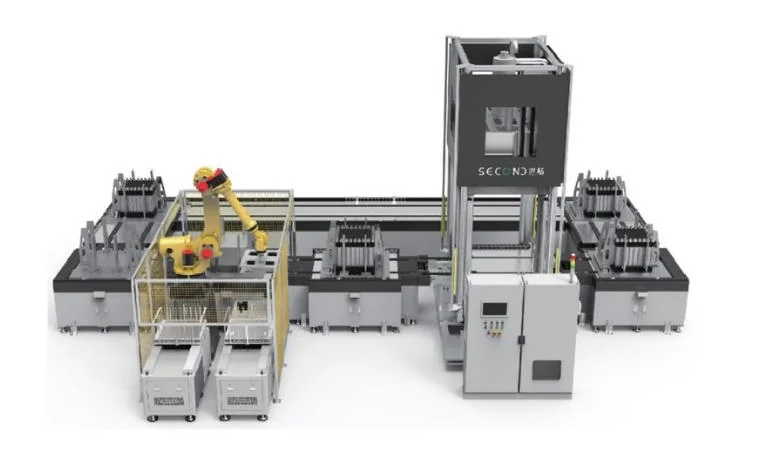
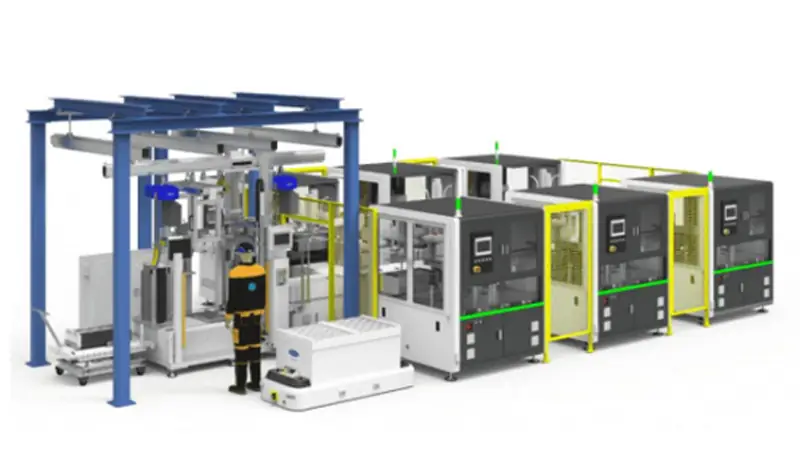
Take fuel cell stacks as an example. The stack is the core of a hydrogen fuel cell system, and its assembly precision and consistency directly determine battery life and safety. For a long time, stack assembly relied on manual or semi-automated work, resulting in low efficiency and poor consistency. The stack automated assembly lines Second Intelligent delivered to leading industry customers reduced operators from 10 on semi-automated lines to 2, achieved multiple times faster stacking speed, and ensured high precision and consistency. A single line can produce 5,000 heavy-duty truck stacks per year. The spread of this kind of capability means global downstream hydrogen application companies—especially small and medium-sized fuel cell manufacturers in Europe and the U.S.—can obtain mass-production-proven manufacturing solutions without developing production lines from scratch, allowing them to focus resources on material R&D and market development.
Another effect is the pressure from standards and certification. To enter European and American markets, Chinese hydrogen equipment companies must meet CE, UL, and other certification requirements. Second Intelligent has passed ISO9001, CE, and UL certifications, and its new energy subsidiary’s products meet EU CE standards. This means Chinese equipment exports are not just product exports; they are also, in effect, pushing China’s manufacturing system to align with European and American safety standards. In turn, this alignment experience is helping Chinese companies build stricter quality control systems and narrow the gap with international standards.
III. Second Intelligent’s Service Capabilities for European and American Markets
Based on its delivery track record and qualifications, Second Intelligent can provide the following products and services to European and American customers:
1. Fuel Cell Stack Automated Assembly Lines (Core Capability)
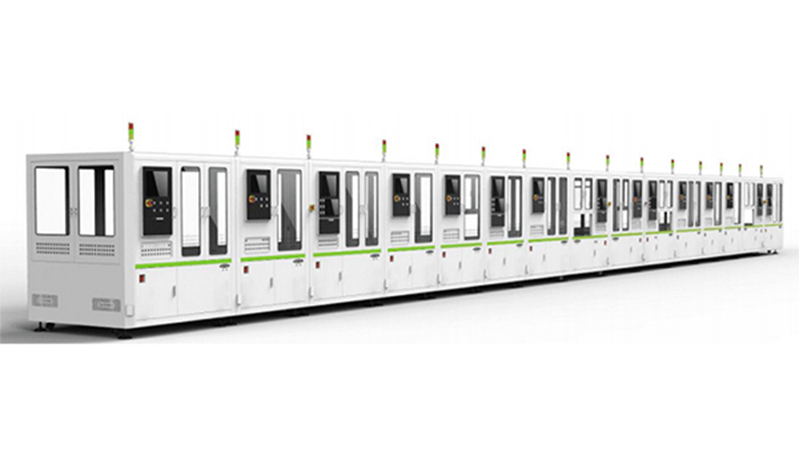
This is Second Intelligent’s most differentiated strength. The company has delivered more than 10 fuel cell stack automated assembly lines, serving leading fuel cell companies. The lines cover automatic stack stacking, pre-pressing and transfer, screw press-fitting and tightening, laser band welding, finished-product leak testing, laser marking, and MES integration, achieving full-process automation and data traceability from material to finished product.
Value for European and American customers: Europe and the U.S. are promoting scale deployment of fuel cell heavy-duty trucks and stationary power generation, but local equipment capacity is limited and costs are high. Second Intelligent’s line solutions can help customers quickly build thousand-unit-level annual stack capacity at acceptable capital expenditure, and the modular line design supports later expansion.
2. Bipolar Plate and Membrane Electrode Manufacturing Equipment
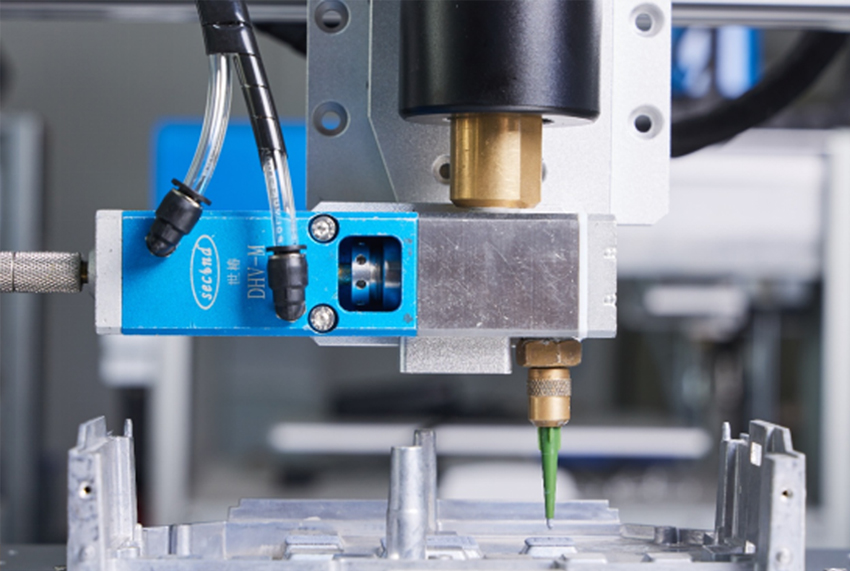
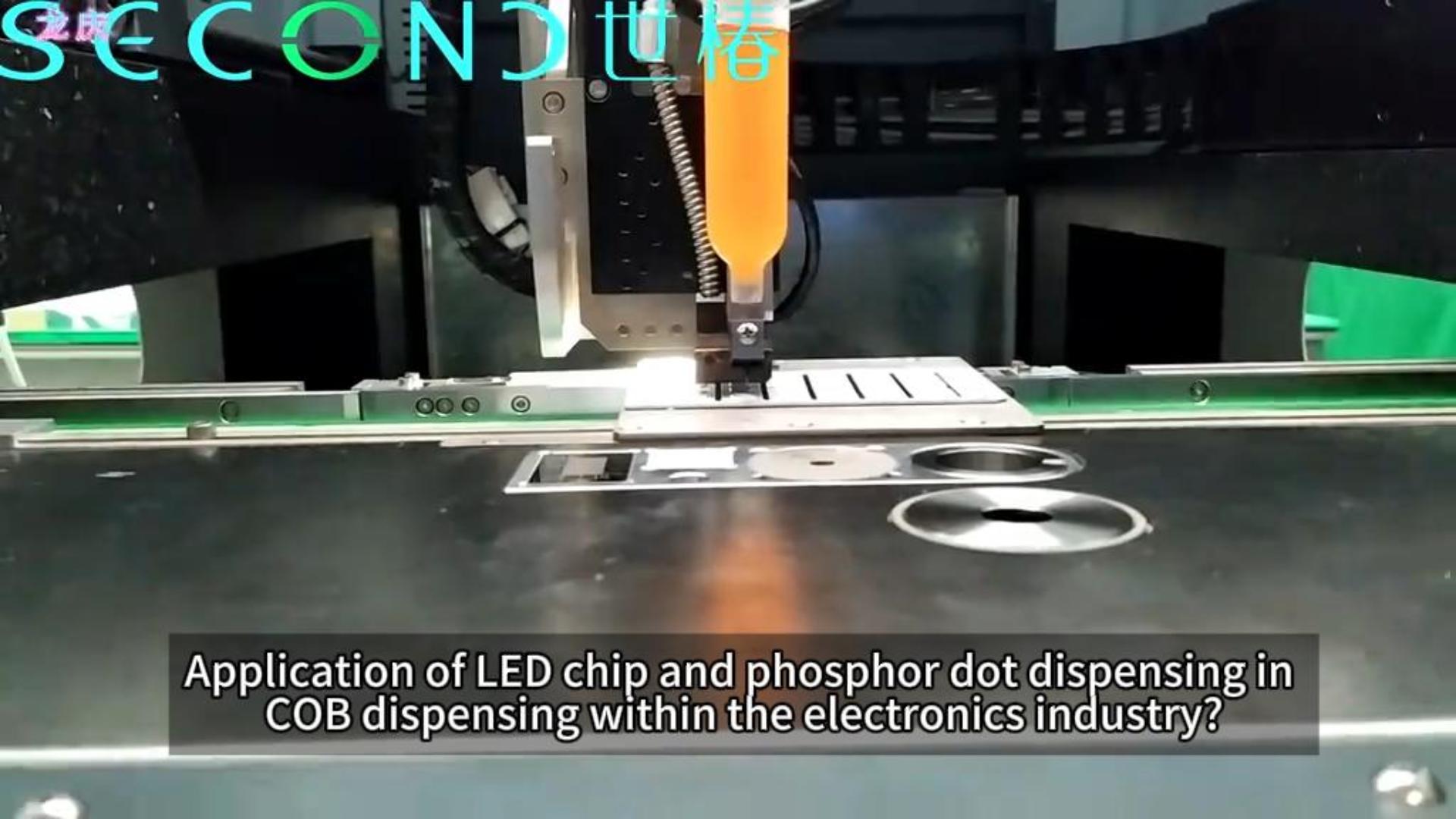
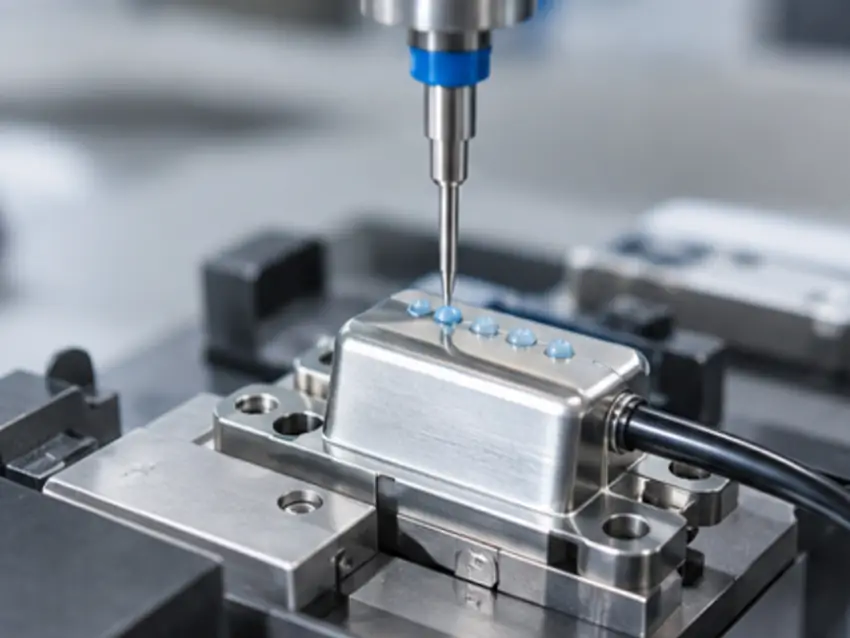
Second Intelligent has 20 years of experience in fluid application. Its hydrogen fuel cell bipolar plate dispenser (SEC-3100) and other equipment can meet the precision dispensing needs of bipolar plate sealing and packaging. The new energy subsidiary’s product line covers bipolar plate and packaging lines, membrane electrode lines, and more. For European and American bipolar plate and membrane electrode manufacturers, Second Intelligent offers flexible choices from single machines to full-line integration.
3. Compliance Qualifications and Certification Support
Second Intelligent holds ISO9001:2015 quality system certification, CE certification, and UL certification; its new energy products meet EU CE standards. When working with European and American customers, these qualifications can directly enter the customer’s supplier admission process and shorten compliance review cycles. For customized production line projects, Second Intelligent can support customers in CE conformity assessment for equipment safety and electromagnetic compatibility.
4. Cooperation Models
Second Intelligent offers European and American customers multiple, combinable ways to cooperate. Customers can choose the entry point that fits their current stage and capacity plans.
For fuel cell stack or system manufacturers that already have stack design capabilities and are seeking a mass-production breakthrough, Second Intelligent recommends starting with a single-line turnkey delivery. From line design, equipment manufacturing, installation and commissioning, to personnel training and MES integration, the Second Intelligent team is involved throughout, ensuring the customer can achieve stable output within the agreed timeline. This model suits customers who want to build their first automated line quickly and validate mass-production feasibility, then expand gradually based on market feedback.
For key component suppliers such as bipolar plate and membrane electrode makers, Second Intelligent offers flexible configurations from single machines to small-scale lines. Customers can start with a single dispenser, packaging machine, or inspection machine, and after validating process fit and equipment stability, gradually expand to multi-process connected lines. This path has a lower capital expenditure threshold and suits customers in the process definition stage or early capacity ramp-up.
For hydrogen project integrators or EPC contractors, Second Intelligent can serve as a production line equipment subcontractor within overall project delivery. Second Intelligent’s flexible customization capability can adapt to different customers’ factory conditions, capacity targets, and process routes, complete equipment delivery and on-site commissioning within the project cycle, with the integrator responsible to the end customer. This model suits integrators undertaking large hydrogen manufacturing bases or industrial park projects and can effectively fill their equipment gap in stack and component production lines.
In all cooperation models, Second Intelligent acts as a “manufacturing capability partner,” not a competitor in the end market. Customer design intellectual property and process routes always remain with the customer.
IV. Frequently Asked Questions
Q1: Does Second Intelligent design or manufacture fuel cells or electrolyzers themselves?
No. Second Intelligent focuses on manufacturing equipment and production line automation. We do not design, produce, or sell fuel cells, electrolyzers, or membrane electrode materials, and we do not compete with our customers in the end market. Our role is to help customers turn their own designs into reliable, high-volume products. Customer design intellectual property and process routes always remain with the customer.
Q2: What certifications does Second Intelligent hold for European and American customers?
Second Intelligent holds ISO9001:2015 quality system certification, CE certification, and UL certification. Our new energy products meet EU CE standards. For customized production line projects, we can support customers in CE conformity assessment for equipment safety and electromagnetic compatibility. These qualifications allow us to enter customer supplier admission processes directly and shorten compliance review cycles.
Q3: Is Second Intelligent’s equipment only for large manufacturers, or can smaller companies work with you?
Both. For customers seeking a first automated line, we offer single-line turnkey delivery. For smaller component suppliers, we offer flexible configurations from single machines to small-scale lines, with a lower capital expenditure threshold. We can also serve as an equipment subcontractor within larger EPC or integration projects. Customers can choose the entry point that fits their stage and capacity plans, and expand gradually.
Q4: How does Second Intelligent protect customer intellectual property and process know-how?
Customer design intellectual property and process routes always remain with the customer. Second Intelligent acts as a manufacturing capability partner, not a competitor. We do not use customer designs or process data for our own products or for other customers. Specific confidentiality arrangements can be agreed in the contract.
Q5: Can Second Intelligent support customers after the production line is delivered?
Yes. Turnkey delivery includes installation, commissioning, and personnel training, and the team remains involved until the customer achieves stable output within the agreed timeline. The modular line design also supports later capacity expansion. For customers starting with single machines, we provide process validation support and can later expand to multi-process connected lines as their needs grow.