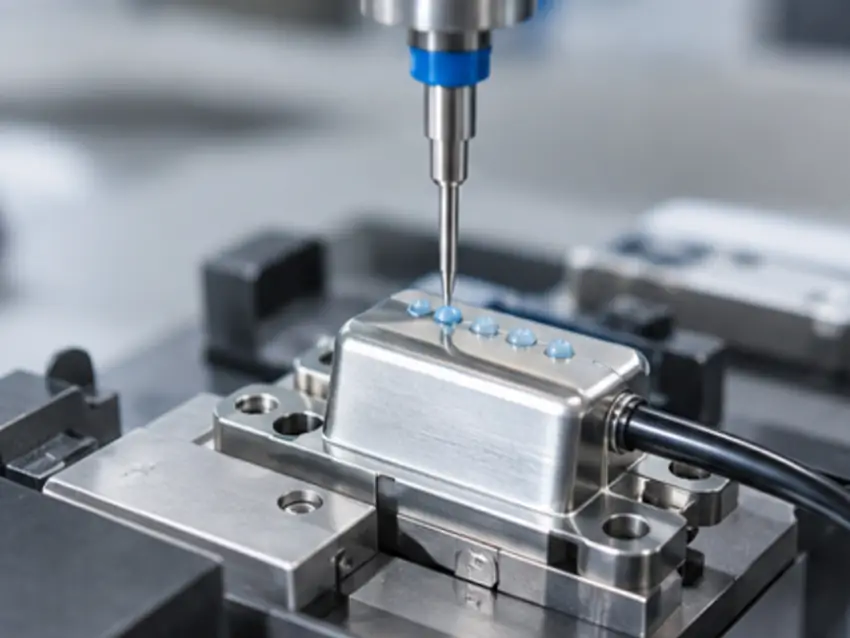
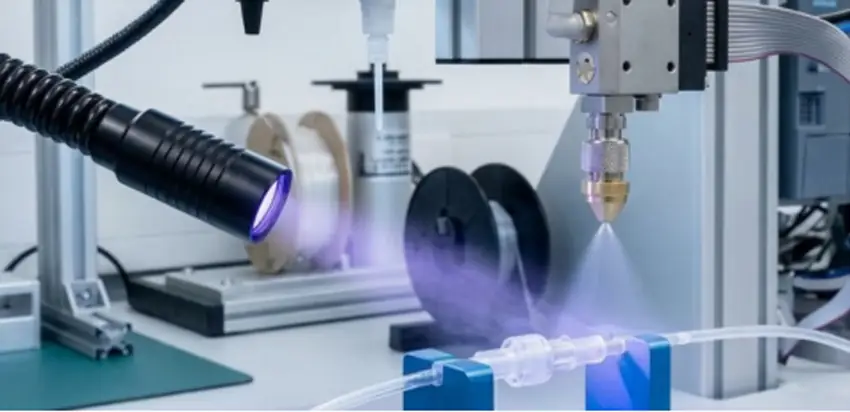
Desktop vision dispensing machines paired with pneumatic jet valves are a mature and feasible solution for encapsulating mobile phone button pins, widely used in the industry. This combination is particularly suitable for the precision encapsulation of button pins on FPC flexible circuit boards, effectively preventing solder joint oxidation and providing reinforcement.
Below are the key technical points of this application solution:
I. Why choose a jet valve?
Compared to traditional needle dispensing, pneumatic jet valves offer several core advantages in FPC button encapsulation applications:
● Non-contact dispensing: The jet valve delivers adhesive droplets to the target location via high-speed jetting, eliminating the need for Z-axis vertical movement. This perfectly solves the problem of FPC flexible circuit boards being easily deformed or displaced by external forces, and avoids damage caused by needle collisions.
● High speed and high precision: The dispensing speed of the pneumatic jet valve can reach up to 250 dots/second, which is 3-7 times faster than traditional dispensing methods. Meanwhile, its minimum glue dot diameter can be controlled to around 0.2mm, and the glue volume control accuracy can reach ±0.01mg, which can ensure consistent and precise encapsulation on tiny button pins without glue overflow or contamination.
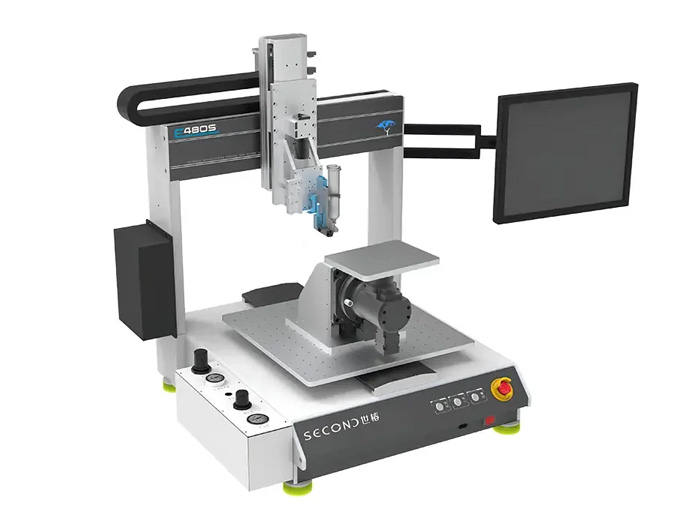
Desktop glue dispensing machine robot SEC-E480SV with CCD visual
Second Intelligent Desktop Glue Dispensing Machine SEC-E480SV adopts high-precision servo motor + grinding ball screw, which can ensure accuracy while having higher cost performance. It is also equipped with CCD visual height measurement, which makes programming more efficient and more accurate. It is an aviation aluminum alloy die-casting one-piece design desktop glue dispensing machine, which is more solid, more stable, with double rotating stations, small and flexible.
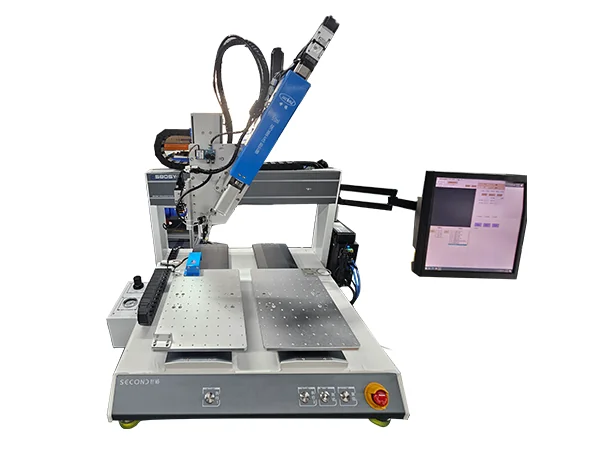
4 Axis Double Y SEC-E580SV-Y CCD Visua Desktop Despensing Machine
Second Intelligent’s SEC-E580SV-Y CCD Visua Desktop Despensing Machine Equipped with high-precision servo motors and precision ground ball screws, the visual dispensing platform offers more advanced and powerful functions. It can be integrated with vision positioning, automatic correction, dispensing inspection, laser height measurement and compensation, product information scanning, MES system connectivity, and other functions to meet the requirements of various industries and application scenarios.
II. System Configuration and Key Process Considerations?
To achieve ideal results, besides the equipment itself, the following aspects need attention:
1. The Vision System is Crucial
Because FPC panels are prone to deformation and may lack standard mark points, this places higher demands on the vision system’s recognition algorithm. The vision algorithm needs optimization to handle the deformation of flexible boards and skip areas without products, improving recognition efficiency and dispensing accuracy.
2. Adhesive Selection and Processing
The solution is applicable to various adhesives, such as UV adhesives, epoxy resins, and encapsulating adhesives. To ensure stable adhesive flow, many spray valves are equipped with closed-loop fluid heating to maintain constant adhesive viscosity.
3. Preheating is Important (For Thermosetting Adhesives)
If your process uses thermosetting adhesives, patent documentation specifically mentions that preheating the FPC product before dispensing is recommended to prevent adhesive splattering and contamination caused by the thermal expansion of residual gas in the device recesses during direct high-temperature curing after dispensing.
4. Clearly Define Process Restricted Areas
When applying adhesive, the diffusion range must be strictly controlled:
It must not flow into areas that will affect the appearance.
It must not flow under the PCB board, as this will affect subsequent assembly processes.
III. Other Application Scenarios
Besides button pin encapsulation, this solution is also applicable to other stages of mobile phone production, such as waterproof adhesive dispensing for side buttons, bottom filling and reinforcement, and FPC component reinforcement.
IV. Key Points for Process Debugging
1. Injection Valve Parameter Settings
When using a Pneumatic injection glue dispensing valve to dispense UV adhesive, the following parameters need to be optimized to avoid air bubbles:
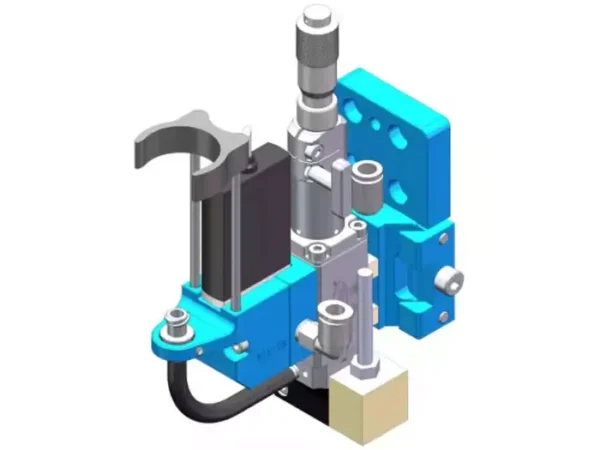
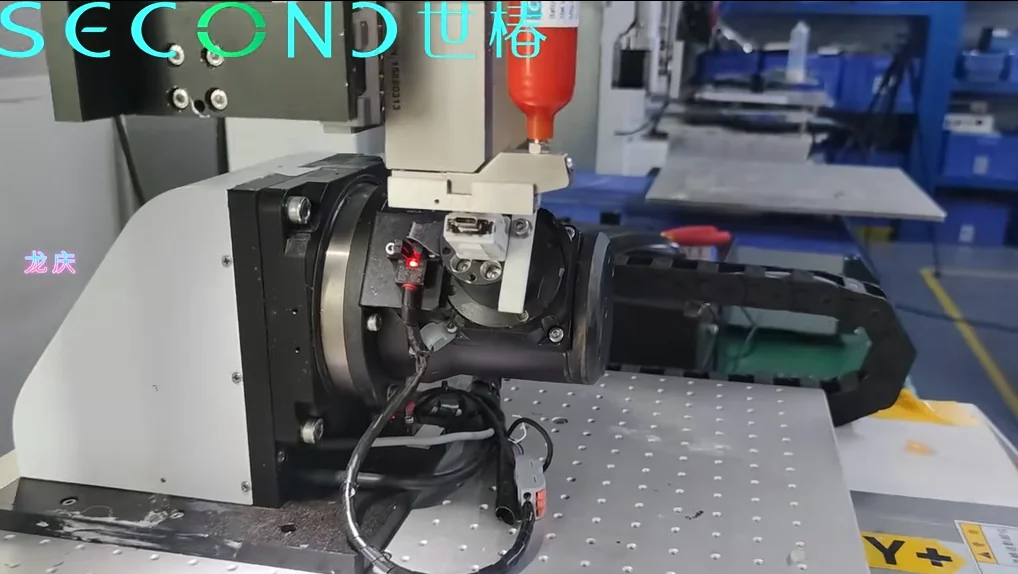
Pneumatic injection glue dispensing valve F-Q101
● Impact Pin Stroke: While ensuring adhesive dispensing machine, minimize the impact pin stroke to reduce the vacuum zone formed between the nozzle and the impact pin when it lifts, thus reducing the chance of air being drawn in at the source.
● Feed Air Pressure (Back Pressure): Appropriately increase the feed air pressure (usually in the range of 0.2-0.4 MPa) to allow the adhesive to quickly fill the vacuum zone. However, if the air pressure is too high, it may force air into the adhesive; fine-tuning is required based on the actual dispensing situation.
● Adhesive Temperature Control: The viscosity of UV-cure adhesives is very sensitive to ambient temperature. A 5°C change in ambient temperature may result in a 50% change in dispensing volume. It is recommended to use the closed-loop heating function built into the spray valve to stably control the glue temperature between 25-40°C and ensure constant glue viscosity.
Second Intelligent has played an important role in theresearch, development, manufacturing, pre-sales and after-sales services of fluid dispensing robot, potting and coating solutions which range from various types of automatic fluid dispensing, potting, two-component potting machines and coating machines with desktop, free-standing, inline or cobot combined systems, and widely used in global electrical, electronics, home appliances, automobile, telecom, pharmaceutical, automotive electronics, semiconductor, aerospace, LED and more.