1. Global manufacturing is entering a new era of “AI + Robotics”
Over the past few decades, the development of global manufacturing has essentially gone through three stages:
Stage | Core Characteristics |
Manual Manufacturing Era | Reliance on manual experience and labor |
Automation Era | Widespread use of PLC, servos, industrial robots |
Intelligent Manufacturing Era | AI, data, vision, autonomous decision-making |
Currently, global industry is moving from “traditional automation” to “intelligent automation.”
Especially with the rapid development of: AI large models, machine vision, digital twins, edge computing, and cloud data platforms, robots are no longer just “machines that perform actions,” but are gradually evolving into: “intelligent manufacturing units with perception, analysis, and autonomous optimization capabilities.”
2. Development Background of Robotic Arms – The Core Execution Platform for Industrial Automation
The development of robotic arms originated from industrial automation needs.
In the 1960s, the first generation of industrial robots entered the automotive manufacturing industry, primarily used for: handling, welding, painting, and high-temperature hazardous operations. Subsequently, industrial powers like Japan, Europe, and the USA promoted the rapid industrialization of industrial robots.
Representative companies include: FANUC, ABB, KUKA, Yaskawa Electric. After decades of development, industrial robotic arms have become one of the core automation infrastructures in modern manufacturing.
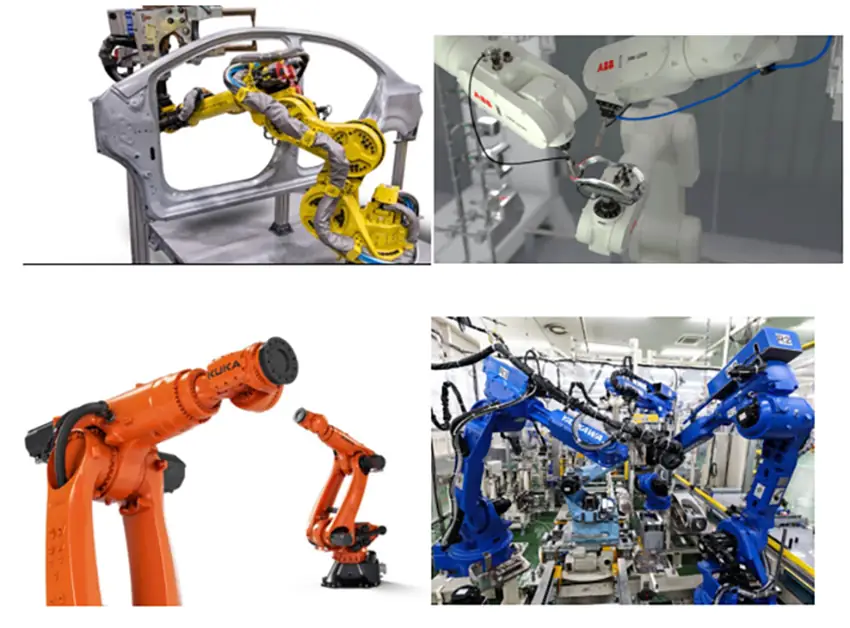
They are widely used to replace manual labor, especially in: automotive industry, semiconductor, PCB electronics, new energy, medical devices, precision manufacturing.
3. Why is manufacturing increasingly reliant on robotic arms?
Because modern industry demands higher standards for production: higher precision, higher efficiency, higher consistency, lower reliance on labor, and more stable yield rates.
Traditional manual production faces: rising labor costs, shortage of skilled technicians, process consistency fluctuations, and limitations in high-intensity and hazardous environments.
Robotic arms offer: 24/7 continuous operation, high repetitive positioning accuracy, high stability, and high cycle rate capacity production.
Therefore, robotic arms have become a crucial direction for intelligent manufacturing upgrades.
4. The Direction of Synergistic Development between Second Intelligent and Robotic Arms
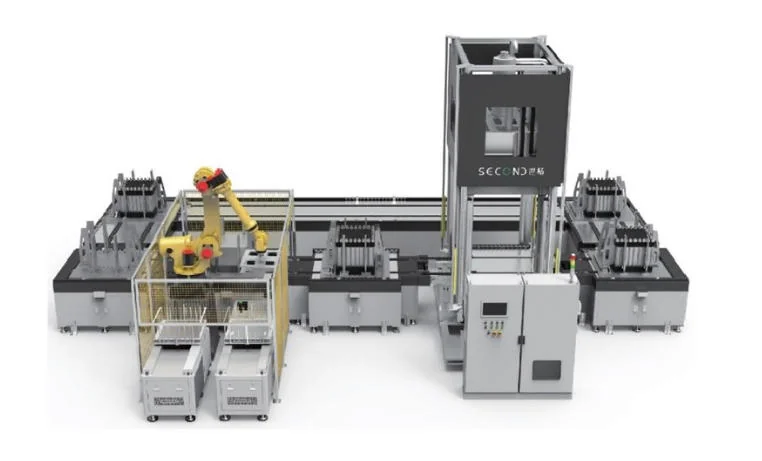
As an intelligent equipment company long focused on dispensing, potting, coating, hot melt adhesive, and automated fluid control, Shenzhen Second Intelligent Equipment Co., Ltd. does not view the application of robotic arms merely at the “robot body” level. Second Intelligent focuses more on: “How to deeply integrate robotic arms with fluid dispensing processes.”
5. The Robotic Arm is Just the Motion Platform; Process Capability is the True Core
In the dispensing, potting, and coating industries, what customers truly care about is not “whether there is a robotic arm,” but rather:
Is the glue amount stable? Is there stringing? Are there bubbles? Is there glue deviation? Does it adapt to complex products? Does it meet yield requirements?
Therefore, the robotic arm handles: spatial motion, multi-angle trajectories, and 3D path execution.
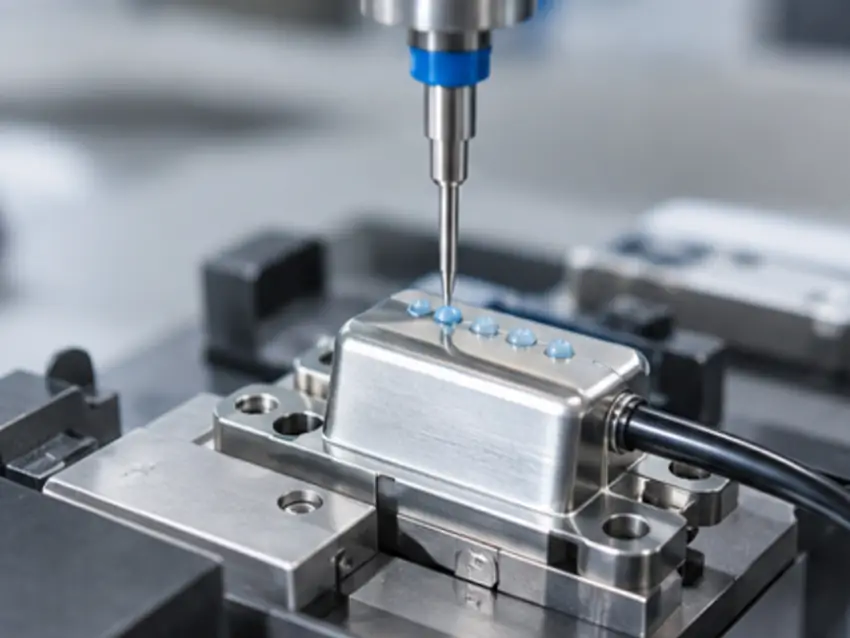
Second Intelligent’s true core value lies in: Fluid control technology, precision dispensing processes, valve control, pressure control, temperature control systems, visual compensation, and automated line integration.
In other words: The robotic arm is the “body,” but the process system is the “brain.”
6. Second Intelligent’s Current Development Directions for Robotic Arm Applications
Currently, Second Intelligent has widely applied robotic arms in:
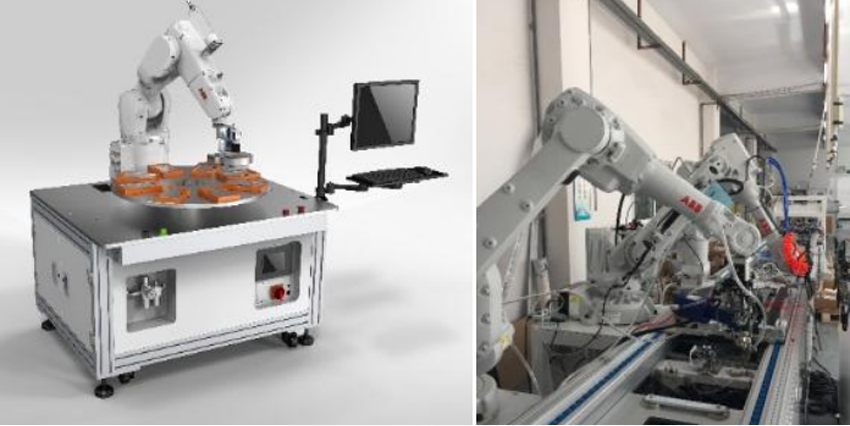
1. Six-Axis Robotic Arm Dispensing System
Suitable for: 3D spatial dispensing, curved surface products, automotive electronics, new energy products.
Enables: Multi-angle dispensing, complex trajectories, spatial obstacle avoidance, high-flexibility production.
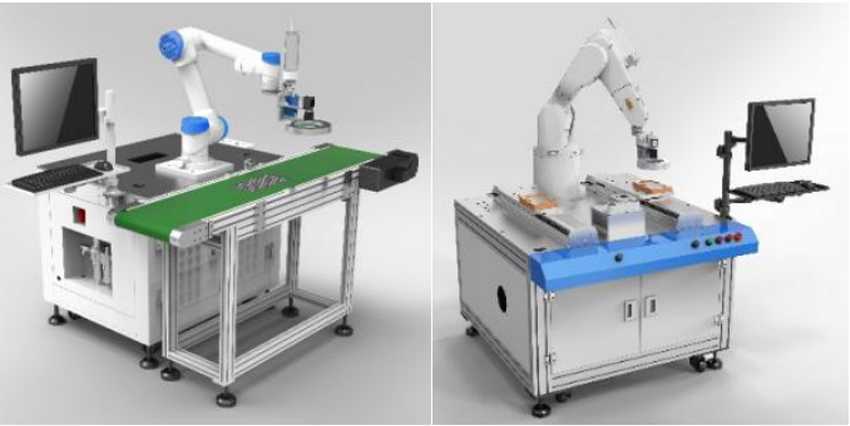
2. In-line Automated Coating System
Applied in: PCB, SMT electronics, automotive control panels.
Integrates: CCD vision, automatic conveying, spray valve control, UV curing, AOI inspection.
Forms a complete intelligent coating solution.
3. Dual-Valve Hybrid Process System
Achieves: Dispensing + spraying, dual-adhesive switching, multi-process integration.
Improves: Cycle efficiency, space utilization, flexible manufacturing capability.
4. Hot Melt Adhesive Automation System
Applied in: Automotive industry, home appliance industry, packaging industry, filter industry.
Meets requirements for: High-temperature continuous glue supply, high-speed trajectory motion, stable fluid output.
5. Future Development Directions for Robotic Arms
Future industrial robots will no longer just perform “automatic execution.” They will gradually enter the “AI intelligent collaboration stage.” The core future developments for robotic arms include:
1. AI Vision
Future equipment will possess the ability to: Automatically identify products, automatically detect deviations, automatically compensate trajectories, automatically detect defects.
Achieving a shift from “fixed programming” to “autonomous recognition.”
2. AI Process Control
Future equipment will not only control motion but also analyze in real-time: glue viscosity, pressure changes, temperature status, dispensing stability. It will automatically adjust: speed, pressure, valve parameters. Achieving: Adaptive process control.
3. Digital Twins
Future equipment will simultaneously establish virtual models.
Achieving: Virtual debugging, remote operation and maintenance, AI fault prediction, online process optimization, helping customers reduce downtime risks.
4. AI Autonomous Programming
In the future, customers will only need to upload: CAD drawings, Gerber files, 3D models. The system will automatically generate: dispensing paths, process parameters, motion trajectories. Significantly lowering the threshold for equipment use.
6. How Should Equipment Manufacturers Embrace AI?
AI does not necessarily mean having to build humanoid robots. For industrial equipment companies, what truly matters is:”How to make equipment smarter.”
7. The Core Competitiveness of Future Equipment Companies
Future industry competition is no longer solely about mechanical structure. It will be:
Traditional Competition | Future Competition |
Mechanical Structure | AI Algorithms |
Hardware Configuration | Data Capability |
Stand-alone Equipment | Software Platform |
Standard Automation | Intelligent Processes |
One-time Sale | Long-term Service |
10. Second Intelligent’s Core Directions for Future AI Development
In the future, Second Intelligent will focus on:
AI Vision for Dispensing: Achieving automatic recognition, automatic compensation, intelligent positioning.
AI Process Database: Establishing a library of glue processes, parameter models, industry application databases to build long-term technical barriers.
AI Adaptive Control: Endowing equipment with self-learning, self-optimizing, self-adjusting capabilities.
Cloud-based Remote Operation & Maintenance: Achieving online monitoring, global remote service, AI fault
warning, data-driven management.
Digital Intelligent Factory: Promoting automated whole-line integration, MES connectivity, factory data interconnection, and intelligent manufacturing platform construction.
11. The Future Belongs to Companies that Integrate “Mechanics + AI + Process”
The future direction of manufacturing development will not simply be “robots replacing humans.” It will be “AI empowering industrial processes.” The truly leading companies of the future will inevitably possess: Mechanical capability, process capability, software capability, AI capability, data capability, and global service capability.
The development of robotic arms propelled the arrival of the industrial automation era.
In the future, Second Intelligent will continue to focus on the development direction of “Fluid Process + Automation + AI Intelligence,” continuously promoting dispensing, potting, coating, hot melt adhesive, and intelligent automated production lines towards higher precision, higher intelligence, and greater flexibility. Moving from “automation equipment” towards an “AI Intelligent Process Equipment Platform.”
The company has obtained ISO9001 and CE certifications, implementing strict quality control throughout R&D, production and after-sales services. It provides 24-hour technical support, customized solution design and rapid spare parts supply, helping customers solve fluid dispensing challenges and achieve cost reduction and efficiency improvement.