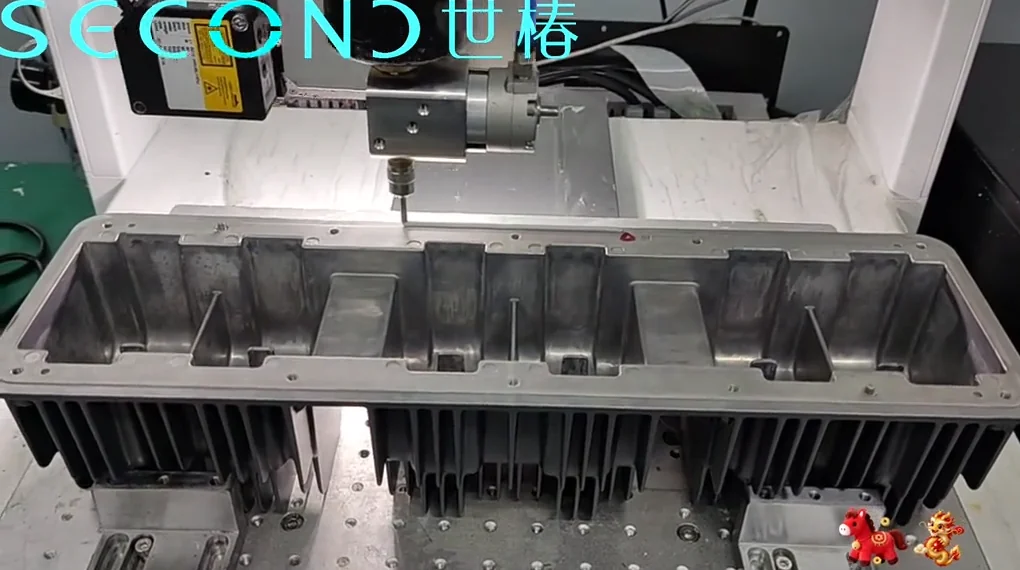
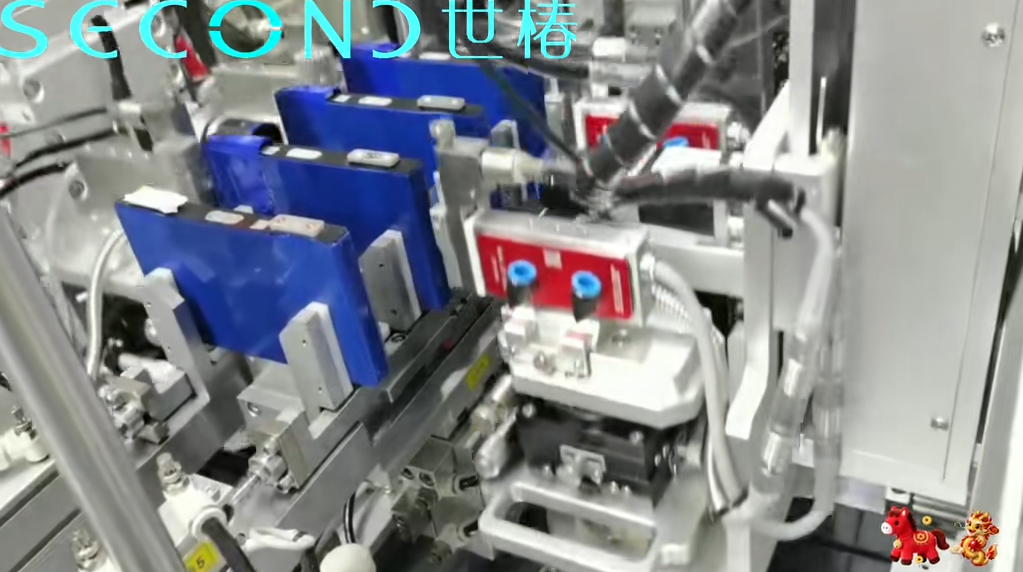
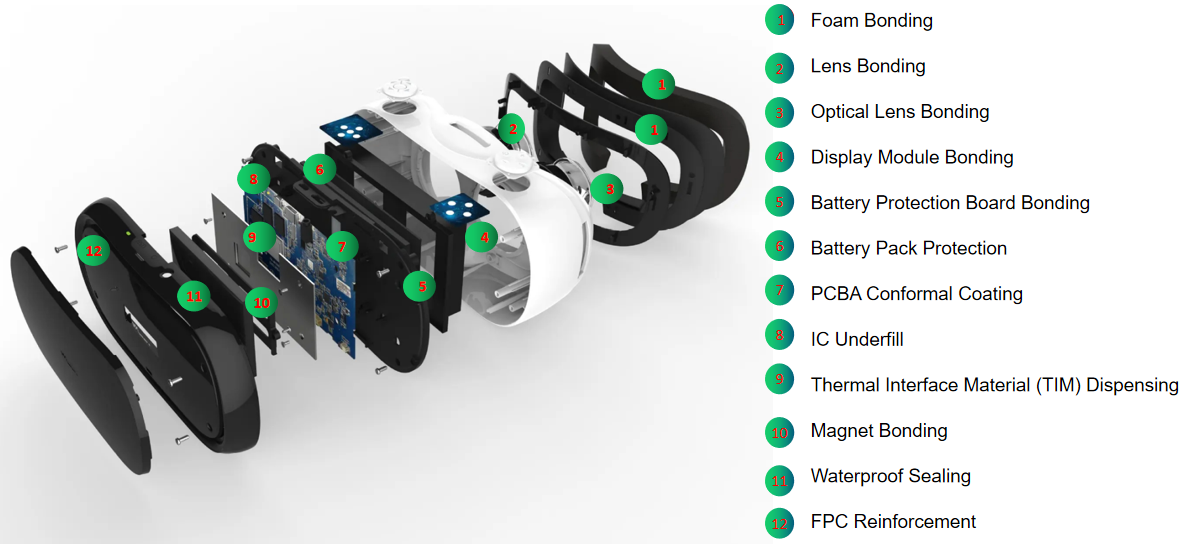
The core advantage of Second Intelligent Sealant Dispensing Machine in groove dispensing scenarios lies in its ability to break down and solve the three key aspects of “clearly seeing the groove, controlling the glue, and tracking the depth,” and then integrate them through system integration. Groove dispensing is challenging because the glue needle must penetrate the groove without rubbing against the sidewalls; the glue must fill the bottom of the groove without overflowing or forming strings. Second Intelligent ‘s solution to these challenges is not to rely on brute force with a single piece of hardware, but rather to adapt to groove shapes of varying widths and depths through a combination of visual positioning, height compensation, and a dedicated valve body.
Ⅰ.Solving the “Alignment” Problem First: Vision and Height Measurement for Clearly Seeing the Groove?
The first hurdle in groove dispensing is positioning. Even slight workpiece misalignment or burrs on the groove edge can easily lead to misaligned dispensing or dispensing onto the groove edge using traditional teaching methods. Second Intelligent widely utilizes CCD vision systems in scenarios involving groove sealing, such as bipolar plate sealing and fuel cell packaging. This system not only finds mark points but also assists in programming and trajectory correction. Operators can select the groove area on the visual screen, and the software automatically generates or corrects the dispensing path, reducing trial-and-error time for manual needle alignment.
More crucial is the non-contact height measurement system. Groove bottom depth often has tolerances, and the workpiece itself may have slight warping. If the needle height remains constant, the adhesive line will become thinner or even break in deeper groove areas, while the needle may hit the bottom in shallower areas. Second Intelligent’s height measurement system detects height changes before tracing the trajectory and adjusts the Z-axis in real time to maintain a constant distance between the needle and the groove bottom, ensuring a consistent adhesive line thickness from beginning to end. For dark-colored adhesives or reflective grooves, the vision system can also improve the stability of edge recognition and avoid misjudgments.
Ⅱ.Solving the “Get in, Disconnect” Problem: Does Valve Selection Determine the Success or Failure of Groove Dispensing?
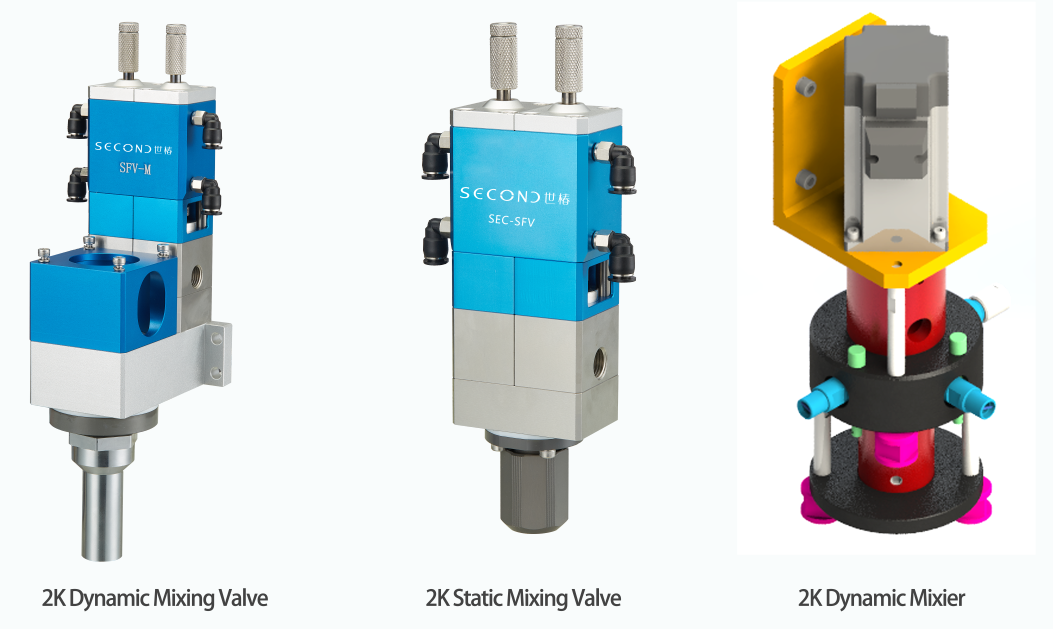
The width of the groove directly determines the type of valve that can be used. Wide grooves are relatively forgiving, and contact dispensing valves with fine needles can be inserted. However, when encountering narrow grooves or thin-walled grooves, inserting a needle can easily scrape the walls. In this case, Second Intelligent’s jet valve solution is more suitable. Jet dispensing is a non-contact process; the valve body does not need to be inserted into the groove, but rather relies on high-speed impact to “shoot” the adhesive droplets into the bottom of the groove. Shichun’s jet valve technology can complete precise dispensing in 0.25mm narrow gaps, with a dispensing speed of up to 1000 dots/second. This means that even extremely narrow grooves do not require forcing a needle in, and the risk of adhesive scraping is avoided.
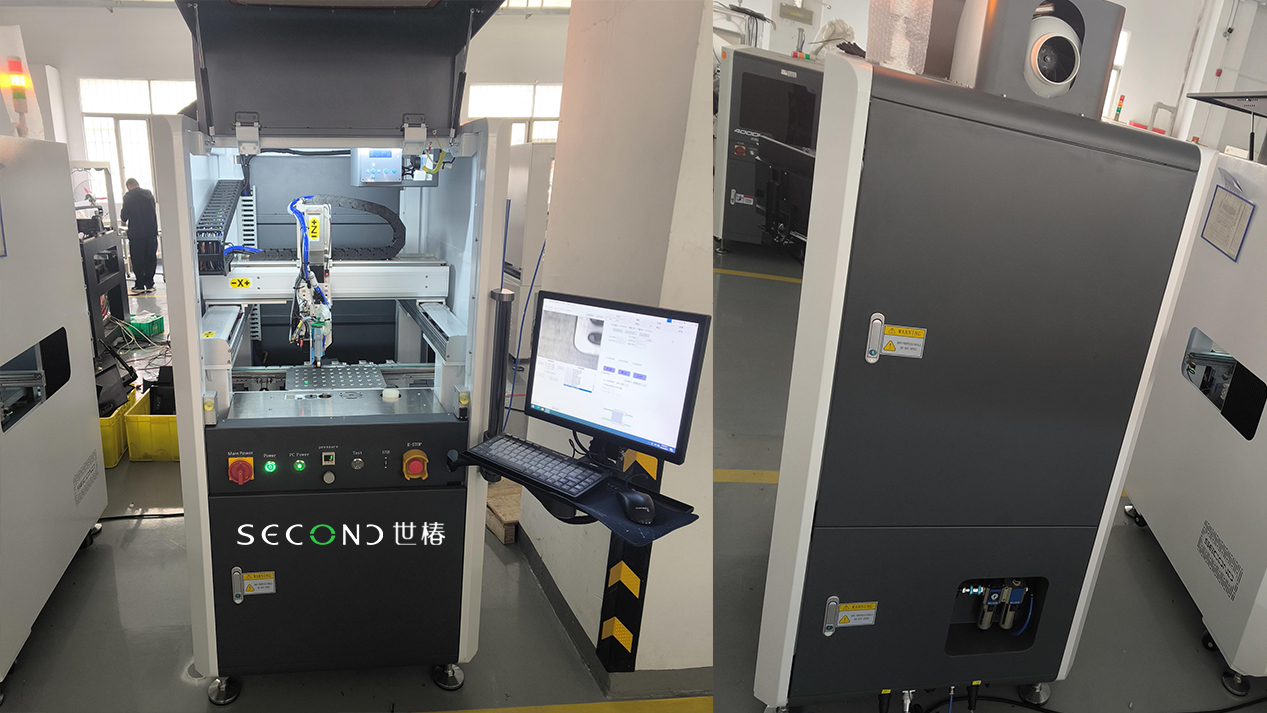
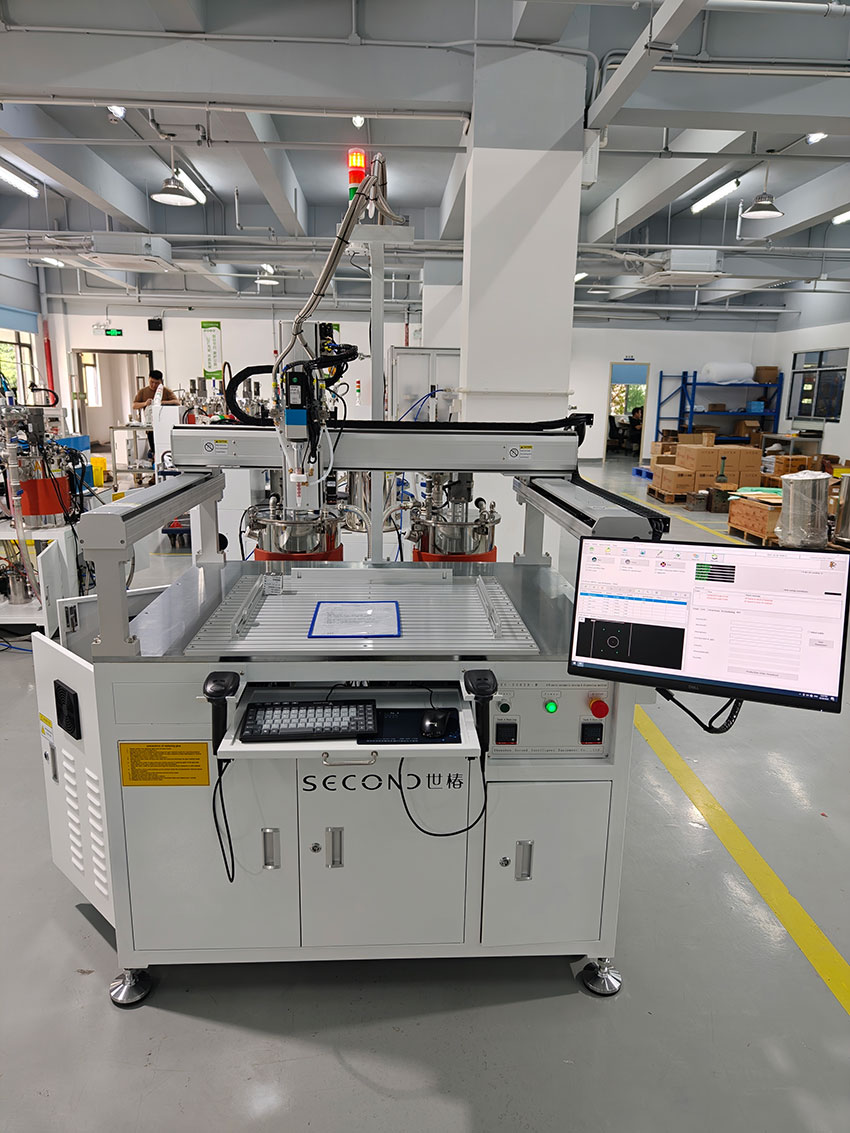
Automatic In-line PCB Glue Dispensing Machine SEC-DH400L
Second Intelligent In-line Glue Dispensing Machine SEC-DH400L adopts an integrated mineral casting design, with ultra-high precision and super stability, powerful expansion capabilities, and can realize ion cleaning, dispensing, detection, UV exposure and other functions;
Adopting a gantry structure, it can bear large loads, stable structure, and a powerful CCD visual positioning system, which can meet the requirements of Mark point positioning, edge positioning, and 3D scanning positioning; strong scalability, and can expand AOI detection 3D detection, UV exposure curing and other functions;
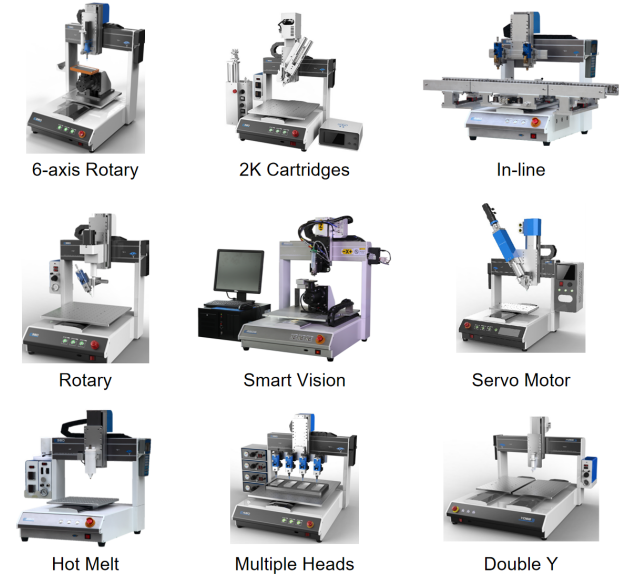
Strong platform compatibility, contact and non-contact dispensing, single-head and multi-head synchronous dispensing, automatic compensation and adjustment of double-head spacing, five-axis dispensing function based on needle A/R displacement, etc.
III. Core Processes: CIPG (In-Situ Curing Gasket) or FIPG?
For applying sealant to grooves, Second Intelligent primarily uses CIPG or FIPG processes to replace traditional pre-formed O-rings or gaskets.
CIPG (Dry Assembly): A dispensing machine applies a ring of sealant to the groove or substrate surface, allowing the adhesive to cure first, forming an elastic gasket that conforms to the shape of the groove. This gasket is then compressed and assembled with another component to achieve a seal.
FIPG (Wet Assembly): Before the adhesive has cured after being applied to the groove, another component is immediately pressed onto it. The adhesive flows under pressure, filling the gap and curing in situ, achieving bonding and sealing.
Ⅳ.Key Processing Points for “Grooves”?
Although Second Intelligent ‘s official documentation does not detail every step of groove dispensing, based on its equipment capabilities and industry practice, the following issues typically need to be addressed:
Trajectory Accuracy and Adhesive Line Formation: Groove dispensing requires the adhesive line to travel strictly along the groove’s trajectory, and the height and width of the adhesive strip must be uniform. Second Intelligent’s equipment typically features CCD vision positioning and laser height measurement to correct for product deformation or positional deviations, ensuring precise glue application into the groove.
Glue Quantity Control: The groove space is limited; too little glue will result in a poor seal, while too much will overflow and cause contamination. Second equipment supports parameter settings with a glue dispensing time resolution of 1ms and precision dispensing valves (minimum glue application rate as low as 0.001ml) for precise control of the filling amount.
Glue Compatibility: Silicone is commonly used for groove sealing. Second Intelligent’s glue supply system (such as vacuum pressure plate dispensing) reduces glue air bubbles, ensuring a dense internal adhesive strip and preventing seal failure due to air bubbles after curing.
Ⅴ.Typical Application Scenarios?
Second Intelligent’s sealant dispensing machine in the following fields often involves grooves or similar trench structures: Fuel Cell Bipolar Plates: Applying sealant within the sealing grooves of the bipolar plate requires extremely high precision in the adhesive strip (adhesive shape accuracy can reach ±0.005mm level) to ensure the airtightness of the fuel cell stack system.
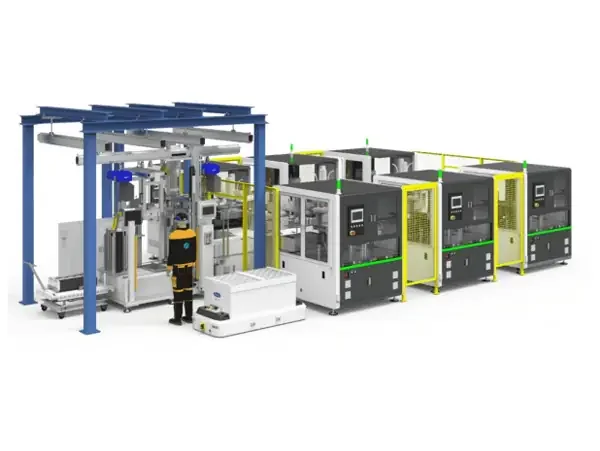
Automotive electronics (such as OBC, ECU): CIPG/FIPG seals are applied within the housing recesses to prevent water and dust intrusion.
FAQ: Five Questions Customers Care About Most
Q1: The groove width is only about 0.3mm. Can Second’s sealant dispensing machine dispense it?
Yes, but you need to select the jet valve solution. Contact-type needles have almost no margin in a 0.3mm groove width, easily scraping the wall. Second Intelligent’s jet valve can complete non-contact dispensing in a 0.25mm narrow gap. The adhesive droplet is injected into the bottom of the groove, and the valve body does not enter the groove, avoiding the risk of interference. Whether it can be adapted depends on the adhesive viscosity and groove depth. It is recommended to bring a workpiece sample for on-machine verification.
Q2: The groove depth of the workpiece has tolerances. Will there be more adhesive in some places and less in others during dispensing?
This is precisely the problem that the height measurement system solves. Second Intelligent’s equipment is equipped with a non-contact height measurement system that detects changes in the groove bottom height before or during dispensing, and adjusts the Z-axis in real time to keep the distance between the needle and the groove bottom constant. As long as the height measurement accuracy is sufficient, fluctuations in groove depth within the tolerance range will not cause significant changes in the thickness of the adhesive line. If the tolerance is extremely large, it is recommended to set parameters by zone during the visual programming stage.
Q3: The sealant is quite thick, and it always stringes when dispensing into grooves. How does Second Intelligent equipment handle this?
Stringing is a common problem in groove dispensing. Second Intelligent’s solution is twofold: First, an intelligent glue-cutting function combined with a pull-back glue-closing command quickly cuts off the glue flow and draws it back at the end of the path; second, at the parameter level, the glue-closing advance and needle lift-off height can be adjusted to break the glue string before it forms. For particularly viscous glues, it is recommended to inform Second Intelligent’s process engineers during the selection stage, as the valve body and glue control parameters need to be specifically matched.
Q4: The groove is a curved, irregularly shaped groove, not a straight one. Can the equipment keep up?
Yes. Some Second Intelligent models support needle rotation, allowing the needle to automatically turn following the path direction, maintaining a consistent glue line shape at curved sections and corners. Simultaneously, the software supports 3D interpolation and CAD drawing import; irregular trajectories can be directly generated from drawings without point-by-point teaching. If the curvature changes drastically, it is recommended to first test the adhesive buildup at the corner using a low-speed run.
Q5: What is the biggest difference between Second Intelligent’s sealant dispensing machine and a regular three-axis dispensing machine for groove dispensing?
The biggest difference lies not in the “three-axis motion” itself, but in the integration of sensing and adhesive control. Regular three-axis dispensing machines can follow groove trajectories, but they typically lack visual alignment assistance, real-time height compensation, and have limited valve options. Second Intelligent’s solution packages vision, height measurement, spray/rotary valves, and precision adhesive supply into a single system, allowing the equipment to “see where the groove is, know how deep it is, select the correct method to deliver the adhesive, and cleanly and efficiently collect the adhesive.” The yield difference in groove dispensing often lies hidden in these supporting details.