A Customized Two-Component Dispensing Solution for On-Board Chargers, Motor Controllers, DC-DC Converters and Automotive Electronic Components
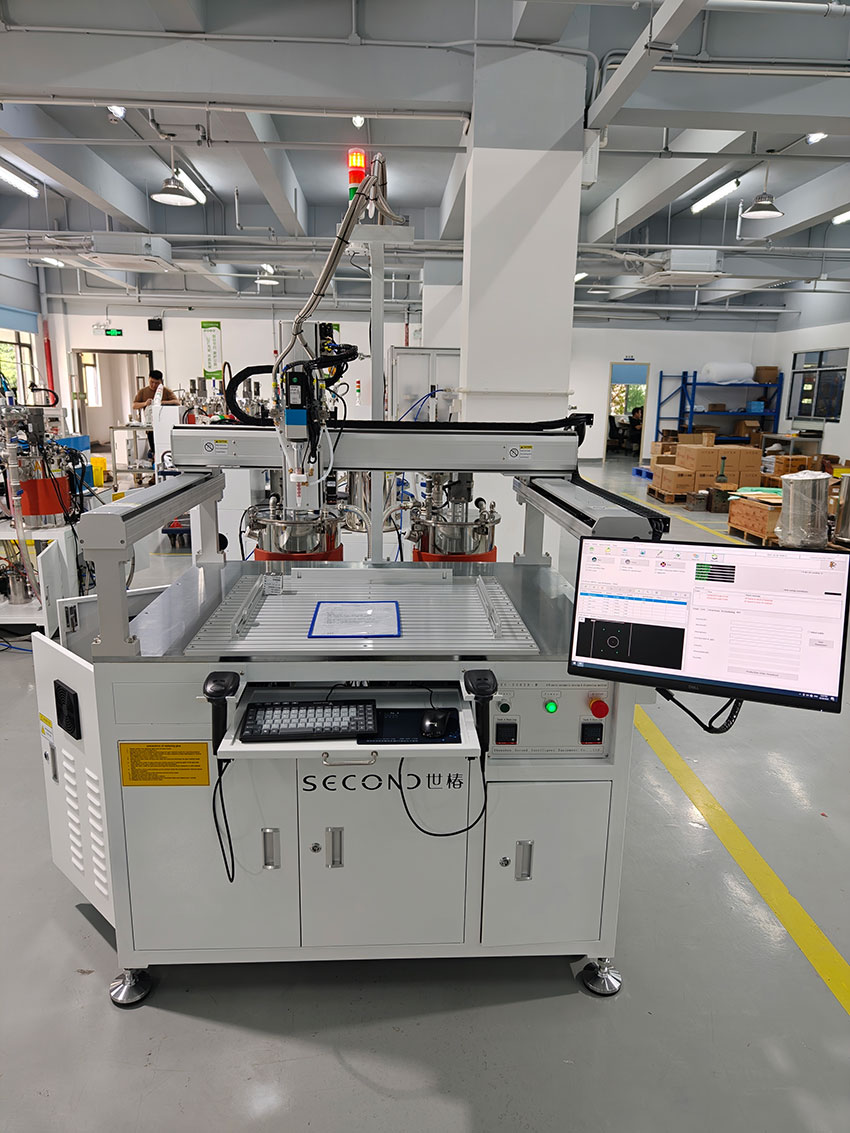
Second Intelligent, a professional manufacturer of industrial dispensing, potting and coating equipment, has successfully completed the order and delivery of its Two-Component Automatic Potting Machine SEC-S3030-B for a trailblazer in India’s electric vehicle landscape requested to potting a thermally conductive silicone encapsulant material, CoolTherm SC-309.
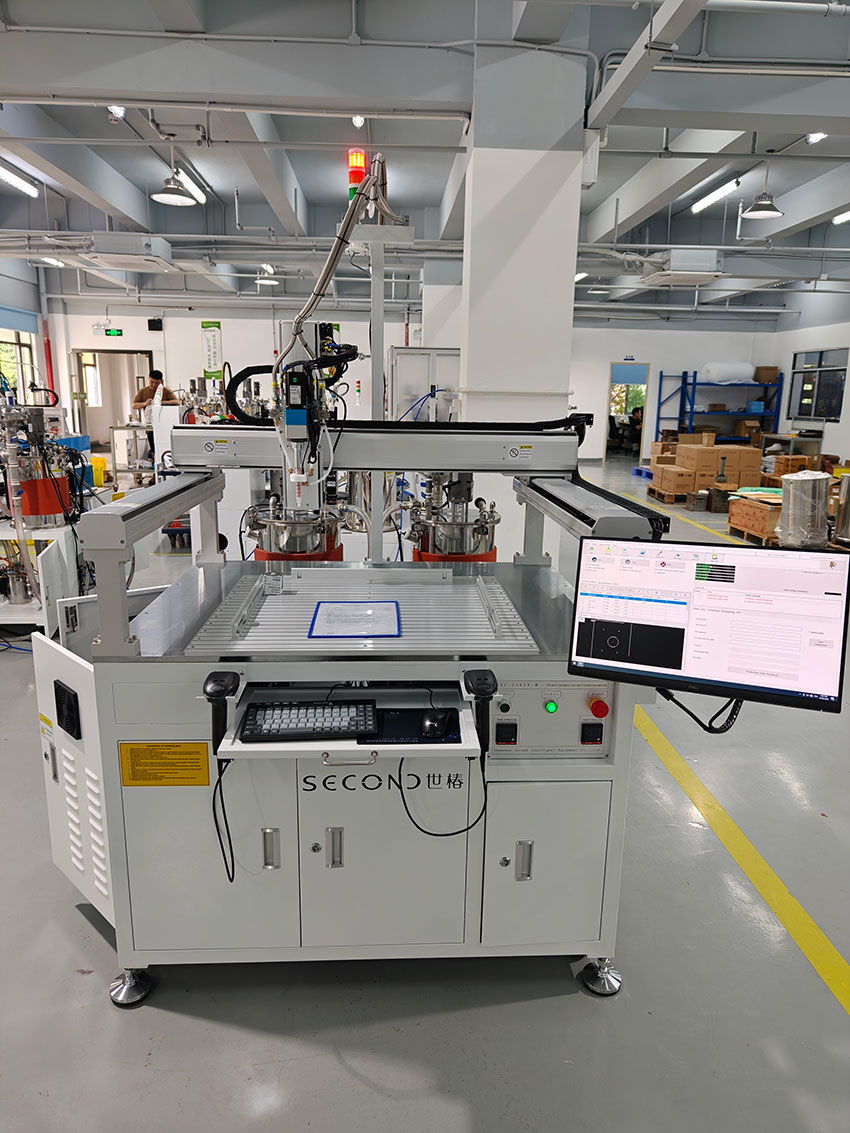
Designed around the project’s dispensing requirements, the SEC-S3030-B integrates precision two-component material metering, dynamic mixing, programmable three-axis dispensing, barcode scanning and production data traceability. The solution is designed to support potting and dispensing applications across a range of electronic power components, including on-board chargers (OBCs), fast chargers, motor controllers, DC-DC converters and electronic control units (ECUs).
As electric mobility and power electronics manufacturing continue to expand, manufacturers need reliable dispensing equipment that can handle different product geometries, two-component materials and repeatable dispensing processes. This project demonstrates Second Intelligent’s capability to customize dispensing solutions for demanding electronic manufacturing applications.
1. Project Overview: Customized Potting Equipment for Indian Electronics Manufacturing
The project was developed in response to the customer’s requirements for a programmable dispensing system capable of processing different electronic products with two-component potting materials.
The main requirements included:
●Three-axis automatic dispensing: Programmable XYZ movement for different dispensing paths and product geometries.
●Two-component material metering: Separate A/B material supply and screw-pump metering.
●Dynamic mixing: Mixing of the two components immediately before dispensing.
●Barcode scanning: Reading product identification information for traceability.
●Dispensing weight verification: Supporting the customer’s dispensing weight control requirements.
●Material conditioning: Stirring and optional heating to support stable material preparation.
●Optional vacuum capability: Vacuum dispensing or degassing can be considered according to the final process requirements.
Rather than relying on a general-purpose dispensing setup, Second Intelligent selected the SEC-S3030-B platform and configured the system around the project’s material handling, dispensing and traceability needs.
2. Application Focus: Potting for EV Power Electronics and Automotive Components
The customer requirement identifies several target product categories that require reliable materials dispensing or potting processes.
On-Board Chargers (OBC)
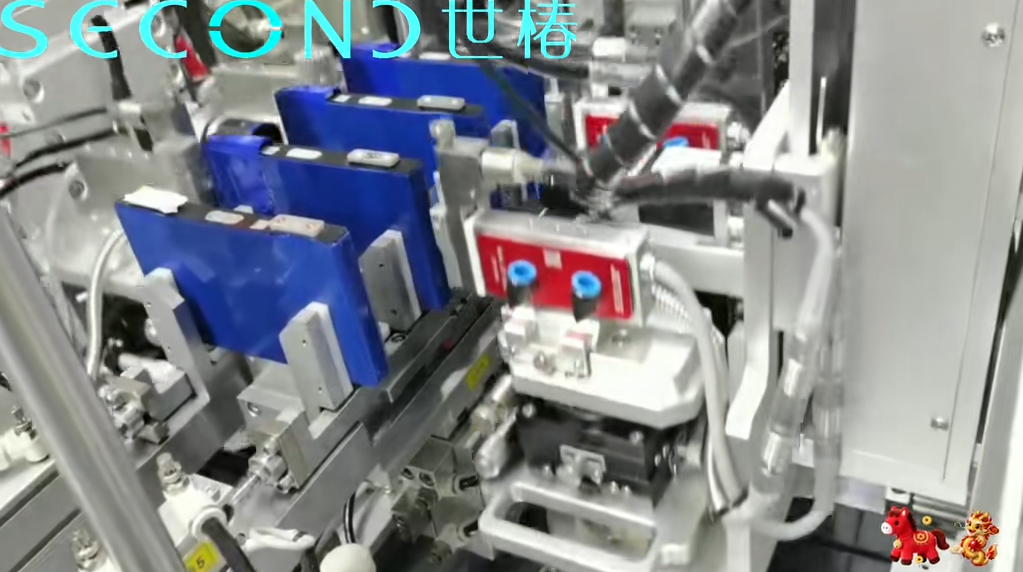
On-board chargers convert incoming AC power into DC power to charge an electric vehicle’s battery. Depending on the design, potting or encapsulation can help protect selected electronic components against moisture, vibration and environmental exposure.
Fast Chargers and Charging Electronics
Charging equipment may contain power conversion modules, control electronics and electrical connections that require accurate material application. A programmable dispensing system can support repeatable filling and sealing processes for suitable component designs.
Motor Controllers
Motor controllers manage the operation of electric motors and may contain power electronics and control circuitry. Appropriate potting materials can help provide electrical insulation, mechanical support and environmental protection.
DC-DC Converters
DC-DC converters regulate voltage between different electrical systems in electric vehicles and other power electronics applications. Controlled dispensing helps manufacturers apply encapsulation materials consistently to designated cavities and components.
Electronic Control Units (ECUs)
ECUs are used in automotive control, monitoring and communication systems. Depending on the product structure and material requirements, automated dispensing can support potting, encapsulation and localized sealing applications.
Important: The actual potting process and material selection must be validated against each product’s design, operating temperature, electrical requirements and reliability standards.
3. SEC-S3030-B: Two-Component Automatic Potting Machine
The SEC-S3030-B is a programmable three-axis dispensing system designed for applications requiring controlled delivery of two-component materials.
Its configuration combines material storage, metering pumps, dynamic mixing, motion control and dispensing software in one integrated platform.
Key technical specifications
Parameter | SEC-S3030-B specification |
XYZ working stroke | 700 × 600 × 150 mm |
Maximum movement speed | 500 mm/s (X/Y); 200 mm/s (Z) |
Metering system | Dual screw pumps |
Pump displacement | 6 cc per pump |
Reference mixing ratio | 1:1 by weight |
Reference proportioning accuracy | ±2% (based on a 100 g reference) |
Reference dispensing accuracy | ±2% (based on a 100 g reference) |
Dispensing speed | 4–10 g/s |
Supported operating viscosity | 100–20,000 cP |
Mixing method | Dynamic mixing |
Control system | Industrial PC, monitor and dispensing software |
Material supply | Vacuum-assisted automatic feeding |
Material tank capacity | 30 L per tank |
Cleaning method | Semi-automatic |
Power supply | AC 220 V, 50 Hz, 5 kW |
Specifications are based on the SEC-S3030-B project proposal. Actual operating performance depends on the selected material, mixing ratio, dispensing path, product geometry and process conditions. The customer’s requested dispensing accuracy and acceptance criteria should be confirmed through application testing.
4. How the Two-Component Dispensing Process Works
The SEC-S3030-B uses separate material supply and metering channels to control the two components before they enter the dynamic mixing system.
The typical process is as follows:
Step 1: Material preparation
The A and B components are loaded into their respective material tanks. Stirring and heating functions help condition the materials when required by the adhesive supplier’s recommendations.
Step 2: Material metering
The two screw pumps deliver the components through separate material paths. The dispensing program controls the material delivery according to the configured mixing ratio and dispensing parameters.
Step 3: Dynamic mixing
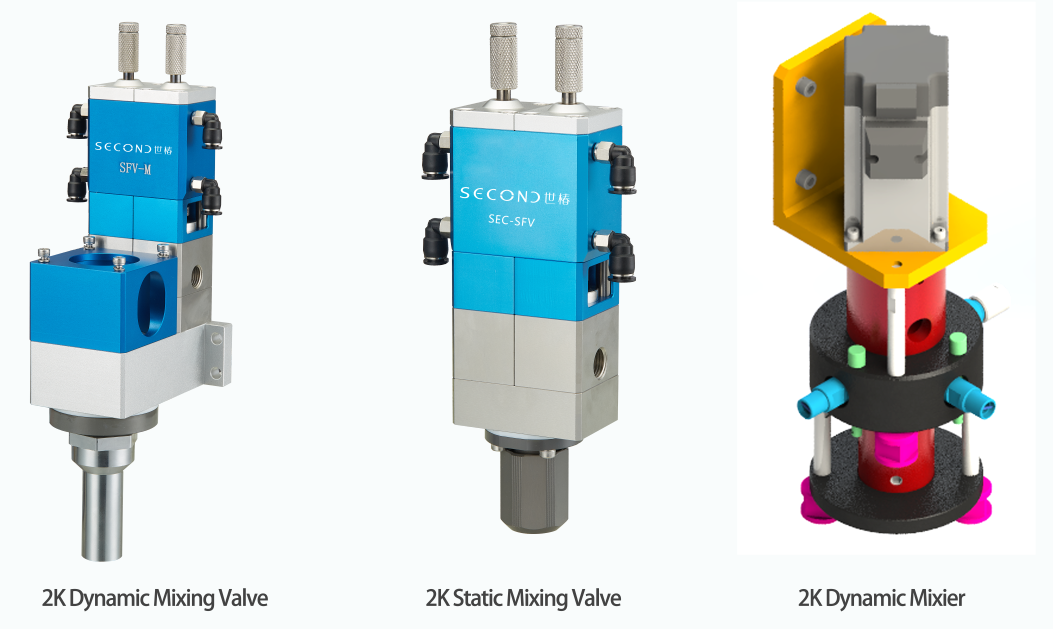
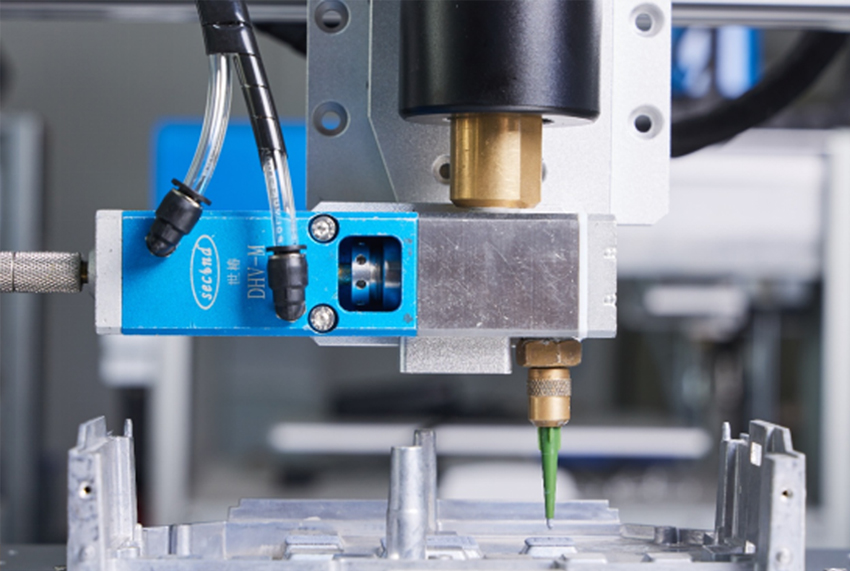
The A and B components enter the dynamic mixing valve, where they are mixed immediately before application. The system includes mixing-status monitoring to help identify mixing abnormalities.
Step 4: Programmable dispensing
The three-axis robot follows the programmed dispensing path to apply the mixed material to the designated product areas, such as dots, lines or cavities.
Step 5: Barcode identification and traceability
Barcode scanners read product identification information before dispensing. The configured data-handling process supports production record management and product traceability.
Step 6: Dispensing weight verification
Dispensing weight can be checked as part of the production quality-control process. The weighing method, measurement range, data recording and any automatic feedback functions depend on the confirmed system configuration.
5. Key Engineering Features
Precision screw-pump metering
Screw pumps are suitable for conveying a range of viscous materials, including epoxy, silicone and polyurethane compounds. Their controlled delivery supports repeatable dispensing, subject to material compatibility and process validation.
For two-component applications, stable delivery from both channels is essential to maintaining the required mixing ratio.
Dynamic mixing for two-component materials
The SEC-S3030-B mixes the A and B components immediately before dispensing. This approach reduces the amount of mixed material remaining in the system after dispensing and can simplify cleaning compared with systems that retain mixed adhesive in longer downstream passages.
The dynamic mixing system also incorporates monitoring intended to help identify mixing abnormalities.
Programmable three-axis motion
With a working stroke of 700 × 600 × 150 mm, the machine supports programmed dispensing paths across a range of product sizes and geometries within its working envelope.
The XYZ motion platform is suitable for applications involving multiple dispensing locations, linear paths and cavity filling. Actual accessibility depends on the fixture, product height and dispensing-tool geometry.
Material stirring and temperature conditioning
The project configuration includes separate 30 L material tanks with stirring and heating functions. These features can help maintain material uniformity and support temperature conditioning when required by the material specification.
The appropriate temperature and stirring parameters should be established according to the adhesive supplier’s technical data.
Pressure monitoring and semi-automatic cleaning
Pressure sensors monitor material delivery pressure and can trigger an alarm or stop the machine when configured pressure limits are exceeded.
The semi-automatic cleaning system supports cleaning of the dispensing valve and mixing tube. Correct cleaning procedures and compatible cleaning agents should be selected according to the adhesive manufacturer’s recommendations.
Optional vacuum dispensing
For products with narrow cavities or a high sensitivity to trapped air, vacuum-assisted processing may be considered.
Vacuum dispensing is an optional project configuration rather than a universal requirement. Whether vacuum is necessary depends on the adhesive’s degassing behavior, the product’s internal geometry, the required void acceptance criteria and the curing process.
6. Barcode Scanning and Manufacturing Traceability
Traceability is increasingly important in automotive and power electronics manufacturing, where process records can support quality investigations and production management.
The SEC-S3030-B project specifies two barcode scanners to read separate product identifiers, including the Serial Number and UID.
This arrangement supports identification of the product before processing and provides a basis for associating dispensing records with individual units.
Where required, the data interface and record structure can be defined according to the customer’s manufacturing execution system (MES) requirements. The exact integration scope should be confirmed during system design and acceptance.
7. Designed for Flexible Production Requirements
The customer’s application requirements cover several product categories rather than a single fixed dispensing path.
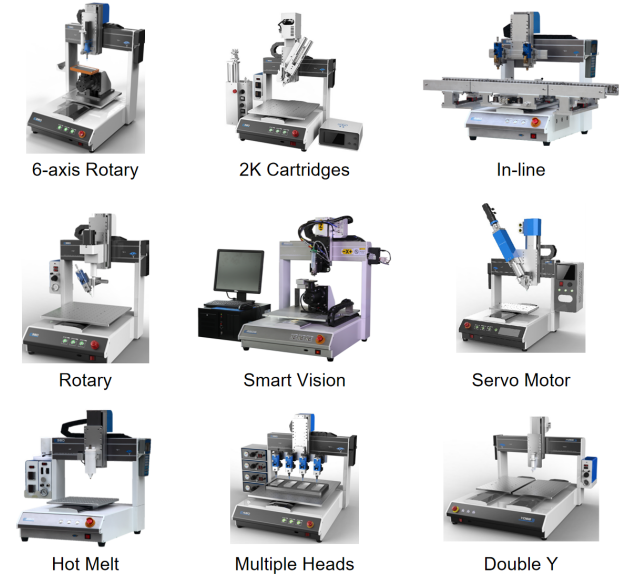
A programmable three-axis system offers manufacturers the flexibility to adjust dispensing trajectories and parameters for different products within the equipment’s working range.
Potential benefits include:
● Repeatable dispensing paths.
● Controlled delivery of two-component materials.
● Reduced dependence on manual dispensing operations.
● Support for barcode-based product identification.
● Easier adjustment of dispensing programs for different product variants.
● A platform for future process optimization and automation upgrades.
Actual productivity improvements depend on the product mix, dispensing volume, curing requirements, loading and unloading time, and the customer’s existing production process.
8. Applications Beyond Electric Vehicle Manufacturing
Although this project focuses on automotive and power electronics applications, the SEC-S3030-B platform may also be suitable for other industries using compatible two-component materials.
Potential applications include:
Automotive electronics
● Electronic control units and selected control modules.
● Automotive sensors.
● Electrical connectors and electronic assemblies.
Electric mobility and charging
● On-board chargers.
● DC-DC converters.
● Motor controllers.
● Selected charging-system electronic modules.
Industrial electronics
● Power supplies.
● Control boards and electronic modules.
Selected sensors and electrical components.
Electrical and magnetic components
● Inductive components.
● Transformers and coils.
● Selected electrical insulation and encapsulation applications.
Equipment selection should be based on the actual material properties, product dimensions, required dispensing volume, mixing ratio and acceptance criteria.
9. Why Choose Second Intelligent for Automatic Potting Equipment?
Second Intelligent specializes in fluid dispensing, potting, coating and customized automation solutions for industrial manufacturers.
The company’s engineering approach focuses on matching equipment configuration to the actual manufacturing process, including:
● Material compatibility assessment.
● Dispensing and potting process development.
● Metering and mixing system selection.
● Customized fixture and motion-path planning.
● Barcode and production data requirements.
● Equipment manufacturing, testing and technical support.
The SEC-S3030-B project for the Indian market demonstrates how a standard equipment platform can be configured to address specific customer requirements in two-component dispensing and electronic component manufacturing.
For manufacturers evaluating a new potting process, early validation of the adhesive, product samples and dispensing parameters can help reduce technical uncertainty before moving into production.
Conclusion: A Practical Potting Solution for Automotive and Power Electronics Manufacturers
The successful order fulfillment and delivery of the SEC-S3030-B Two-Component Automatic Potting Machine for the Indian project highlights Second Intelligent’s commitment to application-oriented dispensing equipment.
By integrating dual screw-pump metering, dynamic mixing, programmable three-axis movement and barcode identification, the SEC-S3030-B provides a flexible equipment platform for suitable two-component potting and dispensing applications.
For manufacturers of on-board chargers, fast chargers, motor controllers, DC-DC converters, ECUs and other electronic assemblies, Second Intelligent can evaluate the product design, adhesive properties and production requirements to develop an appropriate dispensing or potting solution.
Looking for a two-component potting machine for automotive electronics or EV power modules?
Contact Second Intelligent to discuss your product samples, materials specifications, dispensing volume, accuracy requirements and automation needs.
Website: https://www.secondintelligent.com